
 •
Rating:
•
Rating:
THE REVIEW
"A SINGLE DEATH IS A TRAGEDY, A MILLION DEATHS IS A STATISTIC." (josef stalin).
With this quote begins what can easily be considered the musical masterpiece of the symphonic-baroque era of Savatage: "Dead Winter Dead".
This album is Savatage's second Rock-Metal opera after the incomparable "Streets" of 1991, and let's say one thing right away: that masterpiece was absolutely unrepeatable, our guys knew it, and indeed they do not try to serve us the 1991 soup reheated and revisited with current themes (for the time), but instead offer us an engaging, incredibly heartfelt and emotional work where epicness, power, and majesty are masterfully combined, but also (and above all), a river of feelings and emotions that range from hope to sadness, from melancholy to hatred, from despair back to hope... A work where the poetry of the lyrics perfectly marries the musical imagery... An almost perfect union (and tremendously evocative) of words and music that I have rarely had the chance to hear.
The album was released in 1995 and is a concept drawn from a writing by Paul O'Neil (producer as well as an unofficial member of the band) based, with tear-inducing poetry and involvement, on the situation of the (now) former Yugoslavia seen through the eyes of Serdjan Aleskovic, an imaginary character (or not?), who finds himself confronting life in a country ravaged by a thousand years of wars and persecutions, which finally, after the fall of the Berlin Wall, seemed to have achieved the possibility of change that had been so yearned for and suffered by the population, before falling again into the horror of (semi)civil war.
The lyrics are gorgeous, dreamy, and in no way banal or predictable and reflect (condemn) in an "original" and heartfelt way on racism, intolerance, hatred, loss of innocence, the individuals' inability to change things...
But they also talk, in a concealed manner (but not too much), about hope, love, the need for change, and question us on the value of feelings and peace as a right and not as a conquest. The thing you notice right away, and what struck me the most while listening to this work, is the incredible emotional involvement by the musicians that reflects on us worshiping listeners the emotion they seem to feel in telling us the story...
The band offers us a performance where calling it heartfelt is an understatement, and all members sacrifice (in part) their (enormous) technical skills on the altar of moving and dreamy, progressive and pathos-rich Music at every moment... In short... Music with a capital M. Here we go...
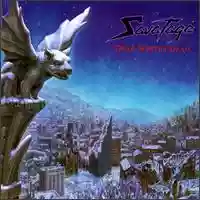
"Overture" is a instrumental and symphonic track that welcomes us into the concept with majestic intensity. “Sarajevo” takes us along with the "disturbing" piano notes of Jon Oliva and the beautiful voice of Zak Stevens reflecting the detached sadness experienced by the stone-hearted Gargoyle, overlooking the city of Sarajevo (the cover with the cemetery invading from the right side of a destroyed city is beautiful), unable to grasp the nuances of the human soul it has so observed and tried to understand. The track is sad and melancholy, starting with piano and voice and progressing in crescendo with orchestral parts: stunning (and alas short). “This Is The Time” is the first real track... In a frightening crescendo among all instruments, Zak's interpretation and Al Petrelli's (former Asia and with a prog background) exhilarating inspiration on the lead guitar stand out. Everything is incredible, it couldn't start better... It's 1990 and after the fall of the Berlin Wall, for the first time in millennia, Yugoslavia is a free country, Serdjan feels joy and hope (and the responsibility) for a new future to build... This is the time to start hoping again... Happiness seems finally near. Unfortunately, while Serdjan rejoices, evil men corrupted by inevitable evil plot in the shadows to instill hatred and intolerance in men's minds, narrated in “I Am”, the fourth track where Jon "the mountain king" Oliva sings with his raspy and aggressive voice, perfectly describing the incomprehensible cruelty of weak men.
“Starlight” starts with Jon's usual piano giving way to Chris Caffery's sharp riff and the perfect rhythm section provided by Johnny Lee Middleton's throbbing bass and Jeff Plate's powerful and precise drumming... The almost martial pace of the song perfectly marries, once again, the lyrics recounting Serdjan's innocence in joining the Serbian militia and finding himself shooting at the city almost unknowingly. The rocky voice of good old Jon returns on “Doesn’t Matter Anyway” where, accompanied by swift and square tempos and Jeff Plate's double bass drum appearance, he describes the situation within Sarajevo where a young Muslim girl named Katrina decides to take up arms and defend the city threatened by an invisible enemy hidden in the hills... The incredible break almost on the edge of crossover in the second minute of the song.
“This Isn’t What We Meant” is a magnificent track: progressive and evocative in music (solos and piano to cry for), very sad, cynical, and hopeless in lyrics: we shift to the winter of 1994 and, after years of war, the ruined city welcomes the return of an old musician who, desperate at the sight of the misery of the ruins, walks towards the main square dominated by the Gargoyle and, reached the central fountain, as it begins to snow, recites a desperate prayer of pain: “It wasn't what we wanted”. Heartbreaking. As soon as the prayer ends, bombs and grenades start exploding in the night that has just fallen on the devastated city... But the old man decides not to seek shelter... He climbs the fountain and, as bombs dominate the sky, crying, begins to play with his cello, the passionate melodies of Mozart...
Thus begins “Mozart And Madness”, an instrumental worthy of applause for intensity and execution where the fusion between instrumental parts and the immortal music of Mozart is one of the most successful things in the entire work. From that evening, the old man would repeat that music ritual trying to override the noise and horror of the grenades, and every evening Serdjan and Katrina, though belonging to different and opposing factions, would listen, unknowingly together, to those magical notes coming from the heart of the lost city. A must listen to anyone. Sublime.
The great notes of Beethoven's “Ode to Joy” (“Memory”) capture us and project us, reprised in an electric key, towards the title track: “Dead Winter Dead”, an incredibly dynamic track with Chris's guitar and Zak's voice on shields painting the atrocities of war that even the snow, with its innocent whiteness, cannot cover. Devastating.
"One Child" arrives with its sadness and immense pain accompanied by Jon's piano… It continues to crescendo and flows into a 6-voice choir that will be a lesson. In an apocalyptic scenario, Serdjan, on patrol in Sarajevo, sees a school torn apart by grenades with dozens of innocent children's bodies and is horrified by it to the point of being haunted by that atrocious image and beginning to understand: what they are doing is not a project of freedom for building a new nation, but a sadistic game for mutual destruction... Crying and despairing, he understands that one cannot build a future of freedom on their brothers' bodies. Heartbreaking.
We have reached the incredible finale. Here is the masterpiece “Christmas Eve (Sarajevo 12\24)” with all its tragedy... A heartbreaking instrumental with unimaginable evocative power... A whirlwind of notes and emotions... Tears, tears, and tears. On Christmas Eve, Serdjan, hidden, listens, like every night, to the old cellist's sweet notes playing Christmas carols full of hope opposing the noises of war... Even Katrina on the other side of the city listens to the sweet melody. Incredibly, to those sweet notes, the snow stops falling, the clouds clear, and the starry sky arrives to illuminate the ruins of men. Suddenly, the music stops abruptly, by now only the noise of grenades prevails over everything and everyone... Anguish and atrocity emerge from Serdjan's and Katrina's hearts who, no longer recognizing the music, rush to the fountain. Arriving simultaneously, they see each other, but putting aside the warlike hatred they no longer understood, they slowly approach and find a horrible scene: the old man lies with his face covered in blood near his destroyed cello. Torn by pain, Serdjan looks up to the sky but the only thing he sees is the millennial stone Gargoyle watching him, unable to understand his sorrow.
We have reached the last chapter of the sad story, and it is another masterpiece: “Not What You See” is an incredibly emotional piece I would dare to compare to the legendary “Believe” of 4 years before for intensity and feeling... In this piece, everything is perfect... Zak's dreamy voice, Jon's moving piano, Jeff's soft and powerful drumming, Chris and Al's incredible guitars that give us goosebump-inducing solos, and Johnny's bass that glues it all... All embellished by a magical melody and those majestic 6-voice choral overlays that cradle us as they tell us how Serdjan, overwhelmed by that night, turns to Katrina pleading with her to set aside hatreds and racial prejudices trying to look at him for who he is and not for the uniform he wears and crying desperately again and again and again, in a whirlwind of feeling and emotion, hatred and condemnation, “I don’t understand, I don't understand, I don't...". One of the most beautiful songs I have ever heard and for which the word Masterpiece is not wasted.
Let yourself be carried away by the incredible melody of this album, let the chilling tales of war frighten you, let your eyes weep while listening to the moving story of Serdjan… Let yourself… And let this masterpiece enter into you… It will never leave.
The best album from Savatage since the sorrowful death of the much-missed Chris Oliva (R.I.P.).
"AND EVERY PRAYER WE PRAY AT NIGHT HAS SOMEHOW LOST ITS MEANING". INDISPENSABLE.
Loading comments slowly
Summary by Bot
Dead Winter Dead is Savatage's heartfelt symphonic metal concept album released in 1995, portraying the tragic Yugoslav Wars through powerful lyrics and orchestration. The band masterfully combines epic musical imagery with emotional storytelling, rich with themes of hope, hatred, and despair. Highlighted by standout tracks like “Christmas Eve (Sarajevo 12/24),” the album is an immersive experience blending technical skill and raw feeling. It's considered a masterpiece and one of the band’s finest works.Tracklist Lyrics Videos
Savatage
Savatage are an American heavy metal band formed in Florida, founded by brothers Jon and Criss Oliva. They became known for blending metal with piano, orchestration, and theatrical, concept-album storytelling, especially on releases like Gutter Ballet and Streets - A Rock Opera.17 Reviews
