
 •
Rating:
•
Rating:
THE REVIEW
The Savage Republic were formed in Los Angeles, on the ashes of the Africa Corps, in the early 80s around the figure of guitarist Brian Licher, a student at UCLA.
Commonly considered the spearhead of the Californian 'trance' scene, their sound, however, goes far beyond any label that could have been applied to it and their debut "Tragic Figures" (Independent Project - 1982) is the brilliant example of a new way of conceiving rock music.
Starting from the ideas of the British post-punk scene, P.I.L. and Joy Division are torn apart by sharp desert guitars and crushed by heavy tribal rhythms, often achieved by striking oil cans, drums, and metal pipes, in the initial "When All Else Fails?" the former or in the splendid "Film Noir" the latter. The love for cinematography finds an outlet in the deviant vision of the most western Morricone in "O Andonis", while the darker obsessions burst violently in the tribal orgy of "Kill The Fascists!" or in the schizophrenic one of the title track.
But they reach their peak in the mini-suites "Exodus" and "Percussion". In the former, the Savage Republic engage in a piece that attempts to disintegrate all the lessons of 'krautrock', paving a path that fifteen years later would be followed by Mogwai and Godspeed You Black Emperor!, where the most terrifying unease is dilated in time and space until it vividly materializes anxieties in our brain, dancing inside it in an ecstatic mantra. In the latter, the sparse and guitar-driven post-rock (yet to come) of Slint becomes obsessive percussion that transforms into a spatial anthem supporting vocal tirades closely reminiscent of the sharpest and most inspired Johnny Lydon.
The album also includes sonic experimentation episodes such as the industrial-noise of "On The Prowl", the kraut-influenced post-hardcore of "Flesh That Walks", or the ancestral echoes of the percussive "The Empty Quarter".
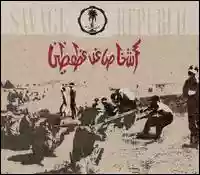
"Tragic Figures" is still today a splendid album that absolutely does not betray the time passed, but on the contrary contains ideas and solutions not yet explored in the infinite rock music production. The original vinyl edition was characterized by the complete presence of writings in Arabic and the hand-numbering of each copy by Licher himself, while the CD reissue contains no less than seven bonus tracks, drawn from the band's early singles.
Loading comments slowly
Summary by Bot
Savage Republic’s debut album Tragic Figures is a groundbreaking fusion of post-punk and tribal rhythms. Drawing from British post-punk and krautrock influences, the band uses unconventional percussion and cinematic motifs to create a unique, timeless sound. Tracks like "Exodus" and "Percussion" showcase their experimental and spatial approach ahead of their time. The album remains relevant, with reissues including valuable bonus tracks.Tracklist Videos
Savage Republic
Savage Republic is an American post‑punk band from Los Angeles, founded by UCLA students Bruce Licher and Mark Erskine (initially as Africa Corps). Known for tribal percussion, industrial textures, and Middle Eastern guitar figures, they debuted with Tragic Figures (1982) on Independent Project Records, evolved through Trudge (1985) and Ceremonial (1986), and originally disbanded in 1989. They reunited in the 2000s, releasing 1938 (2007) and continuing activity thereafter.07 Reviews
