 •
Rating:
•
Rating: THE REVIEW
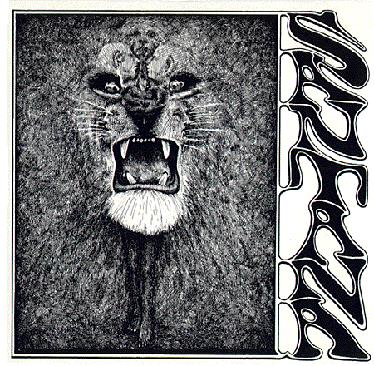
The first and highly charged album by Santana, the last great band of psychedelic San Francisco, nothing to do with the commercial Santana of duets with Sean Paul or Joss Stone. Vibrant, warm, erotic: irresistible.
October 1966, two boys, Carlos Santana and Stan Marcum are at the Fillmore to hear the Butterfield Blues Band, at the end of the concert Mike Bloomfield organizes a jam session with Jerry Garcia and Jack Casady participating, among others. Marcum, knowing his friend is too shy to do it, asks Bloomfield if Carlos could join the jam. Bloomfield agrees, the small guitarist dazzles and catches the attention of Gregg Rolie, the future keyboardist who, after the concert, asks the young Santana to join his band.
Three years after this episode, rechristened first Santana Blues Band and then simply Santana, they release this album tested on the explosive jam sessions they performed live in the Bay Area; anyone expecting a soft record of romantic songs is very wrong: this album is groove and rock. Lots of rock. Music that drives the five hundred thousand at Woodstock crazy and convinces the skeptical Columbia executives about the material to release the album given the overwhelming result of the festival; anyone who has seen footage of them playing "Soul Sacrifice" at the legendary concert will agree that we are witnessing an exceptional formation, capable of taking the stage as unknowns and stepping off with a million copies sold.
The foundation on which everything rests are the organ and bass riffs on which Carlos' solos, gritty and very bluesy, describe Aztec landscapes painted by mescaline, flames burning in the middle of the desert fueled only by passion, mystical sex; the work of the rhythm section is exceptional, proceeding steadily throughout without ever showing any sign of fatigue, among all it is worth highlighting the remarkable work of Mike Shreive who manages with his drums to perfectly season the congas and timbales free to engage in rhythmic battles that are mesmerizing, a good thing since their main goal was to convey on album what they did live, perhaps a slight weak point of the album is that this intention means all tracks were recorded live with very few variations in the band's sound.
Santana's phrasing lacks that distinctive technique for which anyone would recognize him among thousands; it is based more on minor blues pentatonics and logically, on Dorian scales which provide a mournful tone, where some figures more typically mariachi than rock are recognizable.
Another downside of this album is that the structure of the tracks often repeats, in fact, the second degree-fifth degree figure typical of Afro-Cuban music is present in almost all tracks, it must be added that Santana is very skilled at not making it noticeable, in fact, I only realized it afterward, upon reading the scores.
In conclusion, an album that hits you with its rhythm and can be listened to very well, although the unpolished production tends to make the whole album sound a bit the same, nonetheless a classic of '60s-'70s music.
Loading comments slowly
Summary by Bot
This review praises Santana's first album as a vibrant and highly charged debut rooted in psychedelic San Francisco rock. It highlights the band's explosive live performances, especially their iconic Woodstock set, and emphasizes the rhythmic foundation and bluesy guitar solos. Although the production is noted as somewhat unpolished with repetitive song structures, the album remains a timeless classic of late 1960s rock.Tracklist Lyrics Videos
Santana
Carlos Santana (born July 20, 1947) is a Mexican-born guitarist and bandleader known for blending rock and blues with Latin/Afro-Cuban rhythms. He rose to international attention around 1969 with Santana and performances associated with the Woodstock era, and later achieved massive mainstream success with the 1999 album Supernatural.23 Reviews
