
 •
Rating:
•
Rating:
THE REVIEW
- Well, shall we go?
- Yes, let's go.
[They do not move]
I have few classics I boast of having read personally. This is because, with the complicity of school, they project behavioral models in your head towards works that are as stupid as they are paradoxical.
"The Divine Comedy is beautiful, a fundamental work, but it was written a thousand years ago!" I've often heard from my classmates: like saying that children should no longer be read tales from One Thousand and One Nights because they are full of Islamic fundamentalism. If in Italy, we often talk about a lack of respect for freedom of opinion, I would gladly do without that privilege to no longer hear such abuses.
Here arises my problem: I boast of having read few classics, those that do not leave room for unaware mouths wasting air mixed with random words. Those works that do not leave satisfactions, that when you take them by the hand you do not understand the meaning and by finishing them, with incredible genius, you return to square one but with some perplexity about your own summarizing abilities.
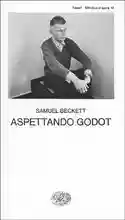
Waiting For Godot is a response of the works to society: "Beautiful the human race, but it was made billions of years ago!". Realizing how everything, especially after the Second World War, is becoming meaningless, obsolete, gaudy, "overcome" is not easy. It isn't for Didi and Gogo who, discussing the aphrodisiac powers of hanging, are not aware of the background surrounding them: a desert, an untraveled road, a tree near death, themselves.
Waiting For Godot is everything and the opposite of itself.
The characters in their inconsistency prove to be atypical heroes of that paradoxical context, of the death of humanity, the end of a dynamism that led us to name the stars, to blind enormous cyclopes with cunning. A falsely opaque shadow that projects on that road and on that tree now macabre decorations of the last, great work of man: the destruction of all his creation.
I like to associate Beckett's figure with Thomas Stearns Eliot and James Joyce, who gave life to what is today defined as modernism. But the former is different, he does not extol the romantic cruelty of an April like others nor the mental menstruations of a woman like Molly. He is another Verga of another end of the century, where realism merges with its metaphysical opposites, where the Hegelian process of thesis-antithesis-synthesis is perfectly disguised under the guise of that Godot who, whichever part of the globe he is coming from, will make us wait for eternity for his arrival.
Loading comments slowly
Summary by Bot
The review reflects on the complexity and depth of Samuel Beckett's Waiting For Godot. It highlights the play's paradoxical nature and its existential themes reflecting a post-war sense of meaninglessness. The reviewer appreciates the work as a profound classic that challenges traditional literary expectations and associates Beckett with other modernist greats. Waiting For Godot is portrayed as a timeless work that questions humanity’s place and legacy.Tracklist
Samuel Beckett
Samuel Beckett (1906–1989) was an Irish author and playwright, a leading figure of modernism and absurdist theatre. He wrote in English and French and received the 1969 Nobel Prize in Literature. His spare, exacting style probes time, memory, and the limits of language.04 Reviews
