
 •
Rating:
•
Rating:
THE REVIEW
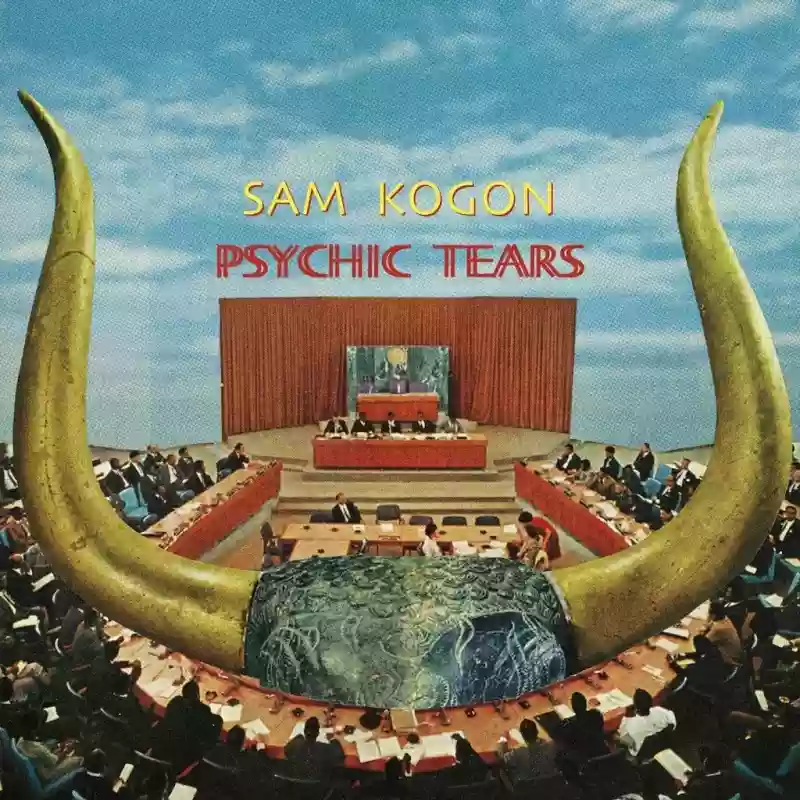
Clearly devoted to Brian Wilson and the Beach Boys and at the same time to an extravagant figure like Marc Bolan, Sam Kogon released one of the albums I'm listening to the most these days last October 2016.
Released by the mythical label Beyond Beyond Is Beyond Records, 'Psychic Tears' is a rock and roll and psychedelic pop album that flows down the listener's ear canals with the same ease as classic albums of the genre released throughout the sixties and seventies.
Coming from a family of musicians (his father played drums with the Thunderbirds, his uncle was Arthur Fiedler, the conductor for fifty years of the Boston Pops Orchestra), Sam Kogon was born and raised in New York but his main sources of inspiration come more from what was the American West Coast music scene.
The album, despite being released through a less promoted channel like Beyond Beyond Is Beyond, was actually produced by a well-known name in New York circles like Shazad Ismaily, known for having previously worked with artists like Tom Waits and Lou Reed, and later mixed by Gabe Wax (Here We Go Magic, The War On Drugs, Cas McCombs among others). A choice that, besides being truly convenient, is certainly also artistic in nature and justifies the clarity of the sound of this work, which is indeed necessary for the rendition of the vintage and baroque sounds of Sam Kogon's pop.
'Psychic Tears' is an album that undoubtedly looks to the past but also has points of reference in the present time if we think of artists like Jacco Gardner (the introductory 'march' 'Chunga & The Mookah's') or the latest Temples album ('I Don't Know', 'I Could Kick Myself'). It indeed has the same almost morbid curiosity towards that period, translating musically into solutions of stylized chamber pop while simultaneously being somewhat dreamy, depicting scenarios that seem to slip through our fingers in an explosion of colored clouds.
Most of the songs clearly directly reference the psychedelic pop and singer-songwriter music of the sixties-seventies. Artists like John Lennon and the Beatles ('I'm Letting Go', 'I Was Always Talking', 'My Love It Burns'), in addition to the already mentioned Brian Wilson ('Something's Wrong') and Marc Bolan ('Lincoln Lincoln'), with temptations to go further proposing a kind of singer-songwriter piano-song in the style of Rufus Wainwright ('Tonetta', 'The Way To Talk To Boys', 'I'll Be There').
Played and arranged with great style, within the album Sam Kogon demonstrates not only to have excellent abilities as a songwriter but also to be endowed with important vocal qualities and as a performer, which make 'Psychic Tears' a successful product worthy of a larger audience than it might initially seem destined for.
Loading comments slowly
Summary by Bot
Sam Kogon’s 2016 album Psychic Tears channels the spirit of 60s and 70s psychedelic pop with clear nods to Brian Wilson, Marc Bolan, and The Beatles. Produced and mixed by renowned artists, the album features vintage sounds blended with modern elements. Kogon’s songwriting, vocals, and performance skills shine, creating a dreamy, stylistic chamber pop experience. Despite its indie release, Psychic Tears deserves a wider audience for its artistic clarity and nostalgic yet fresh approach.Tracklist
01 Chunga & The Mookah's (00:00)
02 Work It Out (00:00)
03 I'm Letting Go (00:00)
04 Don't Know Now (00:00)
05 I Was Always Talking (Feat. Frankie Cosmos) (00:00)
06 Something's Wrong (00:00)
07 I Could Kick Myself (00:00)
08 Tonetta (00:00)
09 Lincoln Lincoln (00:00)
10 My Love It Burns (00:00)
11 The Way To Talk To Boys (00:00)
12 I'll Be There (00:00)
Sam Kogon
Sam Kogon is an American singer-songwriter born and raised in New York. His 2016 album Psychic Tears, released on Beyond Beyond Is Beyond Records, draws on 1960s–70s psychedelic pop and chamber pop influences. The album was produced by Shazad Ismaily and mixed by Gabe Wax.01 Reviews
