
 •
Rating:
•
Rating:
THE REVIEW
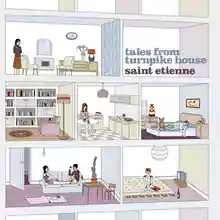
The ideal album against the stress of modern life! Reading it again, it sounds even more idiotic and garish than it already is, but the important thing was to start one way or another, several minutes spent staring at the blank page in search of something witty and brilliant to write, then suddenly, there was the illumination. I hope Bob Stanley, Pete Wiggs, and the splendid Sarah Cracknell won't hold it against me, as they certainly deserved better words, perhaps not extracted from a liquor advertisement, but after all, there's a reason if "Tales From Turnpike House" reminded me of that particular slogan: this is a concept album, a rather unusual concept as it does not draw inspiration from history or literature rather than cinema or science fiction, but from simple glimpses of everyday life. A normal day, a London apartment building and its residents. The nihilism of contemporary post-industrial society! No, perhaps it's better the depersonalization of the individual in a cold, chaotic, and technocratic metropolis! No, even worse, let's try the disorientation of the human being at the dawn of the III millennium... "Ah bello, stop that, it's better". Well, fortunately, you won't find any of these psycho-onanistic worries in "Tales From Turnpike House", indeed, observed from behind the lens of this fascinating and extremely refined kaleidoscope of sounds and atmospheres, even a difficult awakening, a breakfast, a stroll in the park, a quarrel between husband and wife become something dreamy, epic, and fairy-like.
Seventh album of Saint Etienne, TFTH marks a radical shift from the experimental ambitions and trip-hop influences of its predecessor "Finisterre"; a very happy choice at least for me, as folk contaminations and typically British-retro sounds resurface vigorously. By combining these elements with a solid and inspired dance-pop base, the final result is a sound that is creative, eclectic, and brilliant, rich but never opulent, similar to that of the beautiful and misunderstood "Tiger Bay" from '94 but with a lighter and more "poppy" approach. Concerning this latter aspect, part of the credit certainly goes to Xenomania, an English production team known mainly for having collaborated with artists not exactly of the highest quality, among them even both of the evil Minogue sisters, for the series making money is good but occasionally you also need to find some real gratification and follow your talent. The final result is a truly delightful album, able to entertain, amuse and surprise even the most distracted and casual listener: thanks to Sarah Cracknell’s enchanting voice, thanks to a sound that even in its simplest and danceable variations retains every ounce of elegance and distinctly British character.
The aforementioned Minogue sisters, especially that incorrigible sycophant full of "style" and affectation of Kylie, would pay exorbitant sums for the savoir-faire, grace, and charisma of Sarah Cracknell if it were only possible, songs like "Lightning Strikes Twice", "A Good Thing", and "Stars Above Us" theoretically could have also ended up in one of her albums, but the result would have been tomatoes and other vegetables as you like in the face, because talent cannot be aped even with all the money, producers, and technical means in the world, not even badly copying the approach and sounds. "Tales From Turnpike House" has much more to offer besides the stylish, brilliant, and chic electro/dance of these episodes, it's an album full of surprises, of intriguing and wily pop melodies such as "Relocate", a duet with David Essex that evokes a Bowie period "Hunky Dory"; ironic, playful and a bit scatterbrained or the grandiloquent and evocative magnificence of "Milk Bottle Symphony", which perfectly fulfills its role as the encore of the album by perfectly combining modern electronics and 60s stylistic canons, choirs, orchestrations, and an instant classic melody. Still on the subject of retro atmospheres, "Side Streets" offers a delightful beat/lounge relaxing and subtly affected parenthesis and "Last Orders For Gary Steed" a touch of tasty glam rock with lounge contaminations, while "Slow Down At The Castle" moves on more enigmatic and expansive territories, with a folk graced by almost medieval moods and a sinuous pace permeated with an atmosphere suspended in time.
The melancholic and very refined ballad "Teenage Winter", another masterful blend of modern and vintage, suggests that it is now evening, the day is about to end, and with "Goodnight" arrives a splendid a cappella closure, brief, original and fascinating. In these two and a half minutes is a bit of the mood and stylistic mark of "Tales From Turnpike House", an album rich, eclectic but of impeccable elegance and absolute lightness: never something that sounds even vaguely heavy, excessively baroque and ends itself. An original and captivating concept, perfect melodies interpreted by a fairy voice and, in the ultimate synthesis, the triumph of Good Taste, against the squalid imitations and... the stress of modern life. Cheers!
Loading comments slowly
Summary by Bot
Tales From Turnpike House marks a refreshing shift for Saint Etienne with a concept inspired by daily life in London. The album combines retro British sounds, folk elements, and dance-pop, enhanced by Sarah Cracknell’s enchanting vocals. Produced in part by Xenomania, it delivers creative and elegant melodies rich with variety but never heavy. The review praises the album's charm, originality, and ability to turn everyday moments into dreamy, captivating music.Tracklist Lyrics Videos
01 Sun in My Morning (02:41)
02 Milk Bottle Symphony (04:03)
04 Slow Down at the Castle (04:42)
07 Last Orders for Gary Stead (04:26)
08 Stars Above Us (03:23)
09 Relocate (03:08)
10 The Birdman of EC1 (02:45)
12 Goodnight (02:29)
13 You Can Count on Me (03:55)
14 Barnyard Brouhaha (00:57)
15 Let's Build a Zoo (02:34)
16 Excitation (02:09)
17 Bedfordshire (03:57)
18 Night Owl (02:04)
Saint Etienne
Saint Etienne are a London trio formed in 1990 by Bob Stanley and Pete Wiggs, later joined by vocalist Sarah Cracknell. They blend indie pop and dance culture with 60s-inspired elegance and electronic textures, earning a cult following with albums such as Foxbase Alpha, So Tough and Tiger Bay, and continuing with acclaimed works like Tales From Turnpike House and Words And Music by Saint Etienne.05 Reviews
