
 •
Rating:
•
Rating:
THE REVIEW
When talking about 1980s European thrash, as if by magic, a pleasant aroma of sauerkraut fills the senses, the sausage amiably extends a hand, and in our mind, the names of people like the "infernal triad" Sodom-Kreator-Destruction, the beer-loving Tankard, the funny Vendetta, Iron Angel, and those who were my teenage idols, Exumer, begin to echo.
Yet there's a piece of thrash history that smells of five o'clock tea, wears a bowler hat and carries an umbrella, and begs Odin for the queen to be saved. The 1980s were not an easy period for English metal: the first half of the decade was marked by the NWOBHM scene, which quickly vanished, with only a few elite surviving, while in the latter half, the Bay Area took over and Her Majesty's kingdom found itself somewhat overshadowed by the overseas fury. The credit for keeping up Anglo-Saxon honor and dignity, at least in thrash terms, should go to a few but fundamental groups, among which the historical Onslaught (particularly with their essential "The Force" from 1986) and, of course, Sabbat (not to be confused with the similarly named and nearly contemporary slant-eyed filthy ones who, if I remember correctly, were more directed towards death sounds).
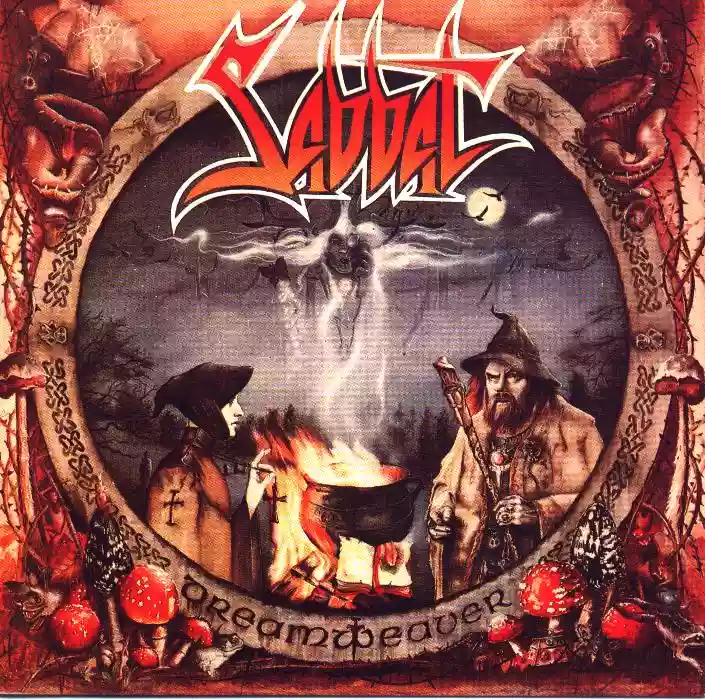
Sabbat was born in 1986 in Nottingham and found their creative fulcrum and true strength in the union between guitarist Andy Sneap (very young: he had just turned 18 when signing with Noise) and Martin Walkyer (who would later form Skyclad, much to the dismay of many "purists"). "Dreamweaver" is their second LP, from 1989, and represents the pinnacle of Sabbat's production. The band's intentions were already clear in their first album, the beautiful "History Of A Time To Come" (1988): uncompromising thrash, massive, powerful, and especially atypical, based on incredibly varied, sharp, and fast riffing, where solos were left in the background to make room for tight and aggressive rhythms and, above all, the possessed voice of the brilliant Walkyer.
Anyone who knows him solely for his work in Skyclad might be shocked: the Silvio Muccino of metal (let's not forget he has a lisp that would drive any speech therapist crazy) is unleashed here. The voice is furious, hysterical, totally possessed with intricate and incredibly refined lyrics, the result of a true mania for everything related to paganism and anti-Christianity (but, of course, never veering into satanism!).
What was proposed in the debut album is here slightly refined, with songwriting enjoying much more refined arrangements that however take nothing away from the aggressiveness of the compositions: sudden accelerations, continuous tempo changes, stop&go, sick melodies, rides with a vaguely epic flavor... every song seems to struggle to contain the compositional fury of the quintet...
And above all, Walkyer's voice and lyrics: the album is a concept based on Brian Bates' novel "The Way of Wyrd" (story of a young scribe seduced by the allure of pagan culture and practices in the pre-Christian Anglo-Saxon countryside), which becomes the starting point for the singer to vent all his vocal aggression, channeling it into lengthy, complex, and refined texts, but delivered instinctively and angrily, without ever resorting to screams or growls. "Dreamweaver" is a masterpiece: far from both the German thrash tradition and the Bay Area sound, it certainly requires multiple listens to appreciate every aspect and perhaps deserved a less muddy production (though if you listen to thrash, I believe you're accustomed to much worse atrocities.. "In the Sign of Evil" teaches..), but above all, it is the true and great testament of a band that would too soon leave the scene.
Legends narrate that Walkyer's obsessive passion for pagan themes was the source of internal conflicts following the release of this album: in 1990, the singer and bassist Frazer Craske left the band to form Skyclad, birthing the admirable "The Wayward Sons Of Mother Earth" (1991). An inglorious end awaited the remaining Sabbat: the subsequent "Mourning Has Broken" from 1991 is little more than a mediocre album that, leaving much of the malice that had characterized previous productions behind, ended up disappointing almost everyone.
Loading comments slowly
Summary by Bot
Sabbat's 1989 album Dreamweaver stands as a pinnacle of British thrash metal, blending aggressive riffs with intricate, pagan-inspired lyrics. The album's conceptual depth and the powerful, unique voice of Martin Walkyer set it apart from contemporaries. Despite its slightly muddy production, Dreamweaver demands multiple listens to appreciate its complexity. The album marked a high point before internal conflicts led to the formation of Skyclad and the band's decline.Tracklist Lyrics Videos
Sabbat
British thrash metal band from Nottingham, England, formed in the mid-1980s. Key members included guitarist Andy Sneap and vocalist Martin Walkyier. Noted for the albums History Of A Time To Come and the concept masterpiece Dreamweaver.02 Reviews
