
 •
Rating:
•
Rating:
THE REVIEW
Reviewing a film, how do you do it? A daunting task, perhaps, and then which film? Well...
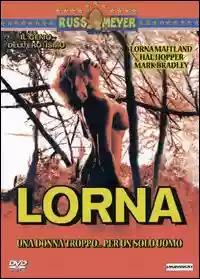
Finally, I manage to watch Lorna by Russ Meyer, the sexploitation director, the one who launched pinups, the most loved by feminists, etc., etc.
It seems ideal.
The film is from '64, and it's a sort of parable shot in black and white.
It all begins with a camera-car (which will inspire the dark roads of a certain David Lynch...) that crashes into an old preacher, the man delivers his curse, almost a warning against human corruption, and the scene shifts to a not-so-self-contained marital idyll, that is, the squalid and mediocre life of a married couple in a godforsaken hole.
Lorna, the sexually unsatisfied wife, meets by chance an intriguing convict and flirts with him without the slightest hesitation, taking advantage of her husband's absence.
The woman will repent only at the end, but death (portrayed by a figure with a scythe and black tunic appearing for a handful of frames) will come mercilessly to punish the adulteress.
It all ends with the moral of the old preacher.
The importance of this film lies in having proposed in the '60s a model of woman different from that accepted and validated by society. Sure, we're still far from the girl power of the busty heroines in Faster Pussycat Kill Kill by the same Meyer, but Lorna's character, who claims her sexual satisfaction and aspires to a better life in a decent place, is a beautiful destabilizing bomb at the phallocratic system of the time.
In this work, the director already shows an excellent mastery of the medium and anticipates some aspects of his lexicon that we will find in other of his films.
The use of the camera and the study of photography are already perfect, as is the choice of the characters of the actors and the settings, which is functional in conveying sensations to the viewer.
Old Russ, who died at 82, is definitely one of those men who left a mark.
To us.
Loading comments slowly
Summary by Bot
The review explores Russ Meyer’s 1964 film Lorna, highlighting its role as a pioneering sexploitation movie with feminist undertones. It praises the director’s mastery of cinematography and storytelling, portraying a provocative female protagonist who challenges the patriarchal system. The film is seen as both a moral parable and a visually compelling piece that influenced later work. Overall, it acknowledges Meyer’s lasting impact on cinema.
Russ Meyer
American filmmaker famed for sexploitation films featuring formidable women, kinetic editing, and desert backdrops. A WWII combat cameraman, later linked with Playboy, he also co-wrote Beyond the Valley of the Dolls with Roger Ebert. Died in 2004 at age 82.04 Reviews
