
 •
Rating:
•
Rating:
THE REVIEW
One of the most underrated rock albums is the right definition for 'Caress of Steel'.
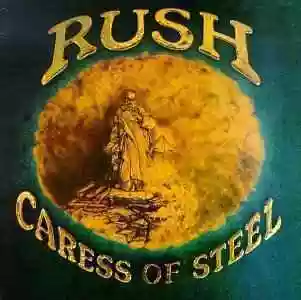
Released in 1975, it marks the boundary between the hard rock and progressive period of Rush. While elements like short songs with hard guitar riffs and vocals bordering on a scream still prevail, you can also notice the beginning of the first suites, whose listening is less immediate for those not accustomed to them. Perhaps this is why critics totally ignore it and the public tends to snub it, then as now. 'Caress of Steel' is still the least sold album by Rush. But why? Is it because of the unattractive cover? The fact is that it succeeds in reconciling two very different musical genres so well, that it naturally leads to a sigh of regret for the sad fate of this LP.
The musicians are in total harmony, with the excellent Neil Peart on drums, who also writes all the song lyrics and proves to be a good lyricist, Alex Lifeson on guitar more in shape than ever, and then the Colossus with a capital C, Mr. Geddy Lee, who with his granite voice silences everyone. Shall we speak of his majestic way of playing bass with extraordinary technique? A piece like Bastille Day is indeed compelling, a healthy slice of hard rock with countless overdubs, the result of considerable studio work, and a fantastic solo by Alex Lifeson. I Think I'm Going Bald represents the comic side that the band has always loved, as it narrates the (mis)adventures of a man going bald. The riff is simple but effective. Lakeside Park is one of the beautiful ballads typically Rush, where you are surprised how Geddy Lee manages to sing and play the bass lines at the same time. In the finale, we find the beautiful arpeggiated guitar with that effect that Alex Lifeson loves so much (and that we also hear in '2112'). The first side ends with the first suite in Rush's history: The Necromancer, a tale of a necromancer who enchants the lands with his dark power, as heard in the gloomy first piece Into The Darkness. Exceptional drum breaks in the piece Under the Shadow and Geddy breaks the speaker boxes with his voice, then the bass begins to travel, culminating in the concluding Return of the Prince, after the super-fast guitar solo. A bit like the Return of the King in the Lord of the Rings, the return of the prince marks the end of the black magic and the restoration of peace and prosperity in the enchanted lands, and the melody becomes more cheerful: arpeggio again, a symposium in music.
Side B: The Fountain of Lamneth divided into: - In The Valley, fantastic acoustic intro and main riff of the suite with the first prog tones. - Didacts and Narpets, fast virtuosity of Neil Peart. - No One at the Bridge, a great and suggestive slow piece with a quite remarkable melodic line. - Panacea, another fantastic acoustic interlude, tear-inducing. - Bacchus Plateau, the electric guitar returns and a new magic begins, great as always Geddy Lee. - The Fountain, grand conclusion, with a reprise of the main theme and a quiet ending with the acoustic. A suite worthy of the name, nothing more to add.
I give 'Caress of Steel' a 5 because it is perfectly played, because it's a beautiful album, because I'm a fan of Rush and therefore not very impartial and critical, because it's a pleasure every time to listen to it again, because I pity its sad fate but most of all I give it a 5 because I'm tired of the usual nitpickers who wrinkle their noses when I talk about it.
Loading comments slowly
Summary by Bot
This review praises Rush's 1975 album 'Caress of Steel' as a highly skilled but underrated work that sits between hard rock and progressive rock. It highlights standout tracks and the band's excellent musicianship, especially the drumming of Neil Peart and Geddy Lee's vocals and bass. Despite its initial poor commercial success and mixed critical reception, the album is seen as a compelling and enjoyable listen. The reviewer passionately defends the album against common criticism and values its artistic merit.Tracklist Lyrics Videos
Rush
Canadian trio formed in 1968, best known for blending progressive rock and hard rock across a multi-decade career; core lineup credited in reviews: Geddy Lee, Alex Lifeson, Neil Peart.46 Reviews
