
 •
Rating:
•
Rating:
THE REVIEW
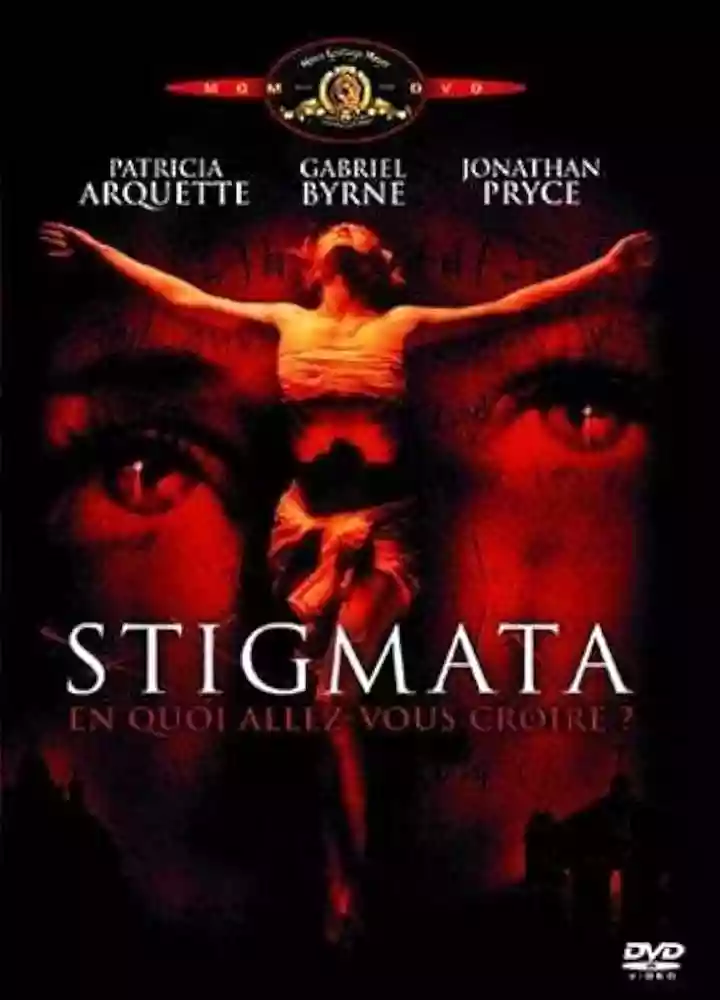
When you have the enticing opportunity to watch a film starring the likes of Gabriel Byrne and Jonathan Pryce, with a soundtrack curated by Billy Corgan, centered on the theme of the Apocryphal Gospels... well, you inevitably set some good expectations for yourself. And you get ready to savor almost two hours of storytelling with intrigued passion.
Only to almost immediately start to feel an inevitable idiosyncrasy towards a by-the-numbers direction, more suited to a commercial music video, filled with cloying clichés. Above all, considering it’s a film from 1999, it is imbued with a decidedly grotesque 1980s vibe.
Stigmata is a film directed by a not particularly famous director, released at a time when Western horror cinema was suffering from a lack of innovation; but supported by premises that make it at least worthy of a viewing. The parallel stories of a priest-scientist investigating seemingly miraculous phenomena and a hairdresser who becomes a sort of messianic messenger intertwine in a predictable way to give voice to some truths about the secrets of ecclesiastical power. A power that for two thousand years has tried to mystify and steer knowledge to its own benefit, hiding and stealing any reliable source that might reveal something different from the now-consolidated dogmatic doctrine.
The Apocryphal Gospels are not a fiction, and numerous essays, novels, and films have addressed them. Specifically, in Stigmata there is talk of a writing made in Aramaic by Jesus Christ himself, an original text that would call into question, if not completely topple, the entire theological and political structure of the Vatican and the Christian Church in general.
Gabriel Byrne, the priest with a scientific background, investigates and randomly encounters this carefree, atheist girl who, in a sort of divine possession, begins to display stigmata similar to those of Christ and to reveal passages from that autograph Gospel. In a mesmerizing and frenetic crescendo of dream sequences, slow motion, and strobes wavering between The Exorcist, The Hunger ("Miriam si sveglia a mezzanotte") and Flashdance, the final clash between the priest and the cardinal who is covering everything up finally frees the hairdresser from the nightmare of her revealing possession. And leads the protagonist in clergyman attire to physically find the artifact at the center of the story.
Personally, I lost the will for rational patience in watching the film after a third of the story. And even though I got to the end, I realized I had yawned and gotten distracted several times. It’s not necessarily a flaw for a director to make visual and narrative choices tied to past stylistic elements. Today, there are plenty of authors making films with features from the Silent Era or Italian Neorealism. By all means. But Stigmata really gives the impression of being a late-'90s film shot fifteen years earlier and released with considerable delay. The stylistic features used by the creators serve no real purpose in the narrative economy nor in seeking to influence the viewer.
I know some people consider it a small cult classic. Not me. Even the illustrious Pryce here seems like a fish out of water: an unconvincing, by-the-numbers performance, his character sketched over the stereotype of a clergyman intoxicated by power and lacking any empathy. But after all, even the other characters have no real depth, they just wear it... very thinly.
Disappointment, alas. Disappointment.
Loading comments slowly
Summary by Bot
This review takes a critical stance on Rupert Wainwright's album 'Stigmate', expressing disappointment with the overall quality. The reviewer finds the work underwhelming and suggests it does not meet expectations. The low rating reflects dissatisfaction with the album's execution. It serves as a warning for potential listeners who expect more from Wainwright.
Rupert Wainwright
Rupert Wainwright is a British film director known for directing the films Blank Check (1994) and Stigmate (1999).02 Reviews
Other reviews
By Hellring
This Stigmate leaves you puzzled by the theses it tries to develop and then leaves halfway.
Patricia Arquette manages alone to keep the film’s fate high, while the other actors seem quite bland and lack pathos.
