
 •
Rating:
•
Rating:
THE REVIEW
Once upon a time... There was a duo formed by Per Gessle and Marie Fredriksson called Roxette. The wild fans of the '80s will remember them well: two young Swedish pseudo-rockers with a motorcycle mania who burst into the music biz with the huge hit single The Look, a song that everyone (or almost everyone, I believe) knows and hums while going about their tasks, perhaps in the shower. A massive success, even in the stern and picky United States, which rewarded Roxette in 1989 with a #1 on the Hot 100 and allowed their second album Look Sharp! (the first work, Pearls Of Passion, had received positive feedback at home) to achieve staggering sales. A more than satisfactory trend that continued and even improved with Joyride and the singles extracted from this work.
Unfortunately, the wave of acclaim began to decline with Crash! Boom! Bang!, then became fleeting with Have a Nice Day and Room Service. A negative phenomenon that also affected their own musical quality: from the (almost) powerful rock of The Look and Sleeping In My Car, Gessle and Fredriksson opted for much more commercial, pop, and danceable sounds (especially in Room Service) light-years away from their original style. Moreover, a tragedy struck the group: Marie Fredriksson, following a serious fall, discovered she had a malignant brain tumor. Operated on a month post-trauma, she underwent a series of chemotherapy and radiotherapy, despite having suffered permanent damage to her nervous system.
Now Roxette, although almost inactive, have decided to re-engage their musical path, giving some live performances, recording new material, and proposing a second collection of greatest hits (A Collection of Roxette Hits: Their 20 Greatest Songs!), released in 2006.
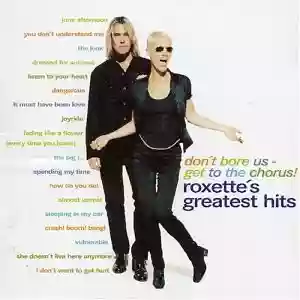
In 1995, Roxette decided to recap the first phase of their career with the best of Don't Bore Us - Get To The Chorus!, containing 14 hits and a good 4 new tracks. A collection that contains the best of the best of the Swedish duo: from the rocking and very '80s The Look, their flagship song, it transitions to the famous "It Must Have Been In Love", a track that had already been proposed long before the cult film Pretty Woman launched it definitively.
Convincing guitar riffs (perhaps not comparable to the sacred monsters of rock that I do not intend to list in this review) are also present in hits like "Sleeping In My Car", "Joyride", "Dangerous", "How Do You Do", the latter included in the album Tourism, a mix of songs recorded in the studio and live tracks from their most successful tour, the Join The Joyride World Tour.
But Roxette are well beyond rock, even with some splashes of country: there are ballads that I find particularly deep and emotional, intense and melodic, a characteristic that gives the mini-band a rather vast and varied repertoire. Not particularly the already mentioned and overly praised "It Must Have Been In Love", but rather "Fading Like A Flower (Every Time You Leave)", "Vulnerable", "Almost Unreal" (original soundtrack of the film Super Mario Bros.), "Listen To Your Heart" and especially the splendid (naturally according to my point of view) "Spending My Time". A precision: all these ballads are vocally performed by Marie Fredriksson, while the more rocking tracks are sung by Per Gessle. But naturally, there are exceptions: the wild and very rock "Sleeping In My Car" is sung by Fredriksson. A ballad tending towards folk and country is "Crash! Boom! Bang!", from the album of the same name, despite the title suggesting a more "explosive" track.
The Roxettian scheme of the semi-(pop) rock and semi-ballads repertoire is perfectly symmetrically respected in the 4 new tracks: "June Afternoon" and "She Doesn't Live Here Anymore" represent the rock vein of the duo, presented particularly (and in these two tracks perfectly) by Gessle while conversely, "You Don't Understand Me" and "I Don't Want To Get Hurt" embody the melodic structure of the ballad, performed by Fredriksson. Here the rock-ballad match ends with a 0-2 in favor of the latter, much more convincing and musically valid than the former. In fact, the rock of "June Afternoon" and "She Doesn't Live Here Anymore" appear too weak and too predictable; they are songs that would be perfect as the soundtrack for TV shows like Dawson Creek and O.C., tending towards a rough country of the Wild West prairie.
A collection quite heterogeneous from a musical point of view (given the pop-rock and ballads dialectic, as already analyzed), not for that reason valid and positive, especially considering that it collects the best of Roxette before they devoted themselves to the dance-pop of Room Service and thus emphasizes, according to my personal opinion, the original and founding sound of the duo. Recommended to the many '80s nostalgics and those who wish to begin delving into the "Roxette" discussion.
Loading comments slowly
Summary by Bot
This review explores Roxette's career highlights collected in the album Don’t Bore Us - Get To The Chorus!, showcasing their blend of 80s rock and melodic ballads. It reflects on the duo's rise with major hits like The Look and It Must Have Been In Love, and touches on the challenges they faced, including Marie Fredriksson's illness. The compilation honors their original sound and is recommended for 80s music fans and newcomers alike.
Roxette
Roxette were a Swedish pop-rock duo formed in 1986 by Per Gessle and Marie Fredriksson. They broke through internationally with The Look and followed with hits like Listen to Your Heart, It Must Have Been Love, and Joyride. After Fredriksson’s brain tumor diagnosis in 2002, the duo gradually returned to recording and touring, releasing late-career albums including Charm School (2011) and Good Karma (2016). Fredriksson died in 2019.05 Reviews
