
 •
Rating:
•
Rating:
THE REVIEW
Born under the sign of musical isolation, in Greece at the end of the eighties, which corresponded to a sort of third world of heavy metal, Rotting Christ managed to emerge with their own style that allowed them to build a long career and also to kickstart a national music scene, that of Hellenic black metal, wrongly overlooked.
Far from the cold winds of the north, which blew relentlessly over Norway and Sweden, where the dark flame of black metal was beginning to burn, along with other well-known events, in sunny Greece, the Tolis brothers' band created their music by intensifying what Celtic Frost and other pioneer bands of those years had expressed so far. The result is a highly invigorated thrash metal, with particularly squared and martial rhythms, accompanied by the aphonic screaming of Sakis Tolis, in which a shy melodic vein is nevertheless present, which would later prevail starting from the gothic turn in the mid-nineties. So, no icy and piercing riffs, no ultra-murky production like we locked ourselves in an abandoned shed in a forest in the middle of winter to record our evil masterpiece, no atmosphere of a dark forest where the aforementioned shed is located, and, as far as I know, not even any corpse paint. Essentially, no true Norwegian black metal.
But a lot of epicness and, in a certain sense, even majesty.
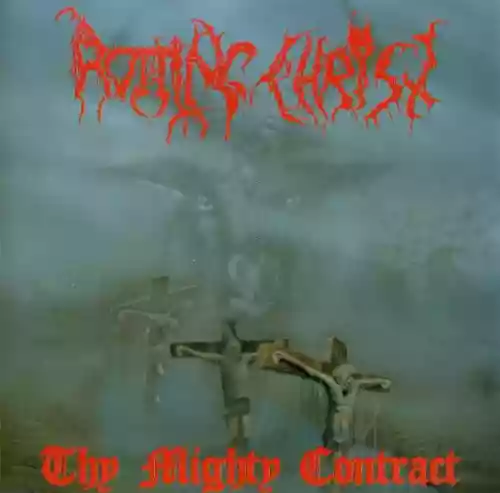
Just listen to "Transform All Suffering into Plagues", from the debut "Thy Mighty Contract" (1993) to confirm it.
However, it must be said that despite the group being geographically cut off, the black metal talent scout Euronymous had noticed them and wanted to sign them to his label, but nothing came of it due to an unexpected turn of events. An unexpected event named Burzum.
This did not prevent Rotting Christ from making their mark on the history of metal and inspiring numerous fellow country bands, among which the most noteworthy are Varathron, Thou Art Lord, and Necromantia, in what can be considered the Mediterranean response to the spread of Nordic black metal.
Loading comments slowly
Summary by Bot
Rotting Christ emerged from Greece in the late 80s with a unique style that shaped the Hellenic black metal scene. 'Thy Mighty Contract' blends thrash metal vigor with epic, martial rhythms, diverging from Nordic black metal's cold atmosphere. The album is influential and recognized despite geographic isolation. It inspired many Mediterranean bands and marked an important chapter in metal history.Tracklist Lyrics Videos
Rotting Christ
Rotting Christ is a Greek extreme metal band formed in Athens in 1987 by brothers Sakis and Themis Tolis. Early releases like Thy Mighty Contract (1993) and Non Serviam (1994) helped define Hellenic black metal. The band later integrated gothic and melodic elements (e.g., Triarchy of the Lost Lovers, 1996) and pursued an epic, myth-infused direction on Theogonia (2007) and Aealo (2010).05 Reviews
