
 •
Rating:
•
Rating:
THE REVIEW
I can't honestly say they are a great band in an absolute sense, once you've listened to one of their albums, you've listened to them all, more or less. It's not always easy to maintain high levels of freshness and inspiration when you are part of a musical subgenre with very clear and codified boundaries. But their formula works beautifully, especially in this debut album. I'm talking about Rotersand, a German trio offering solutions that I particularly enjoy, namely electronic music that also performs well outside of the dancefloor context; their specific futurepop, an EBM enriched with techno and new wave influences with a dash of electroclash, is particularly enjoyable to me. A powerful, direct, and intensely charged style without pseudo alternative, trendy, or hipster nuances, with plenty of adrenaline, a touch of healthy brashness, but also darker and reflective moments. To make a slightly dramatic comparison and to brutally oversimplify, one could say that Rotersand vaguely resemble Depeche Mode with quite a bit of spice and a significantly less showy and self-centered singer, thankfully.
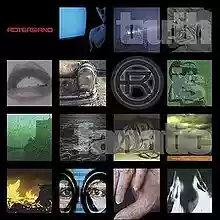
"Truth Is Fanatic," the debut from 2003, is the synthesis of their style and an album truly well-made, muscular and fiery as I like it, slightly acidic at times but never excessively heavy or redundant, perfect for those who love strong and decisive flavors; bombardments of synths, lascivious voice, a wonderful atmosphere of decadent solemnity, industrial beats, and jarring orchestrations intertwining in an exhilarating sound tapestry. The sumptuous "Merging Oceans" with its seven and a half minutes of elevation and spatial trip atmospheres with a surprise tempo change is its stylistic apex, the hedonistic and paranoid acidity of "Electronic World Transmission" and the sick mantra of "Social Distortion" pulse in your head which is a pleasure, and when faced with the basic stimuli of a sizzling "The Fire" or the steroid-treated synth pop of "Content Killer" one can only surrender, hands up and let go. About halfway through the album comes "One Level Down", an unexpected semi-acoustic ballad with intimate tones, a type of song that, with a much more banal arrangement and perhaps sung by a raspy-voiced Eddie Vedder lookalike, could be a decent hit for any post-grunge band aimed at hyped-up teenage girls tired of the usual boy bands but the effect is nonetheless very pleasant, a demonstration of how it's sometimes the underlying "spirit" that makes a song beautiful rather than its intrinsic value.
"One Level Down" marks a turning point in the flow of the work, from here on the rhythms become less frenetic, and after the great display of style and strength of "Merging Oceans", the atmospheres thin out with "Lifelight" and "Move On", mid-tempos characterized by dark atmospheres and introspective lyrics; and after the amplified Moroderian groove touches and go of a mercurial "Sonic Agony", it closes with "Hush", a brief and languid farewell that sounds almost comforting, "it was just a bad dream, now it's all over", seems to be the message of this soothing outro, a bit ironic after hitting the listener with such heavy artillery. This collection of vaguely dystopian-sounding tunes, with a particular emphasis on the weaknesses of the human psyche, has many distinguished inspirations and putative fathers: Prodigy, KMFDM, early Oomph!, Gary Numan, some reminiscences of the Christian "Flake" Lorenz period 1995-1997, the more extravagant Information Society, Giorgio Moroder's visionary grooves rather than Patrick Cowley; overall, the only album by Rotersand truly successful and effective in its entirety, a quality product and an album always effective, intense, and "on point", enough for a well-deserved, widely positive judgment.
Loading comments slowly
Summary by Bot
Rotersand's debut album Truth Is Fanatic delivers a powerful blend of futurepop, EBM, and techno with a raw yet refined style. The album balances energetic tracks and darker, reflective moments. Standout songs like 'Merging Oceans' and 'One Level Down' showcase its depth and variety. Despite the genre's constraints, the band’s formula works effectively, offering a consistently intense and well-crafted listening experience.
Rotersand
Rotersand is described in reviews as a German trio producing futurepop/EBM with techno and new wave influences. Their debut album "Truth Is Fanatic" (2003) is singled out as a stylistic synthesis.01 Reviews
