
 •
Rating:
•
Rating:
THE REVIEW
No, Henry Rollins is not for everyone. He's a damn difficult guy. He's excessive. He always has been, from the days when he was a skinny long-haired young man writhing on stage with the Black Flag of the hated Gregg Ginn to this kind of cross between a shaven-headed Tibetan monk and a square-jawed Marine sergeant. He's not the one who's changed, maybe it's us who have cautiously approached this animal curled up inside an impressive body covered in tattoos, ranging from the darting snake on the ankle to the unsettling eye behind the skull. A body that can disconnect the tiny earpiece that links him to the outside world to concentrate before the explosion. Those who have had the fortune to attend a Rollins concert know very well what it means to be overwhelmed by an explosive manifestation of the force of nature, if someone were to connect an electric cable deep into his ass, he could light up any damn metropolis.
At some point in his history, this inaccessible man decided to express himself as a poet, as an actor, and to continue as a singer. But already in 1990 with "Hard Volume," Henry Rollins proves that by now he is no longer as fast as hardcore requires, yet he's not even shitty when it comes to hard rock at moderate tempos. Take this 1997 album, remove Rollins and then the majestic trio that accompanies him might seem like Led Zeppelin lost in the primordial soup or Black Sabbath pushing their obsession with heavy riff to the limit. But there's Henry, suspended between reading and singing: his voice, which dominates the electronic wind blowing at the start of the opener "Shame" among the torrid and classic hard riffs, makes the difference! The apocalyptic sound wall raised by the drumming rhythm of the loyal Sim Cain and the new impressive bass work of former Defunkt Melvin Gibbs (who had made the previous album "Weight" metal-jazz) well illustrates the descent into hell of pieces like "Starve". Elsewhere ("The End of Something") Rollins manages the absurd operation of seeming a sinister crooner that takes advantage of Melvin Gibbs' funky heritage to whisper "...touch your fear, don't be scared ...it's just the end of something, it's so cold ...it's the end!". The work of the three musicians with Chris Haskett on guitar is hard perfection! When they push the pedal to the metal like in "On My Way to the Cage", they risk breaking your neck for the headbanging you're forced into. The insurmountable barrier they construct around a piece of technical perfection like "All I Want" is only broken by Rollins' filtered voice climbing to its summit to launch into the void.
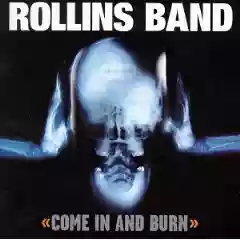
He could have taken advantage of the success of "Weight" from three years before, yet he waited until 1997 to let us in his new album and burn. "Come in and burn" may not be among his masterpieces, but you can bet that Charlie Manson's friend put in all the hate he's capable of: "... I talk and sing about myself because I'm the only person I know, I don't write protest songs about Central America, I've never been there."
And Rollins doesn't need to wield spiked clubs or impale Nazarene figures to gain respect, all he needs is a pair of underpants. He's the hero we might absurdly think to call for help when the upcoming apocalypse of our ambiguous conscience begins to overwhelm us. He's the upright knight whose hand we would reach out to while we flounder amidst the eddies of contradiction that will lead us to score a 1 for consistency.
The beauty is that he will refuse it.
Epilogue: Hey, and the DeGenres?
"I know where you're going and I hate those kinds of questions. My music has no labels, tags, or damn definitions. I hate definitions. In my music, there is every genre of music, just like the records I listen to. I keep asking myself why there's a need for these kinds of classifications. Listen to me and have your own experience. After that, you won't need labels anymore."
Loading comments slowly
Summary by Bot
The review praises Rollins Band's 1997 album Come In and Burn for its raw energy and complex sound. Henry Rollins' intense and unique vocal delivery elevates the music beyond typical hard rock. The band members contribute powerful riffs, inventive rhythms, and technical prowess. Although not considered a masterpiece, the album embodies authentic emotion and artistic defiance. Rollins rejects genre labels, encouraging listeners to form their own experience.Tracklist Lyrics Videos
Rollins Band
Rollins Band is an American rock group formed in 1987 by vocalist Henry Rollins after Black Flag. Known for a hard rock/post-hardcore core with funk and jazz inflections, they cut defining albums like The End of Silence and Weight, toured ferociously, and shifted lineups through the 1990s and early 2000s.08 Reviews
Other reviews
By cretinalbo88
"Rollins knows how to flex his muscles very well in the music while leaving room for the mind in writing the lyrics."
"The guitar follows precise and sharp riffs... the voice in Rollins' classic spoken style follows higher notes as the songs burst."
