
 •
Rating:
•
Rating:
THE REVIEW
Uh-oh! We have been informed that this review also appears (in whole or in part) on rockshock.it
The new wave of Zach Rogue has landed in "Napoleon Dynamite." The project is not explicitly nerdy or youthful, like the recent MTV-promoted film, but the Oakland composer deeply understands the dynamics of provincial life, albeit Californian, marked by a faint, insinuating, and retro lyricism.
After previous musical experiences, Rogue forms "his" true band, and with the contribution of self-ironic and carefree multi-instrumentalists (Spurgeon, Le Bron, Farrell), he creates "Out of Shadow," a series of flashes of light extracted from the gaseous, omnipresent, and still explorable material of the '60s: tones leaning towards the major, phrases between singer-songwriter tradition and folk, happily muffled arrangements. The typically adolescent journey into non-existent oases, perhaps never existed, is unveiled in the second long-playing record, unraveling while claiming descending scales and gloominess.
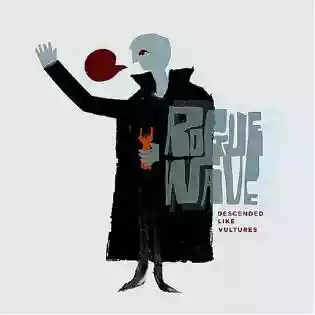
The cover already diverges from pop madness, anticipated in the bold, black line, by that hand with the bloodied finger of a starter single CD from a few months ago ("10:1"). The undertaker-vulture pronounces unexpectedly dense smoke clouds, descends on the almost institutional simplicity of guitar solos, overturns the sense of nursery rhymes and recalls the function of the choirs: similar to that denaturation of the Beach Boys' weave that Brian Wilson carried out last year. They are choirs (not always vocal but ideal) echoes of the moorland/prairie/beach, phantom warnings that descend on consciences from trees and hills to unfold the slumber of the innards of America. If the harmonic openings still dominate "Bird on a Wire" and "Publish My Love", the enveloping dark humor is unleashed in the subsequent tracks to testify to the gap between the noisy world and the intimate world of Rogue Wave, the chasm that the frontman himself admits exists: between hope and reality.
Before the diaristic closure, there is time for the instrumental fullness of "You", reconciliation after the chaotic central experience of "10:1", piano, and synth in cells for a crescendo trance.
(3/1/2006)
Loading comments slowly
Summary by Bot
Rogue Wave's album 'Descended Like Vultures' channels Californian provincial life through retro lyricism and softly intricate indie folk sounds. The band, led by Zach Rogue, combines folk traditions with harmonic, gloomy elements to explore themes of hope versus reality. Instrumental passages and rich arrangements add depth, reminiscent of 60s influences and Brian Wilson’s harmonic textures. The album balances introspective storytelling with atmospheric moods, resulting in a compelling second release.Tracklist Lyrics Videos
