
 •
Rating:
•
Rating:
THE REVIEW
I don’t know much about recent Rod Stewart, my knowledge of his discography stops at 1972, when "Never a Dull Moment" was released. I just know that from then on he was more concerned with filling up his wallet than producing quality music. However, I know that up until 1972, through his time with the Jeff Beck Group, the Faces, and the first part of his solo career, he was able to create exceptional works, relying on his extremely captivating and distinctive raspy voice, bordering on hoarse.
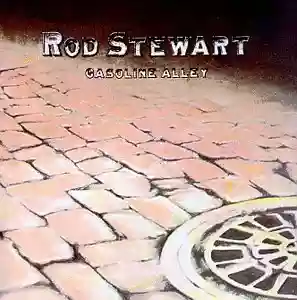
Between 1970 and 1972, as a solo artist, he managed to deliver a triple threat of albums that are simply mouth-watering, all based on the same winning formula: mixing original pieces with classy reinterpretations of other people's songs. "Gasoline Alley" is the first link in this chain, completed by "Every Picture Tells a Story" and the aforementioned "Never a Dull Moment".
Accompanying him are members of the Faces, along with other musicians, who provide Rod's charismatic voice with extremely effective support, where, apart from a couple of instances, it’s the great work of acoustic guitars that takes center stage, intertwining in a consistently perfect manner, managing to create multiple sound nuances that make for a very enticing and satisfying listening experience for those who appreciate a certain type of atmosphere. Adding to the enjoyment are the massive contributions primarily from slide guitar and piano, as well as organ, mandolins, and strings, which help to create a dense and intricate sound texture with a touch of "Rolling Stones' inspiration".
"Gasoline Alley" is an album to be relished, flowing with enviable ease, where right from the eponymous opener, in which acoustic guitar chords create a backdrop for Rod's voice doubled by two electric guitars, eventually joined by a mandolin, it’s clear that you’re dealing with an album of extremely high quality. This notion is reinforced by the lengthy "It's All Over Now", one of the Rolling Stones' early hits, presented here in a riveting version where piano and slide guitar shine, as well as by the personal reinterpretations of "Country Comfort", from Elton John’s monumental "Tumbleweed Connection", and "Only a Hobo" by Bob Dylan, the country-folk song enhanced by a pounding bass in "Cut Across Shorty", enriched by a central solo played on a very gritty violin, and the other two Rod-penned pieces, also with a strong acoustic signature, "Lady Day" and "Jo's Lament". And with the closing electric track "You're My Girl (I Don't Want to Discuss It)", there's something for those who love raw and unadulterated rock too.
Perhaps not Rod Stewart’s absolute best album (the following two have something extra that elevates them to levels of absolute excellence), but still a great work, in which the English singer demonstrates his enviable class, a product of already consolidated experience despite his young age, and a healthy spontaneity that might become elusive in the future.
Loading comments slowly
Summary by Bot
This review highlights Rod Stewart's 1970 album Gasoline Alley as an exceptional early solo record, emphasizing its rich acoustic guitar work, varied instrumentation, and strong covers. The album is praised for its atmosphere and the charismatic delivery of Stewart’s distinctive raspy voice. While not rated above his subsequent two albums, it is still regarded as a high-quality and rewarding listening experience.Tracklist Lyrics Videos
