
 •
Rating:
•
Rating:
THE REVIEW
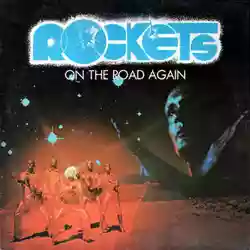
Perhaps more similar to a freak show phenomenon than a rock band, the Rockets released their second album in 1978: "On the Road Again" would be a great success in Europe and particularly in Italy. The famous blues-rock track by Canned Heat, year 1968, is reinterpreted in a "space" key with hammering synthesizers and vocals filtered through a vocoder, and it gains in rhythm and power. The French group's bold, even silver-faced, stance, but this cover version works, indeed.
The rest of the album is instrumental, except for the last track. "Cosmic Race" and "Venus Rapsody" have a strong melodic character entrusted to the keyboards, while in "Space Rock" (a title that says it all) the electric guitar modified with the talk box effect is heard again. But let's return for a moment to "Venus Rapsody": it could easily be part of Genesis's "Wind and Wuthering," just as certain passages of "Astrolights" seem borrowed from the instrumental solos of "Nursery Cryme." The Rockets as a progressive band? But weren't they a freak show phenomenon?
"Electro-Voice", instrumental with a sung part, reflects the influence of Kraftwerk. Finally, the conclusion is entrusted to "Sci Fi Boogie," where the voice returns (without vocoder) in a wild science fiction boogie with electric guitar and drums in the foreground.
Stylistically very different from another French band active in the '70s, Magma, these two bands take the same space journey but in opposite directions: dissatisfied earthlings, Magma invent a remote planet - Kobaïa - and make it the promised land of their utopia; meanwhile, the Rockets come from space - they don't tell us from which planet - and seek on Earth, on the road, their legitimization. Shaved skulls, silver makeup on their faces, concerts based on laser shows: perhaps, more than a freak show phenomenon, the Rockets were indeed a (space) rock band.
Loading comments slowly
Summary by Bot
Rockets' 1978 album 'On the Road Again' is a standout space rock record marked by synth-driven sounds and vocoder vocals. The highlight is a bold reinterpretation of Canned Heat’s classic blues-rock track, elevated with a futuristic twist. Instrumental tracks showcase melodic keyboards and guitar effects with progressive rock hints. The band's theatrical image and stage presence add to their unique identity, distinguishing them from contemporaries like Magma. This album captures a cosmic yet grounded musical journey.Tracklist Lyrics Videos
Rockets
Rockets covers two distinct, publicly documented bands: the French space‑rock/electronic outfit known for silver makeup, lasers and vocoders, and the Detroit hard‑rock group centered on guitarist Jim McCarty and drummer‑singer John Badanjek. Both were active mainly from the late 1970s to early 1980s and are well represented in DeBaser’s reviews.10 Reviews
