
 •
Rating:
•
Rating:
THE REVIEW
We are people who dig through the rubble, in search of something that has been irretrievably lost. Dust seems to envelop everything that remains on the surface. And of what we were, only a faded memory remains.
I realize that I'm getting older when, with few exceptions, I can no longer find in modern music the emotions I've always been seeking. Perhaps it's the frenzy of these times that subjugates us. Or maybe it's us who are losing step. It's probably both.
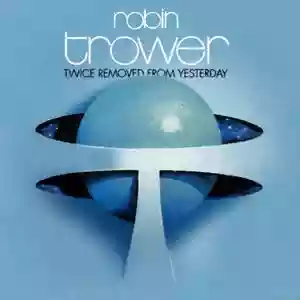
But when I pick up certain records, I understand that it's also a matter of sound. And "Twice Removed from Yesterday" smells of that blues that disinfects every wound, of those saturated tube sounds that the digital era cannot bury.
In Procol Harum, he was a paler shade of white and his guitar was inevitably submerged by cascades of keyboards. That was evidently not the true nature of our Robin, who in the seventies would reinvent himself artistically and become an icon of rock blues. The white Hendrix, as he would often be dubbed.
The comparison is a bold one and probably not even the most fitting. Trower does not possess the wild impetuosity or the audacity of the Seattle genius, but as an admiring Robert Fripp would later assert, "he is one of the few English guitarists who are absolute masters of touch and expressiveness."
The Robin Trower Band, propelled by the backwash of late-sixties rock, debuts in 1973 with this still unripe record. It would take another year to refine the formula and produce the exhilarating "Bridge of Sighs," the pinnacle of their career, but already the trio of songs that opens the show is quite a calling card.
The liquid and sinuous flow of "Can't Wait Much Longer," with its irresistible refrain, sets the stage for the splendid ballad "Daydream," where Trower takes flight on that small Hendrixian wing that would become a constant point of reference for music critics. "Hannah" is the last piece of the triad, beginning with a measured rhythm before exploding like a whip in the central instrumental part.
A special mention finally to the late James Dewar, the band's sublime singer (and bassist), endowed with a voice of imposing masculinity and vocal cords that are the vibration of the soul, at times reminiscent of vintage Paul Rodgers.
The rest of the record is excellent craft. Trower often plays with a rich tone, combined with a skilled use of vibrato, releasing the reverb of his Stratocaster to conquer the sound spaces. The sensation is always that of hearing the right notes in the right place. And therein lies his true mastery.
We are people who dig through the rubble. And nothing is like what we were yesterday. Ask the dust.
Loading comments slowly
Summary by Bot
This review reflects on Robin Trower's 1973 debut album 'Twice Removed From Yesterday,' highlighting its blues rock roots and masterful guitar work. The album showcases Trower's rich Stratocaster tone and the soulful vocals of James Dewar. Though less refined than the later 'Bridge of Sighs,' it sets a foundational sound that captures an emotive, timeless quality. The reviewer connects personally with the album's authentic expressiveness in contrast to modern music.Tracklist Lyrics Videos
Robin Trower
British guitarist and songwriter, famed for his expressive Stratocaster tone and blues‑rock phrasing. After 1967–1971 with Procol Harum, he launched the Robin Trower Band, achieving major success in the mid‑1970s with Bridge of Sighs. Known for collaborations with vocalist/bassist James Dewar and later projects including albums with Jack Bruce.05 Reviews
