
 •
Rating:
•
Rating:
THE REVIEW
Vecchioni is the most cheerful singer-songwriter, annoyingly optimistic, yet irresistible. A friend and nemesis of the gloomy and morbid Guccini, we have rarely tasted his despondency; memorable is the one in 'L'ultimo spettacolo' (for many, one of his most beautiful songs), where an autobiographical story, paralleled with a warrior's journey for war and absence from home, cannot resolve itself in a 'flash of incurable smile' that often closes the professor's songs — a mocking smile, never cynical, in the face of doubts and earthly hardships and the others, which explains how alongside fear, there is always courage.
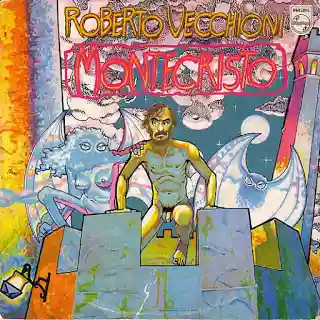
The aforementioned song not only marks an unprecedented gloom, to which he did not want to succumb even with the death of his father ('Per un vecchio bambino' is anything but mournful, even if it makes you cry all the same), it begins to insert his personal story into his work; a story that culminates precisely in 'Montecristo,' the account of the end of a love story that we had already encountered in many previous songs.
Thus we talk about an atypical, beautiful album that doesn't seem to take itself seriously, insists on playing, on a missed love it would like to parody but is instead a clear description of.
Therefore, it's a 'city without women' that we set off towards this time, a city different from that of Vecchioni's already rich geography precisely because it's without women, and one would wonder 'what will he talk about now that there's no woman to put him through all sorts of colors?' In reality, the story is anything but left behind; it will happen with 'Hollywood Hollywood,' and it's regret and bitterness that fill the album.
Above all, the absence, the distance, but at times also the escape from an already finished and sterile situation.
In 'La città senza donne', we feel the desire to start over, to get back in the game (personally, I believe it's just a pretext), the bitterness of a love that now, for better or worse, is only 'a shadow on the heart, silent and light...but I'll sleep on it', it won't be easy to actually fall asleep on a ship that's, deep down, known to be going nowhere, no one, especially he, wants to truly go towards a 'city without women'.
'L'anno che è venuto' is the core of the album, the clearest and perhaps devoid of sentimental corruptions; in this period indeed, the professor alternates songs like "I miss you, I'm sad!" to those "you left me but whatever, I'm cool!", here instead is clear-headed, reflecting on the past year: the story ended, the woman left, yet the poet is too young to feel alone (note the double citation Dalla - De Gregori), but there’s no lack of resentment and bitterness "...and thinking about it carefully, then perhaps I don't love her", i.e., the doubts, indeed, the difficulty of getting back in the game by abandoning a great sentimental security.
Finally, I highlight the most Vecchioni-like track of this amazing LP: the ovation of 'Canzone da lontano', a very sweet song to his daughter, she too will have to be left behind, but how to explain to her that there's no place even for her in a 'city without women'?
"...and when I hear you say 'hurry up, I'm waiting for you!'
when I know you think of me, going to bed
it's not far, this far away..."
Loading comments slowly
Summary by Bot
Roberto Vecchioni's Montecristo album showcases his signature blend of optimism and melancholy through personal, poetic storytelling. The album explores themes of love lost and emotional resilience, with standout tracks like 'L'ultimo spettacolo' and 'Canzone da lontano.' It offers a mature, bittersweet reflection on relationships and solitude, maintaining Vecchioni's characteristic warmth and intellectual depth.Tracklist Videos
Roberto Vecchioni
Roberto Vecchioni is an Italian singer-songwriter and former high-school professor whose work combines literary references, myth and intimate storytelling. Active since the mid-1960s, he is best known for songs and albums such as Samarcanda and Elisir.42 Reviews
Other reviews
By Pibroch
"The City Without Women" is a touching tribute to the quintessential muse for the artist.
"Maybe you should have made me be born old, so I could slowly become a child: I would have had fewer shadows to fear at night and more desire to wait for the morning."
