
 •
Rating:
•
Rating:
THE REVIEW
Eh, no, dear professor, this time we missed the mark.
And this time, dear professor, it's us who are making a note in the register for you.
Yes, because this work was sold to us, in a typically deferential interview, as a child of courage, a dangerous but grandiose incest between singer-songwriter music and classical music, the result of laborious collaborations, study, and even fun.
Who knows what it is, I said to myself, starting - poor deluded soul... - to enjoy it.
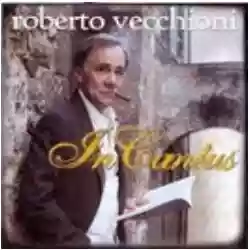
And indeed, the cover looks promising. I confess my old weakness for the professor with the incredibly warm voice and fabulous pen. A slightly more studious (and perhaps a bit less brilliant?) Cohen whom I have always followed with infinite affection. But, as we know, covers are meant to be turned. And in front of certain tracklists, one might even feel unwell.
But how: a big collection with the usual three, four new things...?
I listen: here, there are piano and orchestra, and some pieces are taken from more or less famous classical arias, revisited and sung by Our Maestro. For the rest: repertoire.
Oh dear.
In detail: the orchestra obviously plays well, as you would expect..., the piano is decidedly top-notch. What doesn’t work, unfortunately, is Him: he sings with mannerism (the signs have been there for a few albums...), the vibrato in his voice has increased, and not for the better (a typical effect also of age, whether intentional or natural...), and our professor, here, is not perfectly in tune.
Even in the old live with the (more or less) jazz trio, some errors were audible, but here, combined with studiousness and the cold perfection of an orchestra, it is at times really overwhelming.
Then, of course, one cannot ignore the supreme uselessness - Christmas-themed... - of the work.
There are so many versions of certain songs that you lose count (originals, re-recorded, with guests or without, with the jazz trio, with the orchestra... what a pain... should we expect, next, Vecchioni with triangles, with Bulgarian choirs, with the Alpini, with Cristina D'Avena, with his kids, with the local band, with fifes?). In short, to be clear, what does yet another version of Luci a San Siro or Samarcanda add or take away?
I'm afraid this trend is starting to take away something, more than it gives...
Sometimes listening to works of this type raises more than one doubt, even regarding figures or artists for whom there has always been profound admiration. Could it be that after a lifetime of public dependency combined with a flourishing artistic life, these individuals have financial problems? Or, as they say, does the appetite grow with eating? That after a certain age, the ego, instead of calming down, becomes so big and uncontrollable that it can no longer distinguish between good and mediocre, between quality and mere quantity?
There are numerous reasons, but, in my very humble opinion, this record release was not really necessary.
And the drawer (closed) of memory that certainly awaits it will not cause any problems of conscience.
Loading comments slowly
Summary by Bot
This review criticizes Roberto Vecchioni's album 'In Cantus' for its excessive vocal mannerisms, repeated versions of old songs, and an overall lack of necessity. While the orchestra and piano performances are praised, Vecchioni's voice shows signs of strain and off-tune moments. The reviewer questions whether the album was motivated by creative ambition or other reasons, ultimately suggesting it doesn't add value to his discography.Tracklist Lyrics
01 Vissi D’Arte (00:00)
02 Le Rose Blu (00:00)
03 Sogna Ragazzo Sogna (00:00)
04 Viola D'Inverno (00:00)
07 L'Uomo Che Si Gioca Il Cielo A Dadi (00:00)
08 Il Nostro Amore (00:00)
09 Le Cinque Stagioni (00:00)
10 Milady (00:00)
11 Di Te (00:00)
12 A Dio (00:00)
13 La Stazione Di Zima (00:00)
14 Se Tornassi Indietro (00:00)
Roberto Vecchioni
Roberto Vecchioni is an Italian singer‑songwriter, lyricist, writer and academic from Carate Brianza. Active since the late 1960s, he’s known for literary, mythic and autobiographical songwriting. He won the Sanremo Music Festival in 2011 with “Chiamami ancora amore.”43 Reviews
