
 •
Rating:
•
Rating:
THE REVIEW
It was 1835 when Robert Schumann, driven by love, composed for Friederich Wieck, the woman he loved so much. A young Schumann then sits at the piano and pursues an idea, an image, an emotion. A desperate attempt to put into music what his soul, akin to a stormy sea, dictated to him. All this through the burlesque world of Carnival, in a succession of masked faces. I like to imagine a colorful backdrop and the image of a boy with a brilliant and unstable mind sitting at the piano, and from it, the projections of his emotional state take form in faded shapes, perhaps in the form of the magnificence of nature, like a destructive storm alternating with a calm April afternoon. A projection, exactly, because the rapid changes of rhythm in Carnival are nothing but the disturbances of a mind as brilliant as it was dedicated to a madness considered by his contemporaries as sick, judged by me today as a source of a compositional talent with few equals.
But we are still speaking of Carnival. Robert Schumann, one after another, evokes with impeccable sound mastery, alternating them among themselves, the great masks of the festival (Arlecchino, Pierrot, Colombina) to real characters, his contemporary Chopin, another musical prodigy, and the pride of Italian music, Niccolò Paganini, A symptom of great respect and great gratitude towards those who, in a sense, channeled the young Robert towards Romanticism.
About twenty movements crammed into approximately thirty minutes in a whirlwind of virtuosity and passion, desire and love, which we could define as one of the greatest expressions of German Romanticism. A superbly characterized 19th-century art-life intertwining.
No woman ever received such a great gift.
Loading comments slowly
Summary by Bot
Robert Schumann composed Carnaval Op.9 driven by love and emotional turmoil in 1835. The work reflects a brilliant yet unstable mind through musical masks and vivid characters. It channels Romanticism's passion with virtuosic piano movements. The piece honors musical greats like Chopin and Paganini. Overall, it's a deeply personal and expressive masterpiece.Tracklist
01 Préambule (00:00)
02 A.S.C.H. (00:00)
03 S.C.H.A. (Lettres Danzantes) (00:00)
04 Chiarina (00:00)
05 Pierrot (00:00)
06 Arlequin (00:00)
07 Valse Noble (00:00)
08 Eusebius (00:00)
09 Florestan (00:00)
10 Coquette (00:00)
11 Réplique (00:00)
12 Papillons (00:00)
13 Chopin (00:00)
14 Marche Des Davidsbundler (00:00)
15 Estrella (00:00)
16 Reconnaissance (00:00)
17 Pantalon Et Colombine (00:00)
18 Valse Allemande (00:00)
19 Paganini (00:00)
20 Aveu (00:00)
21 Promenade (00:00)
22 Pause (00:00)
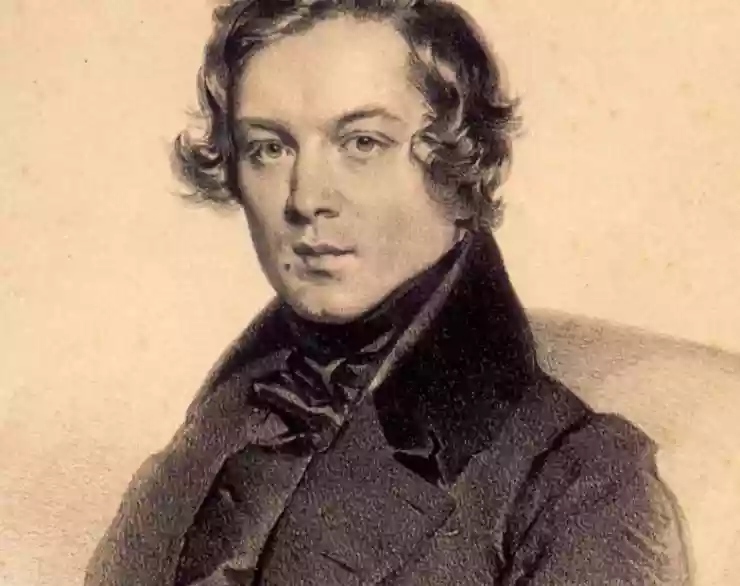
Robert Schumann
Robert Schumann (1810–1856) was a German Romantic composer and influential critic. He wrote landmark piano cycles, songs, and four symphonies, and his marriage to pianist-composer Clara Schumann was central to his life and music. He struggled with mental illness and died in an asylum in Endenich.04 Reviews
