
 •
Rating:
•
Rating:
THE REVIEW
There are still a few pieces missing to have a rather complete picture of the Finnish death metal scene, born under the influence of the nearby Swedish reality and then developed independently but without reaching the popularity and the number of groups of the latter. Establishing 1990 as the year of affirmation of the genre in the country thanks to the self-titled EP by Abhorrence and the demo "Inside the Labyrinth of Depression" by Disgrace, it is noticeable that this musical trend had a short life, in fact the last interesting works in the classic Finnish style are from 1993, in particular, I would mention: "Silence of the Centuries" by Depravity, the technical death masterpiece "Nespithe" by Demilich, and "Musta seremonia" by Rippikoulu (for the true fanatics I would also recommend the EP "Thorns on Thy Oaken Throne" by Wings).
The last work that I therefore consider a classic of this national scene is "Musta Seremonia", which is actually only a demo, but recorded with such professionalism as to have a better sound than many albums of the genre, and of which there is also a remastered version from 2010.
About Rippikoulu, it must be said that they were the first group to write lyrics and sing in Finnish and that unfortunately had a short existence, in fact, they disbanded in 1995 following the death of guitarist Marko Henriksson after releasing only two demos. Recently news has come of a reunion and the release of an EP ("Ulvaja"), but the information about it online is rather scarce.
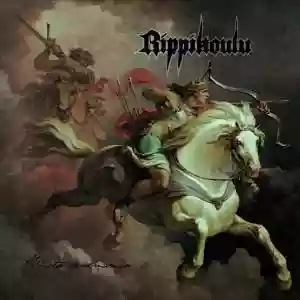
What does this demo have to make it a classic of Finnish death metal? All the ingredients are there: the characteristic sinister and hypnotic melodies, the muffled and somewhat muddled sound, and the doom influences. In this case, it would actually be incorrect to speak only of doom influences, doom is much more than a simple influence, as also for Purtenance, however, Rippikoulu compared to the latter push further into the suffocating meanders of slowness, so much so that in some episodes ("Ikuinen piina", "Anteeksiannon synkkä varjo", but especially "Pimeys yllä jumalan maan") the sound approaches that of Thergothon and their funeral doom. It must also be said that despite the typically death metal rotting atmosphere, the band's style turns out to be elegant in its own way, I don't think it's a coincidence the choice to use the painting "The Vision of the White Horse" by Philip James De Loutherbourg as the cover, and moreover, the singing in the native language fits well into the context and ensures that the group is remembered and does not fall into oblivion. In short, the band does not play anything so innovative, but they do so with strong personality and also maturity, being only their second work recorded in the studio.
Into oblivion shortly thereafter would instead fall all the Finnish death metal, with some bands evolving by changing their style to survive, for example, Sentenced with "North From Here", Amorphis with "Tales From the Thousand Lakes", and Adramelech with "Psychostasia", while all the others were left with no choice but to disband.
Loading comments slowly
Summary by Bot
Rippikoulu's Musta Seremonia is hailed as a classic demo in Finnish death metal, known for its professional recording and distinctive doom influences. The band pioneered Finnish-language lyrics, delivering a sinister, hypnotic atmosphere. Though short-lived, their style remains elegant and memorable, with a remastered version released in 2010. This work symbolizes the peak of the Finnish death metal scene before its decline.
Rippikoulu
Rippikoulu is a Finnish death metal band active in the early 1990s. They released demos including Musta Seremonia and are noted in the review for singing in Finnish. The review reports the band disbanded in 1995 after the death of guitarist Marko Henriksson.01 Reviews
