
 •
Rating:
•
Rating:
THE REVIEW
A Strange Name
Rashaan Roland Kirk also played three instruments simultaneously: two saxophones, one to the right and the other to the left. And a flute, with his nose. Treated by jazz critics (who naturally, many years later, had to change their minds) as a picturesque character, a jolly buffoon, he continued undeterred on his anomalous and curious path, which led him, among other things, into a disc by Mingus
Pouring different parts of tradition, recorded sounds, folk, jazz, and humor into his shaker, he served us cocktails in the form of concerts and records with pyrotechnic flavors. One of the most renowned, recorded in 1965, was called Rip Rig & Panic.
Fury.
We were too young not to feel it as a substance circulating in our very organism, pulsating and decisive. Without half measures, without measured critical distances: dense and widespread, corroded and corrosive, atrocious and sensual in a definitive way, the music did not tell of the world. It was the world.
In 1979, on a scene teeming with bands attempting personal paths after the small big bang of punk, "Y" by The Pop Group struck like a sledgehammer.
The flesh had set up its echoing ritual, its own sound. And it was the sound of fury.
It lasted the time of a nightmare, dilated and compressed. But that record left a stinging and indelible mark. Shortly after, from the tortured surface, fumes of burnt remains rose, still crackling but irreparably consumed. Other sirens were already heard, on a territory irretrievably changed. Another formidable sound document, “For How Much Longer Do We Tolerate Mass Murder?” and then the dissolution.
The fury, however, did not vanish, ending in a constant restlessness that demanded a less claustrophobic space. It remained underlying that restlessness, capable also of smiling, staging a new, unheard-of, itinerant carnival, with what it found along its path.
And it was a road overflowing with suggestions, crowded with fragments and shards. A great receptacle for sound-thirsty acrobats.
In the Name of … God
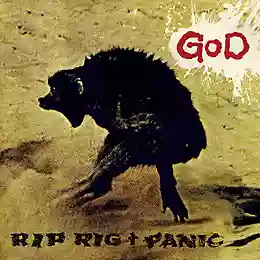
The first album by the group that came to life in Bristol after the dissolution of The Pop Group (choosing as their name the title of the Rashaan Roland Kirk album, who passed away in '77) revealed something more than an affinity with the jazzman's attitude.
Rip Rig + Panic were: Sean Oliver, bass, Mark Springer, keyboards, Gareth Sager sax and guitars, Bruce Smith, drums. And his sixteen-year-old little wife, that Neneh Cherry, who lent her delightfully raw and bold voice.
Young but technically prepared for anything, eclectic and completely immersed in the magma they themselves generated: in the hands of this small group, music flowed wild and tangible in every direction, fueled by a spirit that immediately captivated me.
Double EP, a vinyl with four sides of four different colors, “God” threw open the exuberant spectrum of possible derailing declinations of an equally multicolored verb.
A verb that saw the light in the Babel of those years, raising a sonic vortex in the name of a mixed, nervous, and disorienting, howling and playful God.
No description, sorry, for songs that more than concluding a complete discourse opened gaps innervated with pianistic jazz particles, funk, improvisation, assorted tribalisms, frenzies of burning guitars, and sudden sweetness.
Perhaps less challenging, at first glance, will be the subsequent “I Am Cold” (’82) which also featured Don Cherry.
But the wonder of this debut album still survives, as I replay it while writing (at this moment, in track 11 “The Blue Blue Third”, Mark Sprinter’s hands distill crystalline notes from a piano that emerged after the abrupt closure of the urban jungle materialized in “Those Eskimo Women Speak Frankly”)
Shame on you, music biz!
You will find the name of this volcanic collective cited by myriads of musicians, critics, enthusiasts.
You will discover, if it has not already happened to you, echoes and reflections of their brief adventure in the production of many other groups.
But if you want to buy their records, you have to turn to the Japanese label Progressive Line, which has recently reissued them, rescuing them from the shameful oblivion to which the market had so far condemned them.
Or you can resort to the various “solutions” that you certainly know better than I do.
I keep the usual gnawed vinyl, which today has a little metallic twin.
From which I extracted a burst of samples, which I hope “hit” you
In this God we trust.
Loading comments slowly
Summary by Bot
Rip Rig & Panic's debut album 'God' is a vibrant and intense fusion of jazz, punk, funk, and improvisational sounds. Featuring young and talented musicians including Neneh Cherry, the album channels the restless energy of the late 70s and early 80s Bristol scene. Inspired by jazz innovator Rashaan Roland Kirk, 'God' remains an influential and exhilarating sonic experience. Despite market neglect, recent reissues help preserve this cult classic.Tracklist
01 Constant Drudgery Is Harmful to Soul, Spirit & Health ()
02 Wilhelm Show Me the Diagram (Function of the Orgasm) ()
03 Through Nomad Eyeballs ()
04 Change Your Life ()
05 Knee Deep in Shit ()
06 Totally Naked (Without Lock or Key) ()
07 Try Box Out of This Box ()
08 Need (De School You) ()
09 Howl! Caged Bird ()
10 Those Eskimo Women Speak Frankly ()
11 The Blue Blue Third ()
12 Shadows Only There Because of the Sun ()
13 Beware (Our Leaders Love the Smell of Napalm) ()
14 Miss Pib ()
15 It Don't Mean a Thing If It Ain't Got That Brrod ()
Rip Rig & Panic
British post-punk group from Bristol formed after the dissolution of The Pop Group; members included Neneh Cherry, Gareth Sager, Sean Oliver, Mark Springer and Bruce Smith.01 Reviews
