
 •
Rating:
•
Rating:
THE REVIEW
"And who is this?", many will ask. Trying to explain it to you, I'll tell you that his latest creation has been a critical success. A minstrel, through and through, very unconventional, the guy has been in the music world for quite a while, and he did his groundwork long ago. A guitarist for everyone, he has collaborated as a session man with the "big names" in the charts like, among others, Robbie Williams, Pulp (with whom, by the way, he has a connection that goes beyond the occasional appearance) and also Robert Plant, the latest in chronological order. He had something up his sleeve for quite some time but was just waiting for the right moment to go solo. In 2001, he released his first work: and the one I'm talking about is already the third in four years (fourth if you consider the eponymous mini-album released at the start of his career). Shy and reserved, anti-celebrity by nature, he doesn't chase success, he doesn't crave media and public attention: he goes straight on his path, offering his music which, despite the years passing peacefully, is more or less, always the same. Made of love songs and nothing more, because that's what he wants to propose.
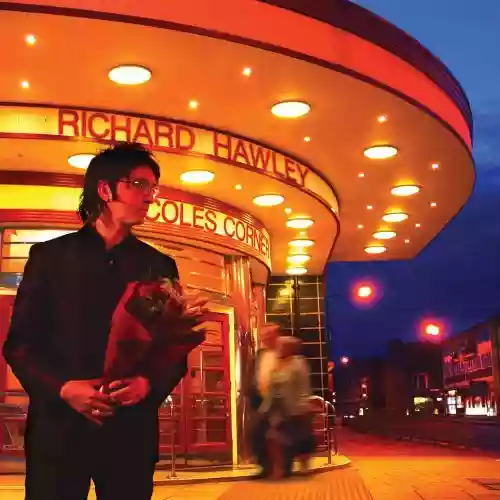
Nothing new, since the theme is the same chosen by 99.9% of those who make music. But he adds "that" something extra which makes the difference, even in the lyrics. Clearly drawing inspiration from American music of the fifties and sixties, made by the likes of Presley, Orbison, Cash, and Boone, crafting tracks with a country and country/western flavor especially in "Just Like The Rain" and "I Sleep Alone," he creates a style so unspecified and indecipherable that it challenges anyone trying to label it and confine his music within a precise definition. There's also space for some distant echoes of the sounds of his homeland, England, and for that Cohen who seems always to be watching from around the corner in "The Ocean," the best piece in my view. He's often poignant and melancholic with his voice, as in "Tonight" and "Who's Gonna Shoe Your Pretty Little Feat": but all this is not synonymous with sadness. With the exception of "Coles Corner," opening and first single released where strings triumph, on all tracks, his instrument is in the foreground. Predominant but not invasive, guitars of all types and with all distortions and effects: as in "Hotel Room," where you can hear sounds dear to Los Indios Tabajaras again (if you know them, you understand where I want to go with this review). The concluding and instrumental "Last Orders" lives between the echoes of a ghostly piano and strange reverberations resembling the turbulent wind that sweeps Coles Corner in Sheffield, a real place in the native city of our subject, a meeting place, a crossroads of many stories, many tales, of ordinary lives, of alternating fortunes and vicissitudes.
The production of Hawley, in short, brings us back to those singers we often see, comparing them with the current music scene, as dinosaurs. Perhaps this return to the past is his strong point: in an era where everyone expects the ingenious innovation, he proposes, revised and corrected, the old, which we too often forget and deny as the father of the new, which very often does not advance.
Loading comments slowly
Summary by Bot
Richard Hawley’s Coles Corner is a critically acclaimed album known for its heartfelt love songs and vintage American influences. The album combines country and country/western styles with a melancholic but not sad tone. Hawley’s shy, anti-celebrity nature is reflected in the music’s timeless charm, enhanced by rich guitar work and careful production. Coles Corner also pays homage to his Sheffield roots, making it a deeply personal yet universally relatable work.Tracklist Lyrics Videos
Richard Hawley
English singer-songwriter and guitarist from Sheffield. Formerly in Longpigs and a collaborator with Pulp, he began a solo career in 2001, earning acclaim for his crooner-like baritone, evocative guitar work, and vintage-informed songwriting. Coles Corner received a Mercury Prize nomination; later releases like Standing At The Sky's Edge broadened his sound.03 Reviews
