 •
Rating:
•
Rating:
THE REVIEW
I pose a question to you: "Celeste nostalgia" is worth more or less than "La luce dell'est"? In my opinion, less, but it's purely a personal opinion. Yet, these two songs (distant in time but not in style) are as similar as you might believe.
Continuing with the questions: do you know who the author of "Celeste nostalgia" is? Simple: Mogol. Do you know who the author of "La luce dell'est" is? Got it? Giulio Rapetti, better known as (Great) Mogol, after having severed the artistic relationship with Lucio Battisti (perhaps he didn't even want to, didn't want to, but if he wanted...) decided promptly, like an eagle intent on scanning the horizon, to take up the role of an author for a perhaps ex-promising Italo-Vietnamese of great success ("Bella senz' anima" and "Margherita" were already timeless classics). To be precise: I say ex-promising because, according to my always highly debatable point of view, the Italo-Vietnamese (let's reveal, it's Riccardo Cocciante) had his best artistic period between 1974 and 1983.
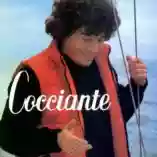
Cocciante and Mogol together write this versatile and melodious high-charting album (perhaps Cocciante's best) towards the end of 1981. The album, which will achieve stunning sales success, will, over time, be proclaimed a cult object or something similar. Who hasn't at least once hummed (in the shower, intent on shaving before going to work) "amore mio grande amica mia cara celeste nostalgia"? The strength of an earworm lies in constant hammering: "Celeste nostalgia" will be the earworm for a good part of 1982, a tune that, the following year, Carlo Vanzina will use as a melancholic final backdrop in “Sapore di sale” (unforgettable the face of Jerry Calà that, casually, crosses paths with Marina Suma). "Cocciante" does not contain, despite standing out above all, only "Celeste nostalgia". The airy and vaguely Battisti-like atmosphere of the classic "In bicicletta" should not be underestimated. And even the inspired "Un nuovo amico" isn't bad: “non dico che dividerei una montagna/per un amico in più/ma andrei a piedi certamente a Bologna/per un amico in più”. Also worth retrieving is "Uniti no, divisi no", one of those compositions that over time, who knows why, got lost in some old attic “a un passo dal cielo blu” (just to quote Paoli). Unfortunately, in an album that could even be considered half a miracle, there are some pearls of mediocrity and banality that leave one bewildered: it’s ridiculous to think that the Mogol-Cocciante duo could have conceived a song like “Parole sante, zia Lucia” (the title is chilling) or silly things like "Amore amicizia". Don't worry: Cocciante has never managed to release a completely successful album (for every three respectable, if not beautiful, songs, there are always three compositions well below the qualitative standard of Italian discography, which, apart from some rare case, isn't all that great). After this (almost exhilarating) album, Cocciante hasn't hit the mark since (even "Se stiamo insieme", despite winning at Sanremo 1991, is nothing exceptional) but his earnings have never diminished. With operettas (see "Il gobbo di Notre-Dame"), a few million euros are always gathered. Well, let's forgive him. Having gifted us “Celeste nostalgia” is already much, perhaps too much.
The last little thought I must waste on Mogol: dear Rapetti, “In bicicletta” may indeed be inferior to “Il tempo di morire” but it's always better than “Esercito del surf”. Let's call it even.
Loading comments slowly
Summary by Bot
This review highlights Riccardo Cocciante's 1981 album 'Cocciante' as perhaps his best work, especially notable for the enduring hit 'Celeste nostalgia' written by Mogol. The album blends nostalgic melodies with Italian pop classics but includes a few weaker tracks. Despite mixed moments, the review celebrates the album's cultural impact and Cocciante's career, emphasizing his continued success through various ventures. It reflects on the collaboration with Mogol and notes the album's lasting appeal.Tracklist Lyrics Videos
Riccardo Cocciante
Riccardo Cocciante (born 20 February 1946 in Saigon) is an Italian singer‑songwriter and composer. After early singles, he issued the prog‑leaning Mu (1972) and scored major hits in the 1970s–80s with piano‑driven ballads. Internationally, he is renowned for composing the musical Notre‑Dame de Paris and other stage works.05 Reviews
