
 •
Rating:
•
Rating:
THE REVIEW
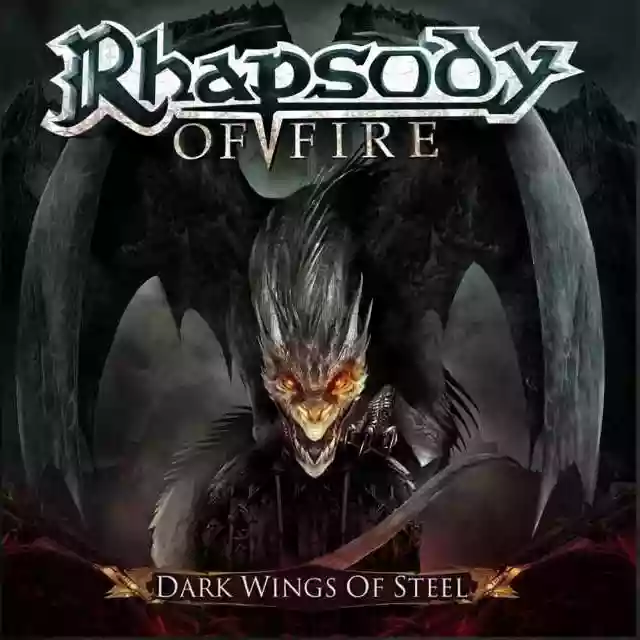
A well-played and well-sung record is not enough to ease the perplexities it generates with each listen. The album is a blend of power/heavy symphonic music with a dark and suffocating atmosphere. The beginning is convincing: after the choral intro, the power outbursts of the opener take off, followed by the martial heavy of "Angel of Light" (both with a majestic and choral refrain). However, the central part of the album is more boring and predictable. The only novelty is found in the heavy cadence of "My Sacrifice", which turns out to be terribly heavy in the unpleasant sense of the word. Before and after this interminable eight-minute ball, there are the predictable "Fly to Crystal Skies" and "Silver Lake of Tears" (the first, a mid-tempo, the other a fast power), both with weak and catchy refrains. It falls to "Custode di Pace" the task of saving the record from oblivion; and indeed, it's a partially successful attempt: this symphonic ballad is the perfect soundtrack for Lione's recited singing; an intense and deep slow song, the most inspired moment of the album. The subsequent "A Tale of Magic" is the second mid-tempo: a pleasant song, beautiful in its refrain. The final pair offers us a robust and gloomy title-track, and a dreamy "Sad Mystic Moon" where the symphonic and choral parts return to shine (themes that, in the album's central part, had given way to a more strictly metal character).
"Dark Wings of Steel" is an anomalous record, full of lights and shadows, clouded by the mysticism that veils not only its atmosphere but also its creation. Surely, if it had been conceived by a different lineup, perhaps the public's hesitation regarding the quality of this work would never have existed. The reason for this coldness (emanated by the public and the specialized press) is written between the wings of the black dragon, imprinted in the album's artwork. That name no longer exists. It became extinct with the Turilli-Staropoli separation (who composed the glorious albums of the old band together). Now, after so many years, the evocation of that name is no longer possible because the music has changed, and especially because the project is no longer the same. That's why it's not wise to use such a logo: it's an unconscious self-destructive act that will weigh on the shoulders of those who created "Dark Wings of Steel". And it's certainly not that "of Fire" that makes the difference, since Rhapsody, were already "of Fire" back in the days of "Triumph or Agony" when they were forced to change the logo for reasons unrelated to the sound they were going towards. In the following years "Frozen Tears of Angel" and "From Chaos to Eternity" were released. The albums certainly had a different metal approach compared to the early records. Nevertheless, the authors of those works could still be called Rhapsody, as there were still folk elements, narrated parts, and orchestral suites (all ingredients that now belong only to Turilli's current musical project). But Luca also has his faults: although his "Ascending to Infinity" is significantly superior to this album, he could have chosen to identify such work as the 4th of his solo project. Sure, the lineup of Luca Turilli's Rhapsody is different from that of Turilli solo; but the fact remains that Luca is the only author, composer, and leader of his current band, and as such, he could have made such a choice. A choice that would have lessened the public's perplexities by preventing them from making comparisons with the old Rhapsody. Naturally, this argument also applies to "Dark Wings of Steel". Therefore, the use of such a logo by the aforementioned bands is to be interpreted as a commercial stunt by the respective record companies (or maybe...who knows...a choice by the respective members of the aforementioned bands?) We will never know. And it would be better not to investigate, as one would risk coming up with words born from thin air. Better to focus on the objective reality, that is, that of a "Dark Wings of Steel" penalized by itself, not because it's bad; but for the apathy it demonstrated regarding the hypothetical possibility of being able to build its own identity.
Fecerico "Dragonstar" Passarella
Loading comments slowly
Summary by Bot
Dark Wings of Steel offers a blend of power and symphonic metal with moments of grandeur but also predictable and heavy passages. The album struggles to find a unique identity after key lineup changes, resulting in mixed public reception. Some tracks stand out, especially the symphonic ballads, while others feel overly heavy or uninspired. The review suggests that the album's challenges stem partly from branding choices and comparison with past successes.Tracklist Videos
Rhapsody of Fire
Rhapsody of Fire is an Italian symphonic power metal band from Trieste, founded by guitarist/composer Luca Turilli and keyboardist Alex Staropoli. Formerly known as Thundercross and then Rhapsody, they adopted the name Rhapsody of Fire in 2006. The band is known for fantasy concept sagas, cinematic orchestration, and collaborations with Christopher Lee as narrator.08 Reviews
