 •
Rating:
•
Rating:
THE REVIEW
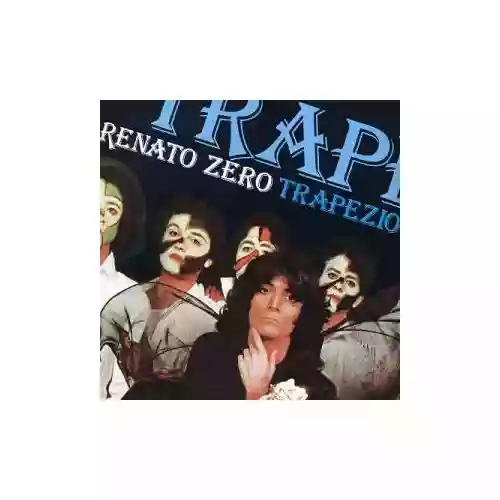
I saw Renato Zero in the summer when he performed at the stadium with his MpZero tour. A concert of rare gaudiness, which nonetheless had the merit of sparking my curiosity. I gathered all possible information about his early career. I believe "Trapezio" deserves a prominent place in the gallery of Italian music. Here's the story.
In 1976, Renato Zero found himself backed against the wall. RCA, disappointed by the poor sales of his previous two albums, "No! Mamma, no!" and "Invenzioni," had given him an ultimatum: if the next one doesn't do well, the contract is terminated.
Renato had been on the fringes of the music scene since 1967, ever since Gianni Boncompagni produced his first single "Non basta sai/In mezzo ai guai" (incidentally, a blatant flop). Despite having participated in high-level productions, such as the Italian version of Hair and the rock opera Orfeo 9, Renato remained a niche figure. Little did "Trapezio" add to his popularity. Listening to them today one has the sensation of a what if, that is, what would the career of "Trapezio" have been like if accompanied by profound lyrics and shocking themes ranging from pedophilia to terminal illness, from abortion to depression. But nevertheless, in 1976 a change of course occurs.
Now, put yourself in the shoes of a boy raised in a suburb who had been starving (or nearly so) for 26 years: the choice was whether to continue with glam rock (image) and singer-songwriter rock (content) risking staying on the margins of success, or compromising and giving a melodic turn to his repertoire. Renato chose the second option, under heavy pressure from RCA itself.
To assist him in more traditional writing, Franca Evangelisti for the lyrics and Piero Pintucci for the music are enlisted. Mogol is even involved in the project. In reality, as often happened and still does, the famous name was just a ploy to stir public interest. The transgressive singer meeting the lyricist of Battisti was certainly a catchy advertising slogan, but, despite being credited as a co-author of two songs, Mogol didn't write a single line for Renato (appropriately, Mogol himself, throughout his career, took care not to mention his "collaboration" with Zero). To make Trapezio even more appealing, "No! Mamma, no!”, "Metro", and "Inventi", which were the three most known songs from the previous two albums, are included.
The first part of the album flows on the edgy tracks of the "old" Zero. It opens with "Il caos", a sharp description of a ruined love, followed by the three extracts from "No mamma no" and "Invenzioni". Next comes one of the most beautiful songs in the entire Zero repertoire, "Una sedia a ruote", which directly and touchingly describes the torments of a disabled person condemned to the immobility not only of the body but also of the feelings. With "Una sedia a ruote", the rock side of "Trapezio" ends, and we enter into the traditional melody, pop, and disco that from then on would characterize his career, for better or worse.
The first experiment of a song written in a trio with Evangelisti and Pintucci is "Motel", a classic love song perfectly successful in its simplicity, made even more engaging by the crescendo of piano notes before the chorus. "Scegli adesso oppure mai" and "Un uomo da bruciare" are the two songs also signed by Mogol: the second, in particular, will be revisited live several times, often drastically rearranged (as will happen in the live "Icaro").
After the transitional "Hanno arrestato Paperino", two major pieces of the Zero repertoire arrive. With "Madame", Renato approaches the world of discos for the first time (where the song had good circulation) and wins over the general public, also thanks to some quite shocking television appearances for viewers of the time. More than a classic, an absolute classic of his discography. The album concludes with the wonderful "Salvami!", in which Renato, first whispering then shouting, describes, through the eyes of a prostitute, the despair for her condition of being "different," "borderline," "alienated," which finds no answer. "Dici bene questo è il posto mio, non l'ho deciso io. Quando questa strada ha scelto me, chissà dov'era Dio. ". It's the cherry on top of an album that deserves 5 stars.
The question remains within me as to what Renato Zero would have been if he had stayed closer to singer-songwriter rock, avoiding the national-popular drift of recent times. In any case, one Renato Zero is enough to make a hundred Vasco Rossi.
Loading comments slowly
Summary by Bot
The review highlights Renato Zero's 1976 album 'Trapezio' as a pivotal work in Italian music, blending glam rock with melodic pop under industry pressure. It explores profound themes like terminal illness and depression, while noting iconic tracks like 'Madame' and 'Salvami!'. The album marked a turning point, balancing artistic edge with mainstream appeal. Ultimately, 'Trapezio' is praised as a classic deserving of recognition.Tracklist Lyrics Videos
Renato Zero
Renato Zero (born Renato Fiacchini, Rome, 1950) is an Italian singer-songwriter and showman famed for glam-theatrical performances and a powerful voice. Emerging from the late 60s clubs, he broke through in the late 70s with hits like Mi vendo, Triangolo and Il cielo, then consolidated with the double LP Tregua and the social snapshots of Artide Antartide. Over decades he’s remained a major live draw and a polarizing, iconic figure.34 Reviews
