
 •
Rating:
•
Rating:
THE REVIEW
I consider Renato Zero a wonderful provocateur. In 1973, just a few years after the women's emancipation marked by 1968, he recorded a captivating song, "No! Mamma, no!", which is perhaps still his most successful track. It was a superb, exceptional, almost metaphysical Renato Zero. A provocateur who oriented the public's tastes towards an exaggerated but not vulgar transvestism, a way of conceiving sexuality that was no longer prudish or rigidly Catholic. "No! Mamma, no!" was, for many, more than just a musical hit: it was an (almost) political slogan meant to reach the high echelons of government and shake the somewhat complacent consciences of many practicing Catholics too mesmerized by saints, priests, bishops, popes, and various Vatican affairs.
What remains today of that Renato Zero? Little, almost nothing. Today Zero is no longer Zero: he is Mr. Renato Fiacchini, a bourgeois from a good family, a lover of casual fashion, and father to an adopted son who, I am almost certain, will have no trouble entering the Italian music star system in a few years. Fonopoli is still a dream realizable (partly realized) but the rebellion and vitality of the twenty-five-year-old sorcino has given way to a more predictable typical fifty-something banality.
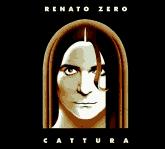
"Cattura" is his second-to-last album. Despite an unprecedented advertising launch (live broadcast on Rai Radio Two with a preview of each single track; various appearances with Giorgio Panariello on "Torno sabato"; frequent guest spots on "Top of the Pops"; posters plastered everywhere between Milan, Rome, and Naples) "Cattura" neither excited nor restored luster to an artist a bit too bourgeois. Only a few fragments of this album will remain. The melodic violins of "I miei miti" (perhaps the most poetic, but not the best song of the entire album); the surprisingly pounding liveliness of "Come mi vorresti"; the beautiful words of "Magari" and the captivating "A braccia aperte". No doubt about it: beautiful music, or almost. Among drums and acoustic guitars, violins and pianos, Zero goes all out: it's a pity that the lyrics are most often quirky and repetitive (excerpt from "A braccia aperte": "A braccia aperte/un sorriso e un po’ più d’umanità": doesn’t it vaguely remind you of "Sogni di latta?"). The rest is calm flatness. "C'è fame" and "Fuori tempo" don't even deserve a listen, while "Naturalmente strano" and "L'altra sponda" aim to address serious topics (homosexuality, latent diversity) but risk involuntary ridicule. All the rest is silence, Shakespeare would say. For me, raised on bread and Zero, it's a deep pain to see one of my idols flounder among foolishness and assorted banality: "No! Mamma, no!", you can't go on like this.
Loading comments slowly
Summary by Bot
The review reflects on Renato Zero's early provocative impact and contrasts it with the lackluster qualities of his album 'Cattura.' Despite strong promotion and some melodic highlights, the album suffers from repetitive and quirky lyrics and fails to recapture past vitality. The reviewer expresses disappointment in the artist's shift towards predictability and conventionality.Tracklist Lyrics Videos
Renato Zero
Renato Zero (born Renato Fiacchini, Rome, 1950) is an Italian singer-songwriter and showman famed for glam-theatrical performances and a powerful voice. Emerging from the late 60s clubs, he broke through in the late 70s with hits like Mi vendo, Triangolo and Il cielo, then consolidated with the double LP Tregua and the social snapshots of Artide Antartide. Over decades he’s remained a major live draw and a polarizing, iconic figure.34 Reviews
