
 •
Rating:
•
Rating: THE REVIEW
After concluding “Automatic for the People,” REM did not undertake any promotional tours, and after a few months of well-deserved vacation, they immediately returned to work – instead of enjoying the extraordinary success and critical acclaim of “Automatic for the People”. There they were in the studio in the spring of 1993 for the third album in three years. And they came up with another jewel.
These songs talk about everything: the new condition of being consumer stars pulled by the jacket, the death of a friend, sex becoming the god of current society, accepting one's insecurity with which one must live… A record that is, as always, mature and substantial.
“What’s the Frequence, Kenneth?”. I would say: the melodic genius of REM, in a good rock song. A very enjoyable and substantial single. What more could you ask for? However, compared to what comes after, this piece, which for many is a masterpiece, is a mere trifle.
“Crush with the Eyeliner”. Certainly an excellent song, but not a masterpiece because it doesn’t evoke emotion. I don't like it when I can't hear Stipe's voice well. Here you can tell it's far from the microphone and gets lost in the air. With the change, things improve a bit with his counterpoint that revives the piece. It didn't need the moon to make it more alive. But perhaps it was REM who wanted it so “detached.”
“King of Comedy” takes the coldness of the previous song to the extreme. Here Stipe sounds like a singing robot. I would prefer a reflective spoken section without a muffled voice, like in “E-bow the Letter.” In any case, it’s not to be discarded. I just never listen to it.
“I Don’t Sleep, I Dream.” To me, the album's high point. Again, there’s no melody; Michael talks, but this time without a muffled voice. There’s no need for melody to move. Just like Lawrence Olivier could move people to tears simply by reciting the alphabet, Stipe had the gift of moving by speaking. From a musical standpoint, the piece is a “masterpiece of sobriety,” a small work of art. The masterful drumming, the beautiful arpeggio by Buck supported by an almost “invisible” piano by Mills; then in the chorus, with Stipe’s almost falsetto accompanied by the organ and distorted guitar, the song rises even more. Simply stunning.
“Star 69.” This is the album's only real fall. “Monster” is a profoundly slow and reflective album, and perhaps REM realized that, in addition to the intro, there needed to be at least another spicy piece, to avoid being accused of being “boring.” This song holds no other value for me. I don’t much like such fast-paced songs. I like speed, but it shouldn’t be coupled with bad taste.
“Strange Currencies” is the “metallic rewrite” of “Everybody Hurts.” The acoustic and melodic enchantment of the 1992 song isn’t there, but that song was a miracle. This one from 1994 is “just” a splendid jewel. Among the most beautiful REM have ever recorded.
“Tongue.” Here it’s the piano and organ masterfully united to accompany Stipe's falsetto. In fact, Michael could have sung even without falsetto, with his splendid nasal voice, and perhaps it would have been even more moving than it already is. As it stands, it’s a masterpiece of delicacy – that never lapses into being sycophantic.
“Bang and Blame.” Another jewel. The guitar in a kind of eerie vibrato, and the melancholic voice as in Stipe's best pieces. If we want to split hairs, the chorus was ripe for one of their melodies. Here, however, it might be too harsh. A fatalistic and chilling (musical) ending concludes the piece superbly.
“I Took Your Name” doesn't reach the beauty of the previous songs, but remains a good, substantial rock song with a memorable chorus, supported by Buck's distorted guitar in the verses, and his brief solos in the choruses.
“Circus Envy.” Like “King of Comedy”: it’s not one to throw away, but I almost never listen to it. A song with such an important theme like envy has been put in a piece that will never truly enter the heart – certainly not mine.
“You.” A truly beautiful slow rock. Very melodic singing, perhaps even too much. Superb chorus, moving while remaining sober. As beautiful as this song is, it shouldn't have been at the end. The obligatory ending should have been “Let Me In.”
“Let Me In,” dedicated to Kurt Cobain, who loved REM so much he said, “I want to die after writing a couple of songs like theirs.” Not much needs to be said about this piece. I am listening to it again now as I write, and still today Stipe's vocalization, 30 seconds in, moves me. The song would be a masterpiece even if it were a single long vocalization. Then, when towards the end, the organ joins the guitar, the emotion grows, if possible, even more.
An album with 7 great tracks, and two excellent ones (“Circus With Eyeliner,” and “I Took Your Name”) can’t help but deserve a 5, even if a couple of songs could have been omitted. That way, it would be a full 5.
Certainly a musical pinnacle – although from an emotional point of view, it doesn’t reach “Automatic for the People.”
Loading comments slowly
Summary by Bot
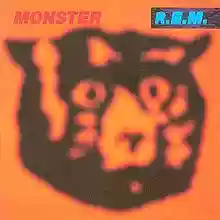
This review praises R.E.M.'s 1994 album Monster as a mature and substantial rock work with multiple standout tracks. While some songs feel less emotional or distant, others like "I Don't Sleep, I Dream," "Let Me In," and "What's the Frequency, Kenneth?" showcase the band's melodic and lyrical strengths. The reviewer considers Monster a musical pinnacle for R.E.M., though emotionally it doesn't reach the heights of Automatic for the People.Tracklist Videos
R.E.M.
Formed in Athens, Georgia in 1980. Core lineup included Michael Stipe, Peter Buck and Mike Mills; Bill Berry was the original drummer until 1997. Pioneers of alternative/college rock with a career spanning to their 2011 split.98 Reviews
Other reviews
By NickGhostDrake
"When you play a song again every time I think it’s love. When you play it for the first time, it’s first love."
"Monster was the first one I adored because it was so right for me, all those guitars that drove me crazy and that song, 'Bang and Blame,' that made me jump."
By Bleak
Gone is the baroque and dreamy intimacy of 'Automatic For The People': the imaginative and eclectic arrangements of that album have been completely abandoned, leaving behind a solid rock skeleton.
A full-fledged makeover, and a very successful one at that.
By Lesto BANG
An album that is not easy to listen to anymore, 12 years later, and reminiscent of certain ventures into the world of the most paranoid and monochord Neil Young.
Expressing oneself about sex is not a valid excuse to publish an album as fairly boring and monolithic as this.
By GrantNicholas
"The shift by Stipe and company did not convince (and still does not convince) many."
"Let Me In, with its electric-apocalyptic atmosphere, is however the masterpiece of the album."
By StoneAgeWoof
An angry album, yet at the same time playful and flirtatious, bright and gloomy.
"I am not your television. I am not your magazine. I am not a commodity," sarcastically demonstrating his integrity.
