
 •
Rating:
•
Rating:
THE REVIEW
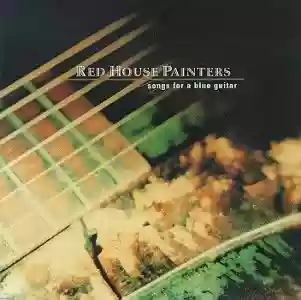
"Songs For A Blue Guitar", released in 1996 by Supreme, is, in my humble opinion, the worst album by Red House Painters. So, how to justify the positive judgment you read here? Well, it's simple, folks: we're still talking about Mark Kozelek.
This album, looking at the career of the San Francisco artist up to today, represents a real turning point: if before there was a doubt that RHP was a "one-man-band", now this sensation has become a certainty.
Kozelek writes, plays, arranges, and produces "SFABG" by himself; there is no trace of other musicians in the credits. This self-reliance couldn't help but have a strong impact on the music. The days of the initial slow-core seem distant, as the Ohio native appears definitely oriented toward a more "classic" rock, not denying, among other things, his love for folk and country. It's said that the very distorted guitars and long guitar solos present in some tracks are the reason why 4AD decided to "drop" the group.
There are several unforgettable moments in the album: "Have you forgotten", "Make Like Paper", and "Trailways" are destined to become classics in our artist's repertoire.
What is less convincing is the value of the work considered in its entirety. The notable lack of uniformity in genre and style among the various songs sharpens the suspicion that Kozelek wanted to compare himself with his musical idols from his youth (no less than three out of eleven tracks are covers) and the - at times - precarious balance between homage and citationism, on one side, and originality, on the other, does not benefit the freshness of this work. Moreover, there is a sense of a more enticing, more "radio-friendly" approach from Kozelek (this judgment is necessarily relative to other RHP works and, thus, not absolute in character. We're not talking about Coldplay, after all...); this is evidenced both by the fact that "All Mixed Up" remains the only video intended for music rotation authorized by the group and by a massive plundering of some songs from the album for soundtracks of various kinds, adapted both for cinema and TV series.
In the end, among highlights and shadows, "SFABG" remains a good album, also because Mark Kozelek's talent and class as a songwriter remain undeniable; it's certain that in his career, both before and after this album, he has done much better.
I'm aware, and I don't hesitate to point it out, that this is quite a unique opinion, in the most literal sense of the term; there are several enthusiastic judgments about the work from critics and the public that you can find online, including an (inexplicable) 9.0 from Pitchfork, a quite authoritative voice among webzines.
Loading comments slowly
Summary by Bot
Released in 1996, Songs For A Blue Guitar marks a turning point for Red House Painters as Mark Kozelek takes full creative control. The album shifts from slow-core to a more classic rock sound with folk and country influences. While it contains standout tracks destined to be classics, the album suffers from inconsistent styles and the sometimes uneasy balance between tribute and originality. Despite being less uniform and radio-friendly, Kozelek’s songwriting talent keeps the album interesting, though it is considered one of the band's weaker releases.Tracklist Lyrics Videos
Red House Painters
Red House Painters are an American slowcore band formed in San Francisco in 1988, led by singer-songwriter Mark Kozelek. They released acclaimed records on 4AD in the early 1990s, followed by the rock-leaning Songs for a Blue Guitar and the long-delayed Old Ramon (issued by Sub Pop in 2001). The group ceased activity by the early 2000s, after which Kozelek formed Sun Kil Moon.09 Reviews
