 •
Rating:
•
Rating: THE REVIEW
Lou Reed and Edgar Allan Poe, a rather unusual combination given especially the chronological distance that separates the two. One Halloween night a few years ago, Lou Reed had a sort of revelation, feeling that there was a point of contact between him and the writer who lived in the first half of the 1800s. Lou Reed has always been fascinated by the supernatural and a certain degree of obsessiveness, which have ended up characterizing his musical work since the days of the Velvet Underground. A psychologist would say that his existence was marked as a child, in the 1950s, when his parents subjected him to electroshock treatment to quell his turbulent spirit. We would simply say that this trait of the singer's personality is probably the point of contact discovered on that distant Halloween night. A point of contact that Lou Reed had already used as a pretext to stage a theatrical piece years ago entitled "POEtry" with director Robert Wilson.
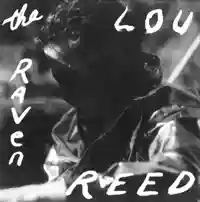
In 2003 the partnership between the musician and the writer continued with The Raven, a double CD resulting from that theatrical experience. The title takes its name from Edgar Allan Poe's poem of the same name and seems to align with the questions that have most frequently tormented the American musician: "why am I driven to do what I shouldn't? What's wrong? And then, what is wrong and what is not?" Thus, we find the point of contact between Reed and Poe: the torment between the desire for survival and the instinct for self-destruction.
The album alternates music with spoken word, the most Reed-like rock, which fades into a gospel and re-emerges as funk, with the different voices that make up the spoken parts. A rich album, full of ideas and sounds. A discovery after another, a volcano in continuous eruption. Perhaps too rich, since a "cleaned up" edition has also been released, largely stripped of the spoken pieces.
Poe died at only forty years old, shortly after publishing the collection "The Raven and Other Poems," succumbing to the vice of drinking that led him to the hospital struck by delirium tremens. Reed translates those obsessions into rock, making use of a quartet composed of Mike Rathke, Fernando Saunders, Tony Smith, Friedrich Paravicini, and a host of guests ranging from David Bowie to Steve Buscemi for the spoken parts.
The double CD is more than a homage to the American writer who died one hundred fifty years ago; it is the result of a true partnership, as could happen between two artists who find themselves sharing a part of their lives, a fusion of souls, tormented souls balanced between pain and pleasure. And we are convinced that Edgar Allan Poe, if he were alive today, would fully recognize himself in the music of his compatriot Lou Reed.
Loading comments slowly
Summary by Bot
Lou Reed's The Raven is a richly layered double album inspired by Edgar Allan Poe's works and themes. Combining rock, spoken word, and diverse musical styles, it captures the torment and obsession shared by both artists. Featuring collaborations from David Bowie and others, the album blends theatrical and musical elements into a unique experience. While dense, it offers a compelling exploration of darkness and creativity.Tracklist Lyrics
Lou Reed
Lou Reed (born Lewis Allan Reed, March 2, 1942 – October 27, 2013) was an American musician, singer-songwriter and founding member of the Velvet Underground. He had a long solo career noted for albums such as Transformer, Berlin and New York and for experimental works including Metal Machine Music.71 Reviews
Other reviews
By Mr_Iko
Lou Reed has chosen this third path. He wanted to merge rock transgressions with melodic maturity, cries of pain with reassuring words.
Turn off the light, close the window, sit relaxed in an armchair, atomically isolate yourself from the rest of the world, and let the first notes of this record play.
