
 •
Rating:
•
Rating:
THE REVIEW
"Os Mutantes são demais!"
("The Mutants are too much!")
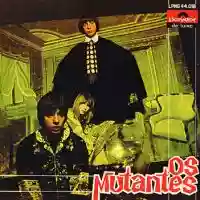
That's what Caetano Veloso said about them at the dawn of the release of their first record in June 1968. And for Brazilian music of the time, they were definitely "too much." Too advanced, to the point of seeming disrespectful towards native musical traditions, if it's true that during their performance accompanying Gilberto Gil at the Festival di Musica Popular Brasileira in September '67 people reacted with indignant violence. Ah, the ultimate heresy to dare to spoil (or modernize) the Northeast folk with visionary injections of Beatles-branded psychedelic pop! Even more so to appear on television adorned as neo hippies, with hair that was decidedly too long, and songs decidedly too irreverent for Brazilian society of the time (and not only that). Yet, if it weren't (also) for them, the Tropicalista movement led by Gil and Veloso wouldn't have been that kaleidoscopic circle of intellectuals and musicians that spurred a mini-revolution at home, and later influenced (and still influences) the most disparate contemporary artists.
Like all vanguards, they were initially opposed, only to become, incredibly, a transgenerational icon among the most enduring at home. Try asking the average Brazilian who Rita Lee is, and you'll get a prompt response. A bit less so if you ask about the Arnaldo and Sergio Baptista brothers (but on her side, Lee boasts a long solo career). But what underlies this lasting memory?
Could it be the fact that, without even ever having seen an LSD tab, the Mutantes sounded like an unlikely encounter between the Beach Boys, Pretty Things, and Deviants? Could it be because, even though they filled their first LP with songs by others (Gil and Veloso especially), they reworked them until they passed them on to the collective imagination as their own compositions (a clear example is the fantastic off-key samba-fuzz of "A Minha Menina").
It might be for millions of other reasons, but we don't care to know them. The important thing is to fully enjoy, 40 years down the line, the primordial madness of a track like "Bat Macumba", the "Strawberry Fields" in Brazilian sauce ("Panis Et Circenses"), the warm hammond of "Baby", the surreal garage of "Ave Genghis Khan". It is also interesting to note the many similarities (I think quite casual) with contemporary and equally little-known bands, especially the United States Of America, proof of the all-encompassing nature of the psychedelia phenomenon on a global scale.
Revisiting this little nugget from the '60s, external to Anglo-American musical and geographical trajectories, is therefore a duty as well as a pleasure.
Loading comments slowly
Summary by Bot
Os Mutantes’ 1968 debut album was revolutionary, blending Brazilian folk and psychedelic rock with bold innovation. Initially resisted for its radical sound and image, the band became a beloved icon of the Tropicalia movement. Their music reworked compositions by key Brazilian artists into uniquely psychedelic forms. This album remains a timeless cultural milestone rich with surreal and captivating tracks.Tracklist Lyrics Videos
