
 •
Rating:
•
Rating:
THE REVIEW
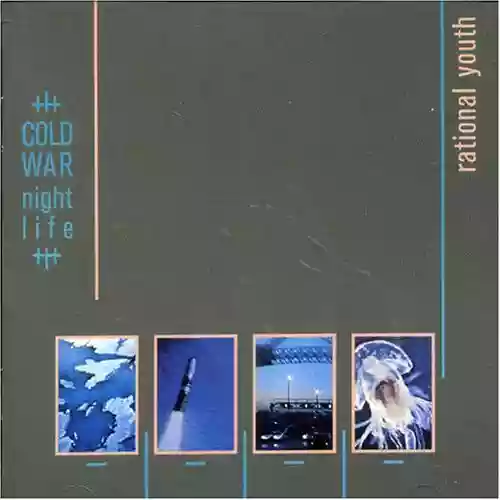
Have you figured out how straightforward these Rational Youth guys are? Polar islands = cold, missile = war, city with lights on = night, jellyfish = life; oh, it may be a bit of a blunder in itself, aesthetically it's certainly not among the best covers in history, but in its own way, I find it brilliant and perfect for an album like this, visionary, a product of its time, but also very, very direct and tremendously catchy. A cult album, released on an independent Canadian label, three novice guys, and a class that many more famous names would envy. Ladies & Gentlemen, the DTK 80's Revival Productions is proud to present you "Cold War Night Life" by Rational Youth, with a special thanks to the person who introduced me to this group and this fabulous record.Tracy Howe (singer), Bill Vorn, and Kevin Komoda, the first Canadian synth-pop group, or at least that's the reputation Rational Youth earned with this grand debut dated 1982, and we're talking about synths 100% here, presumably due to a fairly limited availability of resources (judging by the final result, I'd say it's a blessing), in "Cold War Night Life" there's absolutely nothing else: no guitar, no bass, obviously electronic drums, no background and contamination of any kind. A pure sound, that enters the brain with disarming ease, worthy of the best ABBA, and unlike many other things from that infamous decade, it sounds absolutely fresh, agile, and brisk; epic and futuristic even in 2015, with all due respect to the multimillion-dollar "Radio Gaga" and "Love Kills". A couple of very danceable tracks like "City Of Night" and "Saturdays In Silesia", grand and visionary atmospheres in the initial one-two punch, "Close To Nature" and "Beware The Fly", also surprisingly intense ballads, "Just A Sound In The Night" and "Ring The Bells". Rationality that translates into absolute stylistic perfection, closer to a utopian real socialism than to the pompous American dream, but also an impeccable aesthetic sense for these simple sonic architectures, created with limited means but absolutely perfect.
The lyrics also deserve special attention, they are as brilliant and intelligent as the music offered, just consider the non-musical contrast between the two slow songs of the album, the sweet and melancholic "Just A Sound In The Night" and "Ring The Bells", solemn and rhythmic. The former is a dream, cosmic currents, encounters with extraterrestrial civilizations; is there life on Mars? According to Rational Youth, there is; the latter, however, is a nightmare, the specter of a nuclear war is still alive and well-rooted, visions of war, of disorder, "Everybody's waiting for the hour when the blood and tears will be replaced, but the weak must always feed the stronger, that's the story of the human race, all is hell, ring the bells", but it's still a distant, almost surreal scenario, a perfectly staged tragedy. In "Close To Nature", we sense the fears of an industrial society increasingly close to collapse, in "Beware The Fly" the fatal weaknesses of so-called supermen, Nietzsche, Trotsky, but also the Homeric Achilles, while "Saturdays In Silesia" portrays a discouraging slice of life behind the Iron Curtain, a mechanical, programmed life, but where every moment of leisure becomes a treasure to be fully enjoyed, "Holidays are for heroes", yet "We don't have much but what we've got we're gonna keep (...) find the magic if there's any to be found".
I really don't understand, I can't rationally explain why an album like this, so perfectly immersed in the spirit of its time and with a disruptive melodic strength, an impeccable combination of content and accessibility, was ignored, criminally ignored by the significant music industry; with all the nonsense (some amusing, others decidedly less so, and the latter largely survived to our days) that had their fifteen minutes of fame in those years, then. I've already said it in the case of Jill Jones, here I repeat it with even more force: I would have moved heaven and earth to sign Rational Youth, and instead, for them, there was only total oblivion, except for a handful of die-hard fans who in 1997 convinced a somewhat significant label (SPV) to reissue CWNL on CD. A laudable initiative, but it's emblematic that not even all the song lyrics can be found on the web; it's shocking, scandalous, a gem like this deserved front pages and universal recognition.
Loading comments slowly
Summary by Bot
The review praises Rational Youth's 1982 debut album Cold War Night Life as a brilliant and visionary synth-pop record. It highlights the pure electronic sound created with limited resources, the intelligent and thought-provoking lyrics addressing Cold War anxieties, and the album's timeless freshness. Despite its quality, the album was largely overlooked by the mainstream music industry. It remains a cult classic deserving wider recognition.Tracklist Lyrics Videos
