
 •
Rating:
•
Rating:
THE REVIEW
In recent years, he has devoted himself to the creation of film soundtracks, following family tradition and even winning an Oscar in 2002 for the song "If I Didn't Have You" (from the film Monsters, Inc.). Randy Newman has essentially abandoned the world of pop music, which has provided him with so few satisfactions in almost forty years of activity.
Much appreciated by international critics yet largely ignored by the public, Newman is one of the most talented and interesting American singer-songwriters of the postwar era. He has the ability to creatively rework the main genres of American tradition (jazz, soul, ragtime, blues, country), infusing them with text that is caustic and never predictable, overturning the same clichés to which the musical language used in his compositions refers.
An effective example of his style is offered by the celebrated "Sail Away", a piece with a solemn and anguished progression, in which the beauties and values of America are celebrated, the boundless opportunities that this land offers to migrants... only to discover that the singer is none other than a slavemaster, inviting the black population to leave Africa to reach the new world. Similarly, "Short People" (which achieved relative commercial success at the end of the '70s) emphasizes the typical racism of the average American, taking a strong stance against... short people, victims of the whims of our artist, who is himself part of an ethnically persecuted minority (Newman is, in fact, Jewish).
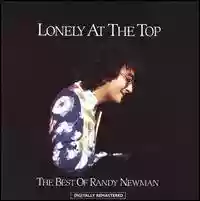
This anthology, released in the mid-'80s, reintroduces the mentioned tracks and numerous other songs that cover much of the Author's career, arranged in chronological order from the beginnings at the end of the '60s, characterized by piano accompaniments with orchestral insertions, to the maturation of the early '80s, where Newman proposed an energetic and well-arranged mix of jazz, blues, and soul with excellent melodic appeal and great stylistic refinement.
All the tracks denote a high compositional quality, with no fillers in the rather extensive lineup: the initial songs are characterized by an alternation of mournful tones ("Love Story", "Living Without You"), sarcasm and self-irony ("Mama Told Me Not To Come"), while later tracks are almost "jokes" that revisit the clichés of much American tradition ("My Old Kentucky Home", "Simon Smith and the Amazing Dancing Bear", "Louisiana", "Rednecks"), while the concluding tracks, more elaborated, convey atmospheres of longing ("Christmas in Capetown") and presumed praises to his elective homeland ("I Love L.A.") appearing more complex thanks to the contribution of richer instrumentation. Instead, the anthology lacks the well-known "You Can't Live Your Hat On", brought to success by Joe Cocker in the '80s and included in the soundtrack of a well-known glossy erotic film, perhaps betraying its original spirit.
It remains a mystery that Randy Newman's name is always less considered compared to other contemporary artists, such as Tom Waits or Leonard Cohen, whose musical proposal and audience type do not differ much from his: undoubtedly Newman shows greater musical culture and compositional clarity than even the great authors just mentioned, but whether due to his mocking and iconoclastic spirit or lesser media impact, he seems somewhat forgotten, as evidenced by the fact that, on the same Debaser, reviews of his works are not abundant.
Precisely by starting from this album, many might rediscover an important piece of contemporary American music, and—who knows—do justice to an Author who perhaps has the "fault" of showing, with a smile on his face, the worst side of the States.
Loading comments slowly
Summary by Bot
This review highlights Randy Newman's 'Lonely At The Top' as a compelling anthology showcasing his unique blend of American musical traditions and sharp, satirical lyrics. Known for his work in film soundtracks, Newman’s songwriting cleverly challenges cultural clichés. Though underappreciated by the public, his musical and lyrical sophistication stands out, making this compilation essential for fans of refined, ironic Americana.Tracklist Lyrics Videos
Randy Newman
American singer-songwriter, pianist, and film composer known for satirical, character-driven songs and acclaimed film scores; a two-time Academy Award winner.09 Reviews
