 •
Rating:
•
Rating:
THE REVIEW
A calculated and succinct light reveals—behind a shutter—the statuesque body of Kim Basinger who improvises (?) a striptease like a seasoned showgirl, all under the eyes of an excited and amused Mickey Rourke: this is the key sequence of the dramatic-erotic craze from the Eighties, "9½ Weeks." A film that—despite its mediocrity—managed to influence the erotic imagery of more than just one generation, thanks to an undoubtful merit of a musical commentary—that "You Can Leave Your Hat On" masterfully belted by 'mad dog' Joe Cocker—so perfectly chosen that it remains among the 'favorites' of countless nightclub shows. It's strange to think that this devilish tune emerged many years earlier—exactly 15, in fact—from the pen of a funny little bespectacled man that few know (and would have a hard time associating with the sensual sphere) but who has left a mark over time more than other artists.
Commercial success never graced Randy Newman, not even when his formula seemed to have everything needed to achieve it: a strange cross between the most lyrical Elton John (the one from the masterpieces of 1970-1973, to be precise—not the baronet who squanders his songwriting talent on pop slushiness for heavy palates) and the most syncopated Billy Joel, with a wink to musical theatre and, why not, to a certain folk tradition. But, as we know, even in music, appearances count, and a quiet and discreet talent often gives way to various freak shows. Thus, even a beautiful album like "Sail Away" (1971)—which includes the original version of the above-mentioned anthem, in its slower and more heartfelt primal form—goes unnoticed by the masses: and it is really a venial sin to miss out on the unusual sweetness of pearls like the title track or "God's Song (That's Why I Love Mankind)."
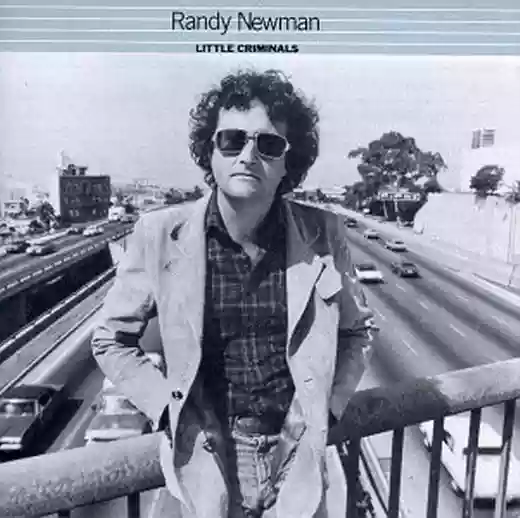
After that work, however, Randy made many friends, and many would be more than happy to accompany him in his bizarre socio-musical explorations. Among which, the ironic and sharp mockery of "Little Criminals" (1977) stands out, which would grant Randy the only true chart success and fifteen minutes of paradoxical and mystified fame. "Short People," in fact—born as a fierce and entertaining attack on human 'betise'—would be, quite shortsightedly, stigmatized by those who saw in it only the denigration of short people. As if Randy himself were the giant of the mountain. Fortunately, the frivolous affair ends where an album, which for compositional variety and tasteful 'understatement' is almost great, begins. It transitions easily from the slow, funny brass—almost mimicking the walk of the protagonist—in "You Can't Fool The Fat Man" to the robust pop-rock with R'n'B tones of the title track, from pop gems like the scandal single and "Jolly Coppers On Parade" to the tender lyrical effusions of "I'll Be Home" and "Old Man On The Farm," up to the grand mid-tempo of "Kathleen." The harmonies by the Eagles' friends almost play better away than at home, embellishing the delightful parody 'divertissement' in "Rider In The Rain" or moving in the superb "Baltimore." And if anyone still doesn't understand what kind of mind they're dealing with, a glance at certain track names can certainly be helpful ("Texas Girl At The Funeral Of Her Father," "Sigmund Freud's Impersonation Of Albert Einstein In America"—as insane and verbose the titles are, as immediate and less cerebral are the pieces).
Born from the heart as well as the head, funny and sharp like its creator, varied and composite like few works of its time—"Little Criminals" is inspired by a wisdom and melodic completeness that it would be unjust to overlook. Food for thought.
Loading comments slowly
Summary by Bot
Randy Newman's 1977 album 'Little Criminals' blends sharp social satire with a rich variety of musical styles. Despite limited commercial success, it features standout tracks like 'Short People' and showcases Newman's witty and thoughtful songwriting. The review praises its lyrical depth, melodic completeness, and the subtle humor that defines Newman's unique voice. This album remains an underrated classic deserving wider recognition.Tracklist Lyrics Videos
Randy Newman
American singer-songwriter, pianist, and film composer known for satirical, character-driven songs and acclaimed film scores; a two-time Academy Award winner.09 Reviews
Other reviews
By R13575098
Caustic, cynical, and ironic in portraying stories and characters in his songs.
The songs are irreverent, dreamy, and the sound of the Los Angeles pianist draws heavily from Gershwin to create songs that are often stories transposed into music.
