
 •
Rating:
•
Rating:
THE REVIEW
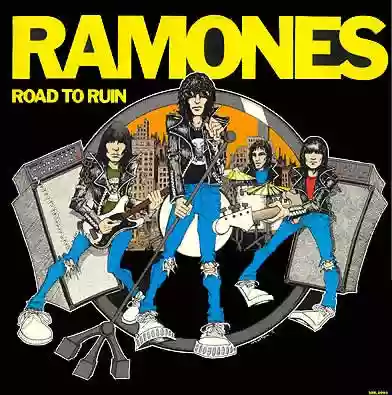
After three albums that are still an unsurpassed example of the most unrestrained and exuberant rock'n'roll primitivism, in 1978 the Ramones found themselves in a situation well-known to many other legendary bands: immense respect from their peers, a decent hardcore base of loyal fan-disciples, a myriad of other groups born from their three chords, but few bucks in their pockets and no significant chart success. It's a situation that often pleases fans more than the band, and in fact, our heroes didn't quite like it, especially because they were well aware they were making music far from devoid of commercial potential (and, in light of the resounding success garnered two decades later by pale epigones like Green Day or Blink 182, one cannot but agree with them). Hence, after replacing drummer Tommy, a victim of tour stress, with ex-Voidoids Marc Bell (Marky Ramone), the four recorded "Road To Ruin". Another example of rock'n'roll primitivism, but a tad more thought out.
Although the longer duration of the songs (which more than once exceed the 3-minute barrier), the cleaner production (among other things greatly benefiting Johnny's sound), and the presence of acoustic guitars and even micro-guitar solos scandalized some punk purists at the time, the rock essence of the Ramones was in fact not at all compromised. A certain craftsmanship is there, and you can feel it, but even the most pop-leaning tracks, namely "Don't Come Close", "Questioningly", and the acoustic cover of "Needles & Pins" by the Searchers, draw liberally from the rock'n'roll of the origins, from those 50s and 60s so dear to the Ramones, and do not sound awkward or affected at all (unlike the next three albums, which suffered from the often overwhelming presence of external producers).
Moreover, the arrival of Marky, who had played hard rock with the Dust, sometimes led to the adoption of more "heavy" and dragging rhythms: as in the initial "I Just Wanna Have Something To Do", which must have been loved by quite a few grunge bands. But the true gem of the album, which alone is worth the purchase (come on, it's 9.90 euros!) is "I Wanna Be Sedated", one of the band's iconic songs, probably their last great misfit anthem: unforgettable riff, melody, and chorus, a one-note solo (Johnny's ingenious response to those who accused him of not being able to play solos), all punctuated by Joey's "pa-pa-papa-pa-papa-papa". These things alone drink up entire discographies of the aforementioned 90s "punk" groups, and more.
If the review seems too emphatic to you, it's because yours truly was initiated into Rock by these individuals. And first love, etcetera etcetera.
Loading comments slowly
Summary by Bot
Road To Ruin captures the Ramones’ transition into a slightly more polished sound without losing their raw punk essence. The addition of Marky Ramone brought heavier rhythms while preserving their rock'n'roll roots. Despite some controversy over the cleaner production and longer songs, the album remains iconic, especially for the timeless hit "I Wanna Be Sedated." This record reflects the band’s struggle for commercial recognition while maintaining artistic integrity.
Ramones
Ramones were an American punk rock band formed in Queens, New York, in 1974 by Joey Ramone, Johnny Ramone, Dee Dee Ramone, and Tommy Ramone. They helped define punk’s sound and look with ultra-fast songs, downstrokes, and leather-jacket iconography. After relentless touring and 14 studio albums, they disbanded in 1996 and were inducted into the Rock and Roll Hall of Fame in 2002.43 Reviews
Other reviews
By Deep-Frenk
The driving riff and catchy melody make it one of the Ramones’ best songs.
They decide to turn to pop punk which offers unexpected melodic cues.
