
 •
Rating:
•
Rating:
THE REVIEW
Introduction: there are groundbreaking films that are works of art and others that are just groundbreaking.
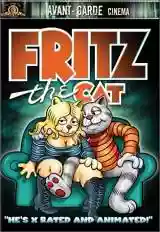
Thirty-five years after its release, Ralph Bakshi's "Fritz The Cat" still doesn't have a well-defined place. Indeed, if the main merit of this animated feature film (78 minutes) was to clearly pave the way for adult animation (as opposed to the traditionally children-oriented Disney animation), it was the first animated film to be banned to minors in the States (resulting in a gain of 20 million dollars against the then impressive, for the times, million spent on production). The artistic limits are very evident and manifest themselves mainly in a weak plot and a screenplay that may have seemed effective back then during a period of full counterculture and youth protest, but now appears mostly easily disjointed and provocative (if not vulgar).
A separate discussion deserves the style used: Bakshi, although highly criticizable, was an innovator in his own way (just think of the rotoscoping technique he used for the controversial animated adaptation of "The Lord of the Rings" in '78), and if the design appears at times garish, it must be remembered that the Israeli cartoonist spent years honing this style, which can thus be defined as intentionally destabilizing and irritating in line with the adventures being told.
The adventures are those of Fritz, a New Yorker cat, who lives liberally in the slums of the American metropolis amidst orgies and disproportionate consumption of drugs with his friends, all humanized animals, and who because of his lifestyle has to defend himself from the "pig cops" (as he calls them) who are drawn precisely as pigs... To escape these, he decides to embark, along with his lover, the provocative and promiscuous Fox, on a trip to the freer California, but during this he will unwittingly get involved in an attack by an Aryan biker, and he will discover that he has lost his virility, which he will regain in the provocative finale..
Derived from Robert Crumb's cult Pulp comic, a character with a truly intense life and a leading figure (among the main ones) in the American Hippie movement rebelling against both societal and artistic rules of the time, the film is therefore an operation that succeeds only halfway (Crumb himself criticized the outcome and in protest killed the comic character, murdered by a lizard...) but it must still be recognized for its courage and dedication used for the production, which was anything but straightforward, and above all, as already mentioned, for its historical merit in breaking away from the prevailing norms regarding animation.
It goes without saying that seen with today's eyes, it often loses its edge, but it's important to remember the historical period from which it originates, namely the late 60s and 70s in America where the rule was to destabilize and in this perspective, one can still find a documentary value. To be avoided like the plague is the Italian version where the dubbing shamefully replaces the original New York slang with voices heavily accented by Italian dialects...
In conclusion, I would like to add a postscript to my introduction: it's obvious that my intent was mostly provocative, but I find it important to make a distinction between works that only had the merit of representing a moment of rupture but with low (properly) artistic results and others that exalt provocation precisely through art. Of course, this falls inevitably into personal taste, but I find it terribly relevant since nowadays art is seen (and exalted) almost only as a moment of provocation (please, be kind and don't beat me too much over this statement...).
Loading comments slowly
Summary by Bot
Ralph Bakshi's Fritz The Cat is a historically significant adult animated film known for pioneering the genre and challenging norms. While its animation style and cultural impact are notable, the plot and screenplay feel weak and disjointed by modern standards. The film captures the late 60s-70s counterculture spirit but often comes across as provocative and vulgar today. Despite its flaws, its courage and innovation remain important.
Ralph Bakshi
American animator and film director, known for pioneering adult-oriented animated features including Fritz the Cat (1972) and for using rotoscoping in his 1978 animated The Lord of the Rings.01 Reviews
