
 •
Rating:
•
Rating:
THE REVIEW
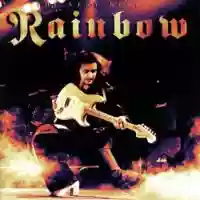
Usually, the various greatest hits or best of don't fully represent the essence of a band but only the fans' favorite tracks and big hits; this is different: from this collection released in 1997, one can perfectly understand the entire artistic journey of this Blackmoriana creation: the evolution, or rather, the incredible involution that led this band (or one man band, depending on the point of view) from being one of the purest, most expressive, brilliant, innovative, and poetic expressions in rock history to being a rock band like many others within 8 years of existence (1975-1983).
Let's follow the order of the album's tracklist: it was the year 1975 and the Man in Black, after leaving Deep Purple, recruited the American rock band Elf, including the extremely talented poet-singer Ronnie James Dio. The result is the album that gave birth to epic metal: "Ritchie Blackmore's Rainbow" from which "Man On The Silver Mountain" and "Catch The Rainbow" are featured in this collection. The first is a splendid hard rock/medieval/Celtic dance, prominently highlighting the Divine Little Man, who with his epic and evocative voice, fully conveys the song's epicness and poetry, while the second is a soft and dreamy ballad, a dreamlike and relaxing vision that became a model for many future bands. (Just think of Born Again by Black Sabbath) It is known, however, that Ritchie Blackmore is famous for his mood swings, and after this beautiful debut album, he decided to leave Elf (obviously excluding Ronnie James Dio) and form a new group with the immense Cozy Powell on drums, Jimmy Bain on bass, and Tony Carey on keyboards. The result is another milestone in rock history such as Rainbow Rising: six songs, six epic emotions, from which "Starstruck" is included in this best of, a very rhythmic and engaging hard rock with a theme of witchcraft and obviously the absolute masterpiece of Rainbow: "Stargazer". A euphoria of mystical hard rock that is, in fact, Ritchie Blackmore's response to "Kashmir" by Led Zep. Eight minutes of magic and dreamlike power. Everything good accomplished in "Rainbow Rising" is confirmed two years later with "Long Live Rock 'n' Roll," which sees the addition of Bob Daisley on bass and David Stone on keyboards. Songs like the title track, an authentic anthem to rock with the usual Divine touch of epicness, the extraordinary "Kill The King" supported by a powerful keyboard base, and the gentle, oriental melody of "Gates Of Babylon" open the Valhalla of rock's doors wide to Rainbow, but just when things seem at their peak, the relationship between two leading figures like Dio and Blackmore cracks, and the Divine Elf leaves Rainbow to join Tony Iommi, effectively marking the end of the mystical poetry of the rainbow.
Blackmore recruits former bandmate Roger Glover on bass and the good singer Graham Bonnet, but the spell is broken: "Down To Earth" is a common AOR album, undoubtedly crafted with great skill, as shown by songs like the catchy and passionate "Since You've Been Gone," but it's still commercial rock. In 1981, there was another change of vocalist with the arrival of Joe Lynn Turner, but the music doesn't change: Difficult To Cure is still an AOR album, albeit very well made and tasteful, as demonstrated by the beautiful "I Surrender." The level drops further with the subsequent albums "Straight Between The Eyes" of 1982 and "Bent Out Of Shape" of 1983, as testified by singles (this time really pretty ugly and banal) like "Stone Cold" or "Street Of Dreams." Here Blackmore, realizing that his Rainbow no longer had anything to say, folds up shop (effectively losing the competition with rival Tony Iommi, who even during the most sordid and vulgar glam rock years never lowered his standards, producing masterpieces like "Seventh Star" or "The Eternal Idol"). Thus leaving for posterity the memory of a great band, which paved the way for that magnificent movement that includes groups like Manowar, Rhapsody Of Fire, Gamma Ray, Dragonforce, Hammerfall, and many others.
Loading comments slowly
Summary by Bot
This review of Rainbow's 'The Very Best Of' highlights the band's artistic journey from innovative epic metal pioneers to a more commercial rock sound. It praises early groundbreaking albums featuring Ronnie James Dio and notes the decline in creative vitality in later years. The collection effectively showcases this progression, capturing both the band's peak and eventual fade.
Rainbow
Rainbow are a British rock band formed by guitarist Ritchie Blackmore after leaving Deep Purple, known especially for the Ronnie James Dio-fronted mid-1970s run mixing hard rock with fantasy/epic themes, and later for a more AOR-oriented direction with different singers.20 Reviews
