 •
Rating:
•
Rating:
THE REVIEW
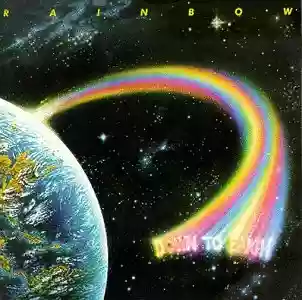
The album Long Live Rock N' Roll and its subsequent supporting tour brought Rainbow, the band "wanted and created" by Ritchie Blackmore, fame and success. Sometimes, however, fame and money aren't enough to smooth over conflicts among members. This also happens with Rainbow. The relationship between the elf Ronnie James Dio and Ritchie Blackmore was very tense at the time, but it became openly apparent during the Japanese tour. In a hotel, in fact, Ritchie Blackmore threw a fit and argued with Ronnie in front of about fifty embarrassed fans. Furthermore, Ritchie was pushing to change the sound towards more hard blues sonorities, something that was frowned upon by Dio who, for his part, wanted to maintain the classic epic sound of Rainbow. But the Rainbow is a "creature" of Ritchie, and therefore the English guitarist has the final say. New album, lineup revolution: in place of Daisley and Stone, the talented Don Airey enters on keyboards and the great Roger Glover on bass (a companion of Ritchie in the Purple). Cozy Powell is confirmed on drums. In place of Dio, the excellent hard-blues singer Graham Bonnett is "hired," endowed with a very warm voice. With this lineup, the group releases the CD DOWN TO EARTH in 1979.
It starts with "ALL NIGHT LONG," a track played with the usual class and skill, but which doesn't leave any particular mark, except for Bonnet's excellent first performance, which bodes well for the rest of the CD. In the group's live activity, this song will replace "KILL THE KING" as the opening track. At track number two, we find "EYES OF THE WORLD," one of the songs that most reminds of the Dio era, and also one of the best. The mysterious sound of Airey's keyboards introduces us to the piece, which then unfolds in a great rhythm by Powell and a great vocal performance by Bonnett. Notable is Blackmore's excellent solo, which seems particularly inspired. We move to "NO TIME TO LOSE," a very direct and catchy song (this song clearly shows the territories Rainbow were moving towards), driven by a great riff from Blackmore and the amazing works of Glover in rhythmic base together with Cozy Powell. At number four, we find "MAKIN' LOVE," a very soft and delicate piece with a very catchy chorus. Very well done by Ritchie, who with his guitar, very delicately accompanies this song dominated by Bonnett's voice, which fits very comfortably in this type of song. The second side opens with the hit (written by Russ Ballard) "SINCE YOU BEEN GONE," a song that shows the new course taken by Rainbow, focused on easy-listening. Not that this is a flaw. The song is indeed carried by a very well-done riff by Blackmore (a riff that we have all heard in one way or another) and by Bonnett's voice. Excellent also is the solo at the end of the song by the Man In Black. This song will over time become the true hit single (along with "I Surrender," also written by Ballard) of the group. Another crucial point of the album is the melodic blues of "LOVE'S NO FRIEND." Masterful is Bonnett's performance and excellent Airey's work on the keyboards. Blackmore here brings out a very engaging and successful solo, making "Love's No Friend" one of the most beautiful and intense tracks on the album.
With the last two tracks, Rainbow take us back to more hard sounds. The first track, "DANGER ZONE," unfolds on a raw and edgy riff by Blackmore. The rhythm supported by the rhythm section is fast and engaging, and gives this song a decidedly upbeat feel. Very well done by Bonnett and notable is a beautiful solo by Blackmore, who proves to be always in top form. It closes with the best track of the album. Rainbow pick up the pace and give us an extraordinary track, very fast and driving, "LOST IN HOLLYWOOD." The piece begins with a drum pattern by Powell (great work by Cozy in this song), who then gives way to a great riff by Blackmore. Excellent singing and the work of Airey and Glover on bass and keyboards. In the change, Rainbow first presents us with a beautiful keyboard solo by Airey, then Blackmore hits the accelerator and pulls out a very "bloody" solo, certainly the best of the entire album. Very well done is Bonnett, who proves he knows what to do even with the speedier songs.
An album that will probably make you wrinkle your nose if you are a fan of the Dio era. But you shouldn't (in my opinion at least) make too many comparisons with the albums with Ronnie. This is a whole different story. A story that, even after repeated listens, will not disappoint you.
Loading comments slowly
Summary by Bot
Rainbow's 'Down To Earth' marks a departure from the Dio era with a new lineup and a harder blues-rock sound. Featuring strong performances by Graham Bonnett and inspired solos from Ritchie Blackmore, the album delivers catchy and engaging tracks. Though different from previous works, it stands as a solid and enjoyable chapter in Rainbow's career. Highlights include hits like 'Since You Been Gone' and the driving 'Lost In Hollywood'.
Rainbow
Rainbow are a British rock band formed by guitarist Ritchie Blackmore after leaving Deep Purple, known especially for the Ronnie James Dio-fronted mid-1970s run mixing hard rock with fantasy/epic themes, and later for a more AOR-oriented direction with different singers.20 Reviews
