
 •
Rating:
•
Rating:
THE REVIEW
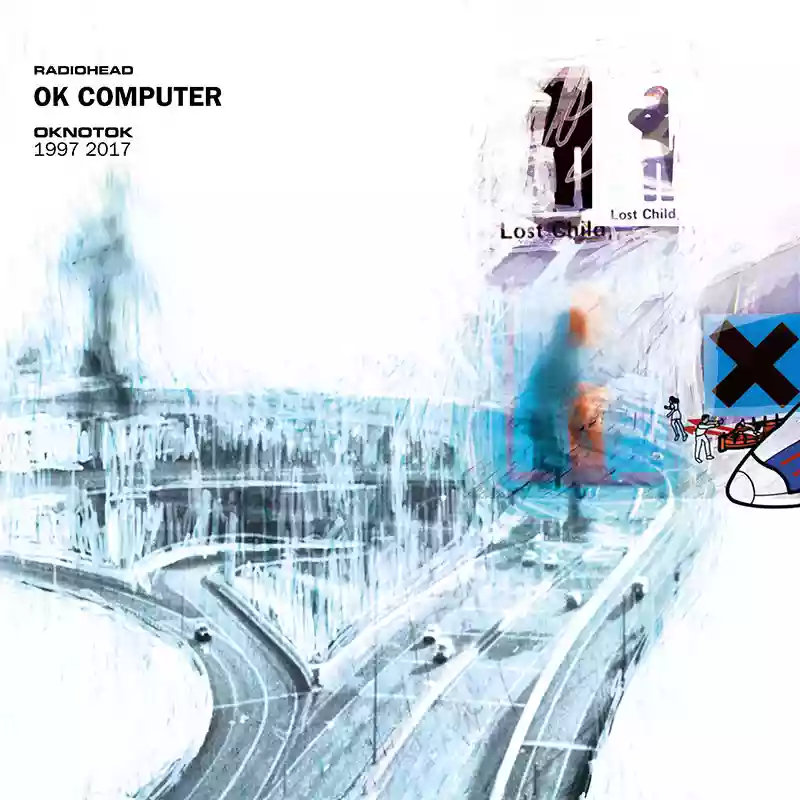
It's so clear that this twentieth anniversary definitively sanctions the classic status of an album that was already a classic shortly after its release, so evident is the band's intention, which is among the least self-celebratory ever, it's all so obvious that I won't dwell on these aspects. The magazines have already done it: Pitchfork, for example, has been praising this album for months with various specials, there's no need to add anything else.
Let's talk about details: it amuses me when people shout miracle over a remastering, as if the songs were indistinguishable jumbles before. Listening to these new versions, however, I couldn't help but notice Godrich's work, which was also excellent with A Moon Shaped Pool. It may be partly a suggestion, but the tracks seem more vivid, richer, more three-dimensional. The sound mix is clearer, even though the 1997 version was already very good. But here, the work is refined. The discourse is subtle and is a dialectic with the experienced listener, who knows the original versions very well. Nigel practically says to you: "Did you notice the strings in Airbag? Hear how beautiful they are, how well they blend with the distorted guitar." In short, I had the impression of discovering more of an entire sonic undergrowth that I hadn't appreciated as much before. The background sounds manage to earn their share of glory along with the main parts: Godrich makes use of the skills already shown in last year's album. An OK Computer with the richness of Moon Shaped's exquisite production. And even the first version was not exactly a crude album; it was also full of details. Yet here, it goes even deeper.
Subterranean is even more psychedelic, with reverberated sounds that trap the listener. Exit Music is even more alien in the first part and grandiloquent in the second: a build-up that smacks even more of opera. Let Down is better appreciated for its chimes and the entire play of echo responses suggesting the alienated frenzy of contemporary living. I even rediscovered Fitter Happier and Electioneering: the former for its somewhat krautrock backgrounds, the latter for the lushness of its distortions, and it's a track I've always found off the beaten path.
Godrich's work becomes impressive with tracks already magnificently produced and that make their richness of production a trump card: Climbing Up the Walls would seem impossible to improve. Yet further filigrees come to light, cries, and vocalizations that might have been lost before in the mix, very light sound veils that guarantee the pleasure of rediscovery. Even Lucky, with its reverberated guitars, would seem impossible to improve. In this case, the difference is not that wide, but there is something additional. The finale of The Tourist is also a delight, with better distinction of the various sounds.
The reflection is this: an album so loved and praised had more to offer. Such complexity of arrangements must further make one reflect on the meaning of the change in direction given by Kid A, which in my view works essentially by subtraction.
As for the three unreleased tracks, I think I Promise is a little masterpiece: the simplicity of the melodic line and rhythm, which are nevertheless highly effective and enduring, should not distract too much from the wise architecture of strings that form the background. But this reissue is precisely a celebration of detail, the importance of just lightly brushed backgrounds. Man of War seems to only confirm the more rock-inflected style that the band has decided to set aside: what was cut out only makes the chosen sound and mood of the 1997 album all the more important and consistent. And the pruned branches are anything but dry. First-rate pieces. Not to mention Lift: the band declared they didn't release it to avoid having too big a success. And so OK Computer shines further because it is the result of painful choices, severe cuts.
About the other b-sides, already present in the singles and known to the public, I must admit I never delved into them on my own over the years. Maybe I did well, as now I'll have an additional album to enjoy all together, and remastered too. The feeling is that the modes are consistent with the style of the OK cpu era but without the communicative urgency and effectiveness of the tracks that ended up on the actual album. Beatle-like traces in Polyethylene, which frankly no band in the world would have left off an album. Pearly is also amazing. Palo Alto would have carried entire albums of other bands on its shoulders.
This is one of the evidences of OKNOTOK: how much musical goodness was sacrificed in favor of a clearer, more concise vision without redundancies? Those who complain that, for instance, the latest work includes True Love Waits don't understand, as if our guys had creative fertility problems. No, that track made sense in that album, marking the end of a love. Just as these make sense today, after twenty years, to testify that aside from the concept, aside from those 12 perfect and perfectly cohesive songs, there was much else that was set aside.
(On a personal note. I listened to this album as a youngster: more than just appreciating it, it shaped my musical tastes. Then I didn't listen to it anymore. Now, between the concert in Monza and this reissue, I'm facing it again. And I can evaluate it after 13 years in which I've refined my tastes and ear. I hadn't realized how beautiful it was, in fact. I had made it my own uncritically. Now I understand the musical values and contents it conveys. To say, the alien perspective on human beings, the work that slowly kills you, the tourist's mania for speed but lack of direction, the end of luck that foreshadows a kind of ice age, the wings that sprout to escape a world devastated by overgrown transport lines.
Musically, this album is the golden ratio of rock. You can't do better. I fully understand it only now. And then the detour of Kid A etc. becomes clear. A push and pull between the obsession for perfection embodied here and the need to find a variation, a diversion, a new way. And the subsequent albums continue with this dialectic, more or less. In Rainbows and Moon Shaped are variations of this golden section, in between the mongoloid son King of Limbs. Hail to the Thief balances beauty and electronic regurgitations, in a moment of chaos dominated by politics and twilight. Without those outbursts, without Feral, there wouldn't have been Moon Shaped; it's the fire that burns and reduces everything to ash. The ash then fertilizes the ground, and from there sprouts daydreams like Daydreaming).
Loading comments slowly
Summary by Bot
This review praises the 20th anniversary reissue of Radiohead's OK Computer as a definitive classic reaffirmed by Nigel Godrich's refined remastering. It highlights the enriched sonic details, the value of previously unreleased tracks, and reflects on the album's lasting influence on alternative rock. The review also places this work within the broader context of Radiohead's evolving artistry and production mastery.Tracklist Lyrics Videos
Radiohead
Radiohead are an English rock band formed in Abingdon, Oxfordshire. The members are Thom Yorke, Jonny Greenwood, Colin Greenwood, Ed O'Brien and Philip Selway. They evolved from guitar-based alternative rock into work that incorporates electronics and orchestration.120 Reviews
