
 •
Rating:
•
Rating:
THE REVIEW
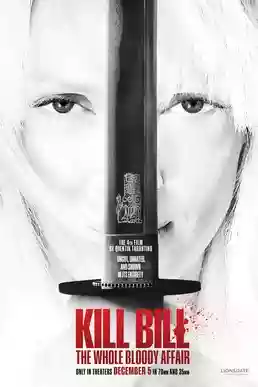
It only lasted four hours and ten minutes, and honestly, I was a bit disappointed. Websites and social media pages spoke of epic Fantozzi-like durations: four hours and forty minutes, two hundred and eighty minutes, eighteen reels, six acts. None of that. Basically, it’s the juxtaposition of the two films, with some passages trimmed because they were unnecessary (between the end of the first and the start of the second), one extra animated scene (O-Ren’s story), a few different shots, tiny additional fragments, and the massacre sequence of the Crazy 88s in color (before it was black and white for censorship reasons), which is no small thing.
I missed the additional scene after the closing credits (in CGI) because a mist was starting to rise in the theater and the aroma of the many Tarantino nerds present was getting overwhelming. Plus, I had forgotten about it.
The clash of swords
But it was still a useful viewing. When the films first came out, I didn’t really know Tarantino yet, except vaguely as a name mentioned here and there, and I never got to see “Kill Bill” in the cinema. The difference, as you would expect, is not insignificant. Because this is a film of whirling images, but also—and above all—of sounds: perfectly chosen music, almost legendary by now, and noises. Very loud noises, the clash of Japanese swords is one of the absolute main characters. The violence of the steel in the theater exploded with all its brutality, nothing like the (endless) home viewings.
The sequence of the massacre at the House of Blue Leaves struck me differently than I remembered. More tragic, exhausting, less choreographed. Maybe the saturated colors, maybe the lack of music in some parts, but I felt the dramatic side much more strongly, which nevertheless coexists with the playful one. Here Tarantino plays with the limits of genre cinema, exaggerates hyperbolically but then allows for moments of compassion, when the Bride spares or wants to spare the younger members of O-Ren’s army.
An organic structure
The most important discovery has to do with the film’s organic structure. In the past, they always seemed very different, unbalanced, as if they had been conceived that way, already separated. Now, however, it’s clear to me that the structure works perfectly over the arc of the ten chapters. While the first five form a sort of choreographed introduction, a technical tour de force, the others go to the heart of emotion, fully defining the characters and delving into their conflicts. The emotional lightness of the first half serves the dramatic weight of the second. In fact, the viewing of over four hours flows beautifully. I don’t feel I can say that such a duration is a sign of self-indulgence by the director, because the construction is all necessary.
A saga yet to be invented
The power of this film, in fact, lies not only in what we see, but also—and above all—in what we don’t see, what is only hinted at. “Kill Bill” weaves a web of references to a past that is only minimally shown to us. Tarantino builds a world that seems to come from dozens of non-existent films: everything gives the impression of having a backstory that the viewer will never see.
The relationships between characters are always complex, in flux, and often recall stories in which masters and disciples once cared for each other and then betrayed and hated each other. Bill and Hattori Hanzo, Pai Mei and Elle, Beatrix and Bill themselves. A saga of which we know only a few fragments, despite the numerous flashbacks.
The moral code
The boundary between good and evil is constantly debated, just beneath the surface. A film of swords and bloodbaths that still manages to offer, in some way, a sense of morality: Bill betrayed the principles that Hattori Hanzo considered sacred, Elle betrayed Pai Mei’s code, Beatrix abandoned Bill precisely because, when she was pregnant, she could no longer embrace his amoral rules.
Even the “villains” show moments of hesitation in this respect: Vernita Green and the Bride do not want to fight in front of little Nikki, O-Ren apologizes before the final showdown, Bill and Elle both claim that “that woman deserved better,” only to do their worst when they actually meet her. Bill himself tries in some way to explain himself in the final dialogue. The Bride, meanwhile, has no qualms about cutting down dozens of lives that had nothing to do with her story in order to get her revenge. There are no good guys here.
And this is the perfect summary: all the characters sense an ethical drive, but cannot disobey the strict rules of their assassin world. Beatrix, on the other hand, does exactly the opposite: to obey her ethical feeling as a mother, she breaks every barrier of the cynical system she was part of.
Loading comments slowly
Summary by Bot
The review celebrates Tarantino's 'Kill Bill: The Whole Bloody Affair' as a singular blend of style, action, and storytelling. It praises the film's seamless direction, unforgettable soundtrack, and unique atmosphere. The reviewer emphasizes the movie's impact on pop culture and Tarantino's unmistakable imprint. The verdict is a wholehearted endorsement for both new viewers and longtime fans.
Quentin Tarantino
Quentin Tarantino (born 1963, Knoxville, Tennessee) is an American film director, screenwriter, and actor known for nonlinear storytelling, stylized violence, and pop‑culture‑infused dialogue. He won the Palme d’Or at Cannes for Pulp Fiction and Academy Awards for Best Original Screenplay for Pulp Fiction and Django Unchained.27 Reviews
