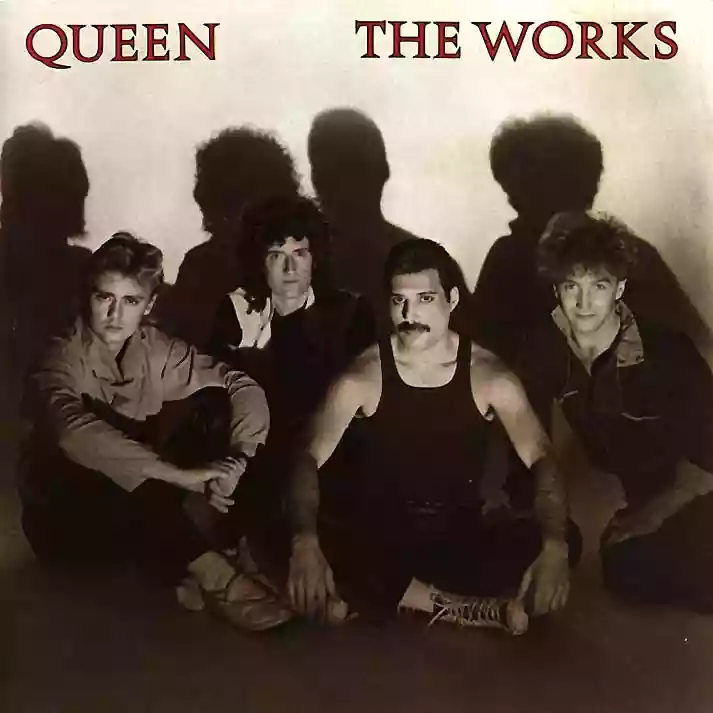

 •
Rating:
•
Rating: THE REVIEW
With "Live Killers" (1979) the career of the Queen puts a definitive point on what had been the artistic path taken from the self-titled debut up to the end of the '70s. The electronic turn of "The Game" (1980) comes less than two years from the rocky sound of "Jazz" (1978), whose listening can only highlight the desire to fully live the rock'n'roll style focusing more on the engagement of the tracks and less on the operatic artificiality, the same which had favored the grandiosity of a combination of sounds and styles practically unique. "Flash Gordon" (1980) celebrates the failure of the incursion of the Queen into the world of soundtracks and no less is the flop with the disco of "Hot Space" (1982), except for the famous single "Underpressure" (with Bowie) which will still reach the top of the UK chart.
The group's live reputation is absolutely not scratched by the artistic ambitions of the last record and even less the desire to meet the commitments of Freddie Mercury (collaboration with Giorgio Moroder for the reissue of the film "Metropolis" from 1927), Brian May (album together with Eddie Van Halen for the blues jam session under the name Star Fleet Project), leaving Roger Taylor and John Deacon to seize the opportunity of the deserved rest after two years of hard work.
For the new album, the chosen studios are the Record Plant of New York. The atmosphere is right and will allow Mercury & Co. to re-emerge with their own strengths, dedicating themselves body and soul to the creation of an album that will have the task of reconciling (though the intent will be achieved only in part) the old guard of their supporters and (no less) a rich audience made of new followers able to get excited about the new material and what was previously realized.
The will of that continuous evolution not always expressed at best in the last years of career is fully manifested with "Radio Ga Ga"; chosen as a single and placed at the beginning of the new album, it is a child of that technological creative streak that on "The Game" had taken its first steps, allowing the modern writing of Taylor to emerge with energy paving the way for an uncontainable lyricism, able to reach a large audience also due to the futuristic clip, inspired by the avant-garde images of the mentioned masterpiece by Fritz Lang. Further ahead, the synthetic nature of "Machines (or Back to Humans)" looks, a clumsy attempt to make use of electronics which - though pleasant - does not hide its limits. Bringing the Queen back to the track (and not only for dancing ...), is the lightness of "I Want to Break Free" (supported by a farcical video clip in which the four musicians playfully display their more feminine side), which allows May to freely expand with a brilliant solo, letting the only track conceived by the mild-mannered Deacon excel over the top. It is the fiery fusion present in "Tear It Up" that reminds us of the band's ability to strike a pose, a track paired with the pure hard rocker nature of "Hammer to Fall" which plays its strength on a powerful riff ( ... the self-made Red Special of Brian makes itself heard again ...) as much as on the unsurpassed choruses, on which the ingenious producer Roy Thomas Baker had already been working from the first records made with the group. For the tracks to be placed on the album, the Queen chooses from among twenty available (others will fill the next albums including the solo careers of Freddie and Roger), those suitable for the musical path undertaken in the eighties even though inevitably radio friendly. Quite different is the depth of "Keep Passing the Open Windows" in which, at a rock pace, one is encouraged not to give up on suicide, allowing "Man on the Prowl" (evident the call to "Crazy Little Thing Called Love") to drag us into a r'n'r vortex of other times. For the relaxed (and sugary) atmosphere of "It's A Hard Life" - for whose intro the opera "Pagliacci" by Leoncavallo is used -, the counterpoints on the piano by Mercury blend exemplarily with the incursions of May to then celebrate both with the melancholic and concluding "Is This the World We Created ...?" a perfect musical symmetry, also expressing in an impeccable moment of sonic purity, perhaps only seemingly out of context with the rest of the album.
Indeed, what can be considered the eleventh studio work of the British band proves to be a musically more than valid product even with a handful of tracks that, even indulging in artificial arrangements, is able to hit the mark at first listening. An LP to which the faithful subjects of the Queen can look with justified detachment, without ever denying the indelible charm of an era that understandably emerges from its grooves.
Loading comments slowly
Summary by Bot
Queen's The Works marks a confident return to form in the early 1980s, blending rock and electronic influences. With standout hits like Radio Ga Ga and I Want to Break Free, the album balances experimental sounds with radio-friendly appeal. It features strong musicianship and memorable melodies showcasing Freddie Mercury and Brian May's talents. Though some electronic efforts show limits, the album overall revitalizes Queen's artistic path and continues to engage both longtime fans and new listeners.Tracklist Lyrics Videos
Queen
British rock band formed in London in 1970. Core classic lineup: Freddie Mercury (lead vocals), Brian May (guitar), Roger Taylor (drums) and John Deacon (bass). Known for genre-crossing albums and stadium anthems such as "Bohemian Rhapsody", and for legendary live performances (notably Live Aid 1985). Freddie Mercury died in 1991.143 Reviews
Other reviews
By claudio1
The Works, despite having only 9 songs, gives the impression of being a beautiful almost complete album.
Is This The World We Created...?, born from the first and only collaboration between Freddie and Brian, is a brief but rarely intense piece.
By Viva Lì
The most overrated band in music history... releases this tedious 'The Works', the umpteenth duplicate, the umpteenth disappointment.
Mercury’s voice isn’t ungracious, it’s gritty, it’s passionate, fine, okay, but the music, the lyrics, the atmospheres, are often recycled stuff.
By Walterstarman
The Works is a great album, the grandchild of a wise grandfather ('The Game') and the child of an overly subversive father ('Hot Space').
'Radio Ga Ga' was loved by 80s electronic music enthusiasts and the world but not well-regarded by usual rock-centrists.
