 •
Rating:
•
Rating:
THE REVIEW
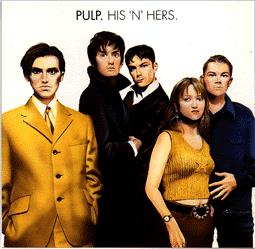
"His 'n' Hers", released in 1994, is probably the true masterpiece of Pulp, one of the last cultured, intelligent, refined, and at the same time "accessible" musical realities to have climbed the Pop charts. This album represents the real turning point for the Sheffield Band, it will be the launchpad that will later lead Jarvis Cocker to pull out of the hat a stunning record like "Different Class" (which I have already reviewed) and, subsequently, the restless "This Is Hardcore" (which I will review). Let's take a few steps back then, and return to the golden times of Britpop, a "movement" about which much unkindness and unfounded generalizations have been said for a long time: if I ever had to exhibit evidence as a "devil's advocate" of how that scene actually had more than valid cards, my choice would surely fall on this "His 'n' Hers".
This album is predominantly centered on the themes of bittersweet teenage memories, the first tumultuous contacts with love and sex, nostalgia for the typical disturbances of lost innocence. Jarvis, no longer a kid, through his lyrics that are halfway between deeply personal and regret for things that could have been and yet weren't, becomes the spokesperson of a generation of kids who literally find themselves in his lyrics and the stories he tells. Cocker's style is descriptive but deeply felt, with his wordplays, pauses, whispers so reminiscent of another newly rediscovered Crooner (Scott Walker). The Band (which boasts the talented Candida Doyle on keyboards and the charming Steve Mackay on bass) gives maximum emotion to his verses: I don't exaggerate if I say that those Pulp, for the impact they had on the youth imagery of those years, can be compared to Vasco Rossi in Italy.
The highlights and social/progressive commitment of "Different Class" were yet to come, with the exception of the initial "Joyriders" (inspired by the Sound of Suede, which was on a strong rise at that time), a sarcastic portrait of classic suburban bullies. The main theme remains love and the dissatisfaction that love brings you: the lively "Lipgloss" talks about a young woman frustrated by a relationship she can no longer escape, sucked into the monotony and routine of an increasingly flat and predictable life.
The morbid "Acrylic Afternoons" is an outburst from Jarvis who retreats into the illusion of dreams to imagine erotic encounters with girls that will never "realize"; the tormented "Have You Seen Her Lately" is Jarvis's plea to a she not to have her "life turned into a dumpster" by a man who doesn't deserve her; "Babies", poignant and nostalgic, is a teenage memory in which there's everything to be moved, a kind of story (listen to the song and read the lyrics, you'll understand) that takes a fatal turn towards the end, accentuated by the acceleration of the track, almost giving the idea of a past that for a moment had become "present" again and instead vanishes, like the regrets of a Cocker in splendid form. A masterpiece. It's high-class Pop that Pulp offer in these tracks: the Singer's erotic obsessions and his melancholic youthful reminiscences might seem trivial elements, but they are rendered with truly commendable elegance and lightness. Cocker leads the listener to empathize with the stories, to live them. "Oh imagine that this is a film/ and that you are the star/ and that soon we will enter the place where you will understand that you will have to give your heart/ oh give your heart to me" he sings in "Happy Endings". It's hard not to be drawn into a song-symbol of the album like "Do You Remember The First Time?", a true anthem: to the notes of a U2-style Bridge and a chorus made memorable by the arpeggio of Russel Senior's guitar, it tells of a meeting between two former lovers changed by time and aware that nothing between them will ever live up to their memories.
The subsequent "Pink Glove" is another blow to the heart, an unusual and venomous declaration of love accompanied by an irresistible melody worthy of the Style Council: here it's the keyboards of Candida that seem to reach up to the sky that stir emotions. After the soft and romantic ballad "Someone Like The Moon", it closes with the metaphysical tale of "David's Last Summer" but the desire to listen to the album again is there, absolutely. As rightly noted by the group in the lyrics booklet "Please Do Not Read the Lyrics Whilst Listening To the Recordings": and surely a group like the Italian Baustelle must have listened to this album until they literally wore it out, given the enormous influence of the English Band on them.
Influences or not, I miss Pulp so much.
Loading comments slowly
Summary by Bot
Released in 1994, Pulp's His 'n' Hers is hailed as their true masterpiece and a turning point in Britpop. The album explores themes of love, nostalgia, and youthful innocence through Jarvis Cocker's insightful lyrics and emotional delivery. With standout tracks like 'Do You Remember The First Time?' and 'Babies,' it captures bittersweet teenage memories with elegance. The album's sophisticated pop sound and storytelling made a lasting impact on the 90s music scene.Tracklist Lyrics Videos
Pulp
Pulp are an English rock band from Sheffield, associated with the Britpop era and fronted by Jarvis Cocker. After years in relative obscurity, they reached major success in the mid-1990s with albums such as Different Class, followed by darker, more adult work like This Is Hardcore.13 Reviews
Other reviews
By Lao Tze
"'Babies' by Pulp is the voyeuristic anthem par excellence."
"'His 'n' Hers' is a box that you must be very careful to open - at the risk of having a mountain of melancholy, repressed frustration, faded memories from years ago crumble on you."
