
 •
Rating:
•
Rating:
THE REVIEW
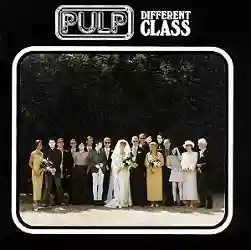
Writing about this album is for me a dive into the past, back to my 15-year-old self: it was 1995, in the "Belle Epoque" of Britpop, a genre often considered in its most negative sense but which was actually the last true musical trend to capture a particular generation not necessarily English or Anglophile. This "Different Class" was one of the cornerstones of that moment when England reclaimed the scepter of Pop (or Rock) after years of American dominance with all those nihilistic and self-replicating Grunge bands. I focus on Pulp (who had already been in the independent scene for at least 10 years) because among all the bands that emerged in those years, they were the most effective, perhaps even more than Blur with "Parklife", in giving voice to the reality of young proletarians in a more literary, almost "Pasolinian" perspective (thanks to the lyrics of the never too appreciated Jarvis Cocker).
With this great album, Pulp gained popular success driven by two hits like "Common People" (an attack on the hypocrisy of the fake-socialist bourgeoisie) and the melancholic "Disco 2000". While musically the band picks up a certain retro taste for some '70s English Rock "sacred monsters" (Roxy Music, Scott Walker, David Bowie) reinterpreting them in their own style (the contribution of keyboardist Candida Doyle was fundamental), it is Cocker's lyrics, a decadent and intellectual singer, that leave a mark. Pulp's world is a provincial world, of dreams clashing with the harsh reality of unemployment, drugs, the impossibility of changing one's destiny: it's a world that goes beyond Sheffield, becoming the theater of the stories narrated (sometimes in the first person, sometimes not) by Cocker.
"Mis-Shapes", "Sorted for e's Wizz", "Underwear" and the poignant "Something Changed" are little portraits of everyday life, never rhetorically exalted but described with a sometimes disarming realism. Ambitions, illusions, love, sex, and a desire to live become the themes on which Cocker expresses his reflections, halfway between typical British humor and the bitterness of perpetual existential dissatisfaction.
The cold and dark "F.E.E.L.I.N.G.C.A.L.L.E.D.L.O.V.E." is where Cocker reveals himself the most, hinting that the man who until then had never given space to love is indeed him, an emblem of one of the many industrial cities that end up suffocating social relationships and the prospects of a different life.
To the aristocratic girl who in "Common People" would like to live one day as a "common person," Jarvis replies that "when you're alone in your bed, and you see the roaches climbing the wall, all you need to do is call your dad to stop it all and go back home"...
Loading comments slowly
Summary by Bot
The review reflects on Pulp's 1995 album Different Class as a defining Britpop record that voices the realities of youth and working-class struggles through literary lyrics and nostalgic 70s rock elements. It highlights key tracks and Jarvis Cocker's role as a thoughtful social commentator. The album is praised for its authentic portrayal of ambition, love, and social challenges beyond its Sheffield roots.Tracklist Lyrics Videos
Pulp
Pulp are an English rock band from Sheffield, associated with the Britpop era and fronted by Jarvis Cocker. After years in relative obscurity, they reached major success in the mid-1990s with albums such as Different Class, followed by darker, more adult work like This Is Hardcore.13 Reviews
Other reviews
By david81
It’s the Pulp of "Different Class" (1995 a magical moment for British Pop)... one of the best records of the 90s, definitely the one that best describes England of those years.
"Common people"—a danceable talk—sounding much like a B-grade disco ornamented with lyrics worthy of the best Irvine Welsh.
