
 •
Rating:
•
Rating:
THE REVIEW
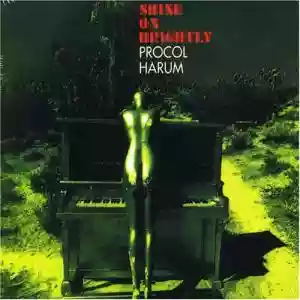
It might be the melancholic voice of Gary Brooker, it might be the Hammond of Matthew Fisher, it might be that romantic atmosphere that oozes from every note, but when faced with an album like "Shine On Brightly," one cannot help but agree on the importance it had for the music of the years to come.
A refined and elegant work, standing among the very first albums of progressive, then still in the womb of the groups that were giving birth to it, including Procol Harum.
The album in question was released in 1968, a year after the worldwide success of "A Whiter Shade Of Pale" and the release of the first LP. It is a mature work, rich in baroque elements and continuous references to classical music; along with the previous one, the forerunners of baroque or symphonic rock, call it what you will.
And naturally, an album worthy of being called great must be played by a great group (a bit like the Cinghiale brush advertisement...) or at least in good shape, and Procol Harum was both. Here, none of the band's components clash, on the contrary, there are features that shine and together exalt the music itself. For example, the warm and ringing voice of Gary Brooker, the Hammond organ of Matthew Fisher, the trademark of their sound, Robin Trower's blues guitar, along with a well-crafted and respectable rhythm section with Barry Wilson on drums and David Knights on bass. The group also counted a lyricist in its ranks, Keith Reid. Another important factor that makes this band's sound unique is the fact that besides an organ, there is also the constant presence of a piano, played by the singer, which often walks on the base perfectly crafted by Fisher's hands.
But let's get to the album, composed of 7 tracks including a 17-minute suite, one of the first in rock history. It starts with "Quite Rightly So", brief but intense. Extraordinary singing and a bouncing organ line that, right after listening to it, makes us want to start whistling it. The title track is also beautiful (which the group will also sing in Italian with the title "Il Tuo Diamante"), with piano and guitar creating a perfect blend. In the middle, a notable organ solo of fine quality. Along with the previous piece, two songs that paradigmatically highlight the band's style, capable of moving and full of sentimentality.
Next is "Skip Softly (My Moonbeams)", a track with different musical settings, more whimsical and hard thanks to a guitar solo leading us to the final digression. "Wish Me Well" is instead a piano piece on which Robin Trower draws continuous flashes, reminiscent of the Rolling Stones. "Rambling On" brings us back to the style that most represented the group, with a slightly melancholic piano base and the warm, smooth guitar ever-present to mark the rhythm. In the finale, a register change under the sign of carefreeness in a fervor of sounds. Another excellent piece, magnificently interpreted by Gary Brooker, the group's spearhead. "Magdalene (My Regal Zonophone)", the penultimate track, is also excellent like any moment taken from the album, where in the end one can notice a sort of fanfare that revisits the previously outlined theme.
The album closes with the suite "In Held Twas In I", composed of 5 movements:
- Glimpses of Nirvana: the intro of the song takes us to paradisiacal musical shores, thanks to a heartrending piano merging with the sitar, perfectly representing the piece's sweet and peaceful atmospheres, marked by a barely hinted and whispered singing, almost like poetry.
- Twas Teatime At The Circus: a very short section, seeing a decisive change in musicality towards more carefree and circus-like themes, before being interrupted by an explosion that makes way for
- In The Autumn Of My Madness: another masterpiece of drama, with excellent Hammond parts embroidering the crescendo leading to a more "avant-garde" subsection, loaded with psychedelia, a precursor to much progressive, which imperceptibly allows us to gently enter
- Look To Your Soul: summarizing the group’s musical canon with the usual tension and epicness.
- Grand Finale: the suite ends with a fully instrumental section, accompanied towards the end only by almost ecclesiastical choirs. Even the guitar solo is precious, rising above the song and decreeing its finale. A surely fitting title for the last part of the suite.
Thus ends the album, refined, melancholic, an absolute masterpiece of the '60s, hinting at the music to be revisited in the following decade by various groups. Fundamental.
Loading comments slowly
Summary by Bot
Procol Harum's 1968 album Shine On Brightly is a refined and elegant work that played a crucial role in the birth of progressive rock. Featuring Gary Brooker's emotive voice and Matthew Fisher's iconic Hammond organ, the album blends baroque and classical influences with rock. Highlights include the innovative 17-minute suite 'In Held Twas In I' and tracks that showcase the band's mature musicianship. This album remains a timeless masterpiece of the 1960s, influencing many future artists.Tracklist Lyrics Videos
07 In Held 'Twas in I: Glimpses of Nirvana - 'Twas Teatime at the Circus - In the Autumn of My Madness - Look to Your Soul - Grand Finale (17:31)
Procol Harum
Procol Harum were an English rock band formed in the 1960s, known for blending rock with classical and blues influences and for their signature Hammond-organ-and-piano sound. Their biggest hit was the 1967 single “A Whiter Shade of Pale,” featuring Gary Brooker and Matthew Fisher, with lyrics by Keith Reid.12 Reviews
