 •
Rating:
•
Rating:
THE REVIEW
It's hard to separate the name of Procol Harum from the song that made them popular worldwide back in 1967, namely "A Whiter Shade of Pale"... that Hammond organ riff by Gary Brooker, inspired by Bach, was one of the sound symbols of the 60s, and not only that, given that the single of the track made several notable comebacks in the world charts over the years, eventually breaking the barrier of 10 million copies sold.
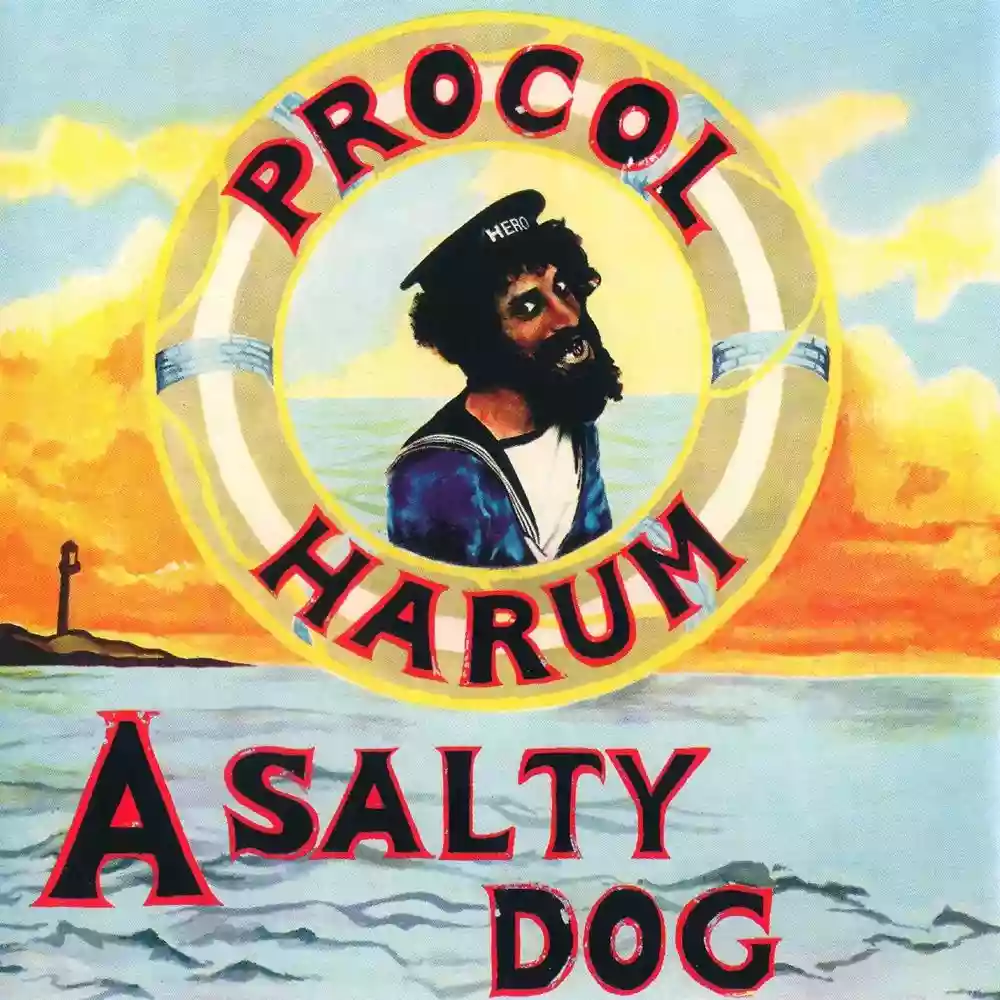
In Italy, the band caught particular attention from local artists, since both Dik Dik ("Senza luce") and Camaleonti ("L'ora dell'amore," or "Homburg") became successful with remakes of their songs. But Procol Harum, although inevitably associated with that classic, were able to produce other great music, and in 1969 they released their third work, namely this "A Salty Dog," which in our country still had a particular resonance, and those with my age or older might remember in what context.
For those who aren't around the "forties" like myself, let me clarify that in the mid-70s, there was a hugely popular program on Rai among the youth of the time, called "Avventura," which was a show dedicated to documentaries about nature or specific exploration endeavors in remote or unknown places. The opening theme was sung by Joe Cocker, a cover of "She Came in Through the Bathroom Window" by the Beatles, and the closing theme was precisely "A Salty Dog" by Procol Harum. Anyone who remembers all this perhaps, like me, still associates the first notes of strings and piano of the track (with the sounds of the sea and seagulls) to the sunset over the sea (in black and white, unfortunately, but all it took was to dream the colors...) of the show's theme, and perhaps, like me, gets emotional just like back then...
"A Salty Dog" is one of the most extraordinary melodies in rock history, undoubtedly on the level of the greatest Beatles classics, where everything sounds wonderfully... from Gary Brooker's voice, delicate and powerful at the same time, to the orchestral strings in the background, to the choice of pauses and crescendos. The lyrics tell the story of tragedy and hope of a group of shipwreck survivors, a recurring theme in the band's discography, if you think of "The Wreck of the Hesperus" present on this same album, and in "Whaling Stories" from the previous "Shine on Brightly." In front of such a classic, at what level does the rest of the album stand? In my opinion, it's more than good; the remaining tracks should be listened to and evaluated on their own, otherwise, the comparison could unjustly undervalue them. In particular, I find the final triad of side B excellent (I still have the vinyl record...), composed of the piano ballad "All This and More," the warm and intense blues of "Crucifixion Lane," and "Pilgrims Progress," the latter with some similarities to "A Whiter Shade of Pale," especially in the use of the organ in the background, yet absolutely not repetitive compared to the aforementioned classic. Two episodes based on acoustic guitar are also worth noting with pleasure: the delicate and highly refined "Too Much Between Us," which might interest Nick Drake fans, and "Boredom," which, despite the title, is not boring at all, on the contrary, the flute and percussion give it a lively hippie party atmosphere....
Procol Harum then show their claws (in their own way, of course...) in "The Devil Came From Kansas," the track most akin to hard rock, and they reimmerse in the tragic atmosphere of marine (mis)adventures in "The Wreck of the Hesperus," while "Juicy John Pink" is a very "standard" blues, with Robin Trower in the spotlight. "The Milk of Human Kindness" is instead the least memorable track on the album.
A last note on Procol Harum's style; in my opinion, beyond the obvious influences, mainly traceable to classical music and blues, this group had a very original sound (notice I said original, not revolutionary), and not easily labelable. Another point in their favor. However, it's a pity that in their (few) subsequent works, there was a premature decline. For the record, the band reunited in the early 90s, but it failed to generate significant buzz around them.
Nonetheless, even if it's not a masterpiece (except for the title track, which is, indeed!), "A Salty Dog" deserves to be listened to again or discovered, because it's worth it.
Ratings: "A Salty Dog" - song: 6; rest of the album: 4
I also include the lyrics of the song "A Salty Dog"
"All hands on deck, we've run afloat! I heard the captain cry
Explore the ship, replace the cook: let no one leave alive!
Across the straits, around
Loading comments slowly
Summary by Bot
Procol Harum’s 1969 album A Salty Dog is celebrated for its standout title track, an orchestral rock classic rich in storytelling and emotion. While the album as a whole may not reach masterpiece status, its diverse songs showcase the band’s unique style blending classical, blues, and rock. The review highlights the album's nostalgia, particular resonance in Italy, and standout tracks beyond the title song. Overall, it encourages listeners to rediscover or explore this underrated gem.Tracklist Lyrics Videos
Procol Harum
Procol Harum were an English rock band formed in the 1960s, known for blending rock with classical and blues influences and for their signature Hammond-organ-and-piano sound. Their biggest hit was the 1967 single “A Whiter Shade of Pale,” featuring Gary Brooker and Matthew Fisher, with lyrics by Keith Reid.12 Reviews
