 •
Rating:
•
Rating:
THE REVIEW
When in 1973 Marvin Gaye released “Let‘s Get It On,” there was talk of the unprecedented and unheard-of sexual charge unleashed by the songs, filled with lyrics that were moving away from the romantic/sentimental towards more erotic themes, though always distant from explicit references. Only seven years later, the third album by Roger Nelson - known for a few years by the stage name Prince - eliminated any remaining modesty with a cycle of wild and borderline steamy songs. If "Let’s Get It On" seemed like a direct title for an album, how does “Dirty Mind” sound to you?
It’s a moral and musical manifesto, that of the “dirty mind” and its manual of life to survive in the urban jungle of early '80s America. To give you a reference point, we are in the year of Carpenter's “Escape from New York” (1997), when Saturday night fevers and the vibe of good times had long been archived, and the scenario was anything but comfortable, on the contrary. The first singles by Duran Duran resounded in the stores, at parties, Chic were beginning to be replaced by the Cure, and a darkness that prompted more reflection than dancing was spreading. But as we know, this very atmosphere of early post-punk/post-disco uncertainty would lead to a very fortunate season, producing incredibly innovative masterpieces for nearly five years.
It was in this season that Prince emerged, after a couple of naive attempts (“For You” and “Prince”) to resurrect a disco-funk that now seemed trite and worn out by rampant and destructive commercialization. Roger had truly believed in his initial works, and the disappointment of both him and Warner over the almost-flops of the preceding releases was instrumental in the maturing of the artist's new choice: to create a 33 completely played in solitude, just him, the instruments (needless to say, he was a complete multi-instrumentalist), and a rudimentary sixteen-track setup. Prince unleashes his faucets of emotions with an instinctive rawness that neither he nor others had dared before. Driven by sentimental, professional, and social dissatisfaction, our 23-year-old decides to claw back, scratching and confronting his own anxieties head-on.
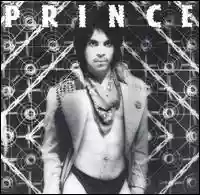
The atmosphere is dark, but more in the sense of “dark” than “black.” Everything is sparse and immediate, as in the magnificent black and white cover, featuring Roger in the foreground wearing only a hippie jacket and pants, gazing proudly in front of an overturned bed (the mattress frame also lends a psychedelic touch to the setting), as if it were a portrait of himself. The brazen image of a young man who, amidst the general anxiety, wields a singular approach: living life wildly, making love and especially sex a source of joy, a commodity to exchange between society's victims, dedicating himself to music and women as ultimate means to feel alive.
From here a very short journey, only eight songs, which are sufficient for initiation. Even “Let’s Get It On” had only eight songs, not just as a record industry trend, but because the tracks are real bombs, icebreakers to be consumed in small doses.
The opening is entrusted to the robotic funk of the title track, where already the young man yearns to hook up with a girl in her father's car... and we've only just begun. As the tracks follow one another, we will witness scenes of punk incest (“Sister”), danceable jams like in “Uptown” (where he briefly meets a girl on the street and moments later proves to her “that he is not gay”), splendid new wave ballads like the ultra-covered “When You Were Mine” (perhaps the only truly sweet and fragile piece). Obviously, the most inappropriate is the legendary “Head”, meaning “Blowjob”, a spicy funk where our hero takes advantage of a bride still a virgin but skilled in oral practices. The world of black music would take years to recover from these thirty minutes of genius delirium.
Musically, Prince thus dismantles the dying vein of '70s soul by creating a renewed funk sound, dirtier, essential, yet full of effects (note the rich depth given to keyboards) and adapted to the changing times. He also proves to be an excellent guitarist with a clean, crisp, original technique; and to skillfully immerse himself in genres until then jealously guarded by the “whites,” forging incredible rock hybrids.
“Dirty Mind” would essentially be yet another commercial flop, but also his first masterpiece. And the keenest ears would soon appreciate the newborn "Minneapolis Sound," a prelude to rides under the purple rain.
Loading comments slowly
Summary by Bot
Prince's 'Dirty Mind' album marked a daring departure from 1970s soul, embracing raw sexuality and musical innovation. It captures the dark yet vibrant mood of early '80s America with edgy funk, new wave elements, and candid lyrics. Despite being a commercial flop at release, it became a defining work and laid the groundwork for the Minneapolis Sound. The album’s concise eight tracks blend punk attitude, funk grooves, and rock guitar, showcasing Prince’s multi-instrumental talent and bold vision.
Prince
American singer, songwriter, multi-instrumentalist and producer; seminal figure in funk, pop and rock who led a prolific career from the mid-1970s until his death in 2016.29 Reviews
Other reviews
By Blackdog
"Dirty Mind is the germ that will infect the world to come, written, produced, and played by the civil Roger Nelson."
"The opening of the title track is a hypnotic and syncopated disco/funk rhythm, bathed in the murky and dark waters of new-wave lyrics."
