
 •
Rating:
•
Rating:
THE REVIEW
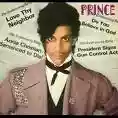
If Dirty Mind is Prince's most erotic album, Controversy, on the other hand, represents his most "political" record: in different ways from one another, at least 4 songs present address themes that deliberately depart from the "mainstream thought" that characterized the previous records (sex, of course, and love affairs) to tackle new themes, unsuspected until just a moment before. Perhaps for this reason, the entire album appears more interesting from a conceptual point of view, rather than a musical one. A case in point is the title track: based once again on a funk structure, "Controversy" is light years away from the relaxed atmosphere of Dirty Mind. It is almost a menacing track: the guitar riffs and keyboards are abrasive, tight, and throughout the piece, the percussive part, reinforced by repeated "uuwh" from the voice, suggests the idea of punches to the stomach, while Prince wonders in amazement why there's so much clamor around him. Ideally, the song is divided into three parts: the initial examination of the controversies raised ("am I black or white, straight or gay?"), followed by the recitation of the Lord's Prayer (!), and, finally, a clear declaration of intent ("I wish there was no black and white, I wish there were no rules"). Within the brief space of a song, he has laid out the main issues that will henceforth always be present in his lyrics: the liberating power of the sex/love combination, the conviction of having God on one's side, and the message of emancipation that springs from such awareness.
I insist a little more on the meaning of "Controversy": the curious Princian theology, which finds its philosophical peak in Lovesexy (with the equation God=Love), has always seemed to me an element that Prince considered very seriously in his music, and not a gimmick to spark controversy and draw attention to himself. Well, that theology is already entirely present in this piece and in the entire album, as demonstrated by the next two tracks. "Sexuality" expresses, in the very speed of the music, the urgency of the message: it is, more than any other, literally an anthem, a call to action. It directly addresses his followers, who appear as the chosen ones of a new, carnal religion, and targets the potential culprits of society's ills, branding them as "tourists," who peek at the world through the keyhole of a camera, and raise children in sexual repression. The result of such polemic fervor, in a way that may seem inconsistent, is the stratospheric celebration of eros, represented by "Do Me Baby": a ballad so splendidly kitsch, (and at times embarrassing, even for the most ardent fans) that only Prince could have convincingly interpreted it. In the Seventies, it was said that the private had to be subordinated to the political. Prince resolves the issue by continuously blending the two planes: thus, the masturbatory fantasy of "Private Joy," which possesses a melody and progression impossible to resist (with the guitar forced at the end to produce unimaginable sounds), is followed by the anti-Soviet nursery rhyme of "Ronnie Talk To Russia," which musically is an oddball rock 'n roll with added choruses and little keyboards, giving the piece the appearance of a general mockery. "Let's Work" sees the reemergence of adults-only content and a rough and robust funk - where the primary role is assigned to the bass, with a brief touch of similar-rap towards the end. But it is the next track that astonishes: "Annie Christian" is finally a track where compositional mastery goes hand in hand with an "important" text. It is noteworthy as the first song where Prince does not appear as the protagonist, as that role is usurped by a disturbing figure, a kind of sociopathic mass murderer, who roams America spreading innocent blood and shining with the luciferous splendor of the Antichrist. Around these lyrics, Prince constructs a musical fabric that magnificently evokes the sense of bewilderment and fear conveyed by the words: the rhythms are dissonant, the singing seems slightly out of time compared to the music, and the electric guitar, working throughout the track in a submerged and dark way, explodes in the most beautiful solo Prince has produced so far. It is then almost with relief that the album's finale makes way for the light and lively "Jack U Off," with the reassuring return to more "earthly" concerns, but also, inevitably, less disturbing and fascinating than the previous one.
Loading comments slowly
Summary by Bot
Prince's album Controversy is a conceptually rich work that shifts focus from eroticism to political and social issues. The album blends funk rhythms with provocative lyrics tackling identity, liberation, and societal norms. Standout tracks like 'Controversy' and 'Annie Christian' showcase Prince's evolving musical and lyrical mastery. The album combines intensity with artistic experimentation, balancing serious themes with engaging funk arrangements.Tracklist Lyrics
Prince
American singer, songwriter, multi-instrumentalist and producer; seminal figure in funk, pop and rock who led a prolific career from the mid-1970s until his death in 2016.29 Reviews
