
 •
Rating:
•
Rating:
THE REVIEW
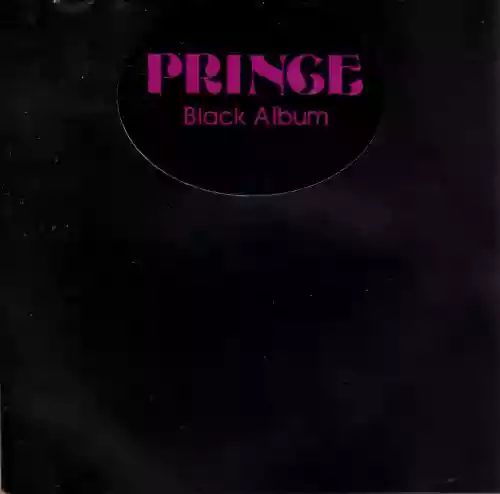
1987 is a crucial year for Prince: The Revolution disband after a five-year streak of success, the first disputes with Warner Bros. arise (eventually climaxing in the tumultuous '90s) with the record label's refusal to release the triple "Crystal Ball", replaced by the seminal "Sign O' The Times". 1987 is also the year of the (unreleased) "Black Album", Prince of Minneapolis's response to the Beatles' "White Album".
A deep voice grumbling in the background (awaiting The Rainbow Children), brass instruments increasing, and his chest-voice singing (that "people, get ready…" is, to me, one of his best timbres): thus begins "Le Grind", hedonistic, raucous, decidedly raunchy (for example, the bit towards the end, when the choruses consist of pure panting), which seems to set the tone for the entire album, very dark and very funky. Indeed, the follow-up, "Cindy C.", follows its festive spirit, with our voice becoming acidic, shrill, while the music, still dominated by brass, momentarily yields to exotic rhythms, before the humorous back and forth between our artist and "his" Cindy (Cat's rap)… The two opening songs, I think, are each a condensed version of the Prince-sound, not just of that period: synthesized rhythms, infinite overlapping voices, continuous changes of rhythm and unexpected sound and stylistic solutions… The omnivorous and encyclopedic nature of Prince's music is not only manifested over the length of an entire album ("Sign O' The Times" teaches this), but often within a single song. "Dead On It" is a mockery, not even a benevolent one, of the dullest rap ("Negroes from Brooklyn play the bass pretty good/But the ones from Minneapolis play it like it oughta should" and again "See, the rapper's problem usually stem from being tone deaf/Pack the house then try 2 sing, there won't be no one left/On it") and "macho". In contrast, "When 2 R in Love" fits here like a fish out of water… wherever it is placed, however, it shines with its crystalline, serene, sensual ballad character under dimmed lights (never have obscenities been uttered with such candor). The jump to "Bob George" is abrupt, but not without dramatic effect: here Prince engages in one of his favorite activities: portraiture. He paints the portrait of this strange character with a few brush strokes, as he has done elsewhere (how many songs with proper names in his repertoire: Anna Stesia, Anne Christian, Dorothy Parker, etc), but here decisively veers towards parody, self-irony ("What's he do 4 a living? Manage rock stars?/ Who? Prince?/Ain't that a bitch!/That skinny motherfucker with the high voice?"), and staging, complete with gunfire and police sirens.
"Superfunkycalifragisexy" starts from the reinterpretation of a jingle/earworm (the Beatles did it already, but Prince demonstrates a passion for such things, here too, the examples are many, from America to Man in Uniform) to transform it into the backbone of a dense and dark, vaguely unsettling funky: as much as the first two songs are sunny, "Bob George" and this represent the true "dark" side of the Black Album, which however does not take further shape, but fades into the tangle of agitated voices preluding to the free exercise of the musicians in "2 Nigs United For A West Compton", where the spirit of controlled improvisation seems to return, dominating the early recordings of 94 East. After a few minutes (perhaps too many..) it returns to song form, with that delightful (in my opinion) concoction that is "Rockhard In a Funky Place": horns, propulsive rhythms for the abdomen, chorales, falsetto voices, guitar solos… everything is thrown into the cauldron of this piece that always seems on the verge of derailing, and yet, despite the heterogeneous group that inhabits it, brilliantly reaches its destination, the finale of a plea on the theme of love (à la Prince, of course, with disappointment over "lost erections"...), and the appointment for the next chapter of the saga…
A divertissement (the album was created for Sheila E.'s birthday party) written during a period of great inspiration that, while not reaching the peaks of Prince's production (the score would be 4.5 out of 5), manages to be fresh and at times innovative.
Loading comments slowly
Summary by Bot
Prince's unreleased 1987 Black Album reveals a dark, funky side of the artist contrasting with his mainstream works. Featuring innovative rhythms, layered voices, and raw humor, it showcases his musical depth and playful yet intense themes. Not reaching his absolute peak, it remains fresh and inspiring, reflecting a crucial period of transition and creativity.
Prince
American singer, songwriter, multi-instrumentalist and producer; seminal figure in funk, pop and rock who led a prolific career from the mid-1970s until his death in 2016.29 Reviews
