 •
Rating:
•
Rating:
THE REVIEW
Perhaps the word "pop," wrongfully and sadly overused by the music business, demands justice and a fitting place in the swirling universe of contemporary song? It is certain that it, born with a dual handicap - its strong sociological connotation and a dangerous scent of lightness - should be somewhat clarified, repositioned, encouraged. And not to the mortification and condemnation of a concept, precisely that of "light," which is far from being the enemy of the people or a shame for the artist; nothing like the "little songs," after all, communicates certain truths to us better.
The not too distracted ear will notice how this task was already accomplished not many years ago, when suddenly, in its path towards liberation, pop managed to push beyond the boundaries that had frustrated it from birth, to surpass the limit within which its message could not have become truly universal.
A very strange character, the deus ex-machina of this silent Copernican revolution: on one side, a past as a gas station attendant and a never too delved vocation to become a priest, one of the many pale faces mirrored in the perpetual rain of the Northern lands; on the other, the unconditional love for American musicals, the protagonist of endless dreams that would soon "implode into one." From the beginning, and without hesitation at least until '90, Paddy McAloon placed his dream under the service of a project as concrete as it was singularly metaphysical: to bestow the pop with an "other" dignity, spreading an entire decade with prefabricated seeds that would yield unripe (but how intense...) fruits in the challenging, unattainable "free pop" of "Swoon" (1983), mature plants with the elegiac and subtly restless "Steve McQueen" (1985) or the sharp and good-naturedly ironic "From Langley Park To Memphis" (1988).
The ground was fertile, the dish full of gifts: who would forget the delicate poetry and ethereal sounds, bordering on the impalpable, of an "Elegance", the anger and impotence whispered in those masterpieces of balance that were and remain "Bonny" or "Goodbye Lucille No. 1", Bacharach strolling through the fields of Newcastle ("Moving The River", "Cruel", "Horsin' Around"), perhaps arm in arm with Proust ("I Remember That")? And sketching a thanks for "When Love Breaks Down" is an almost trivial operation.
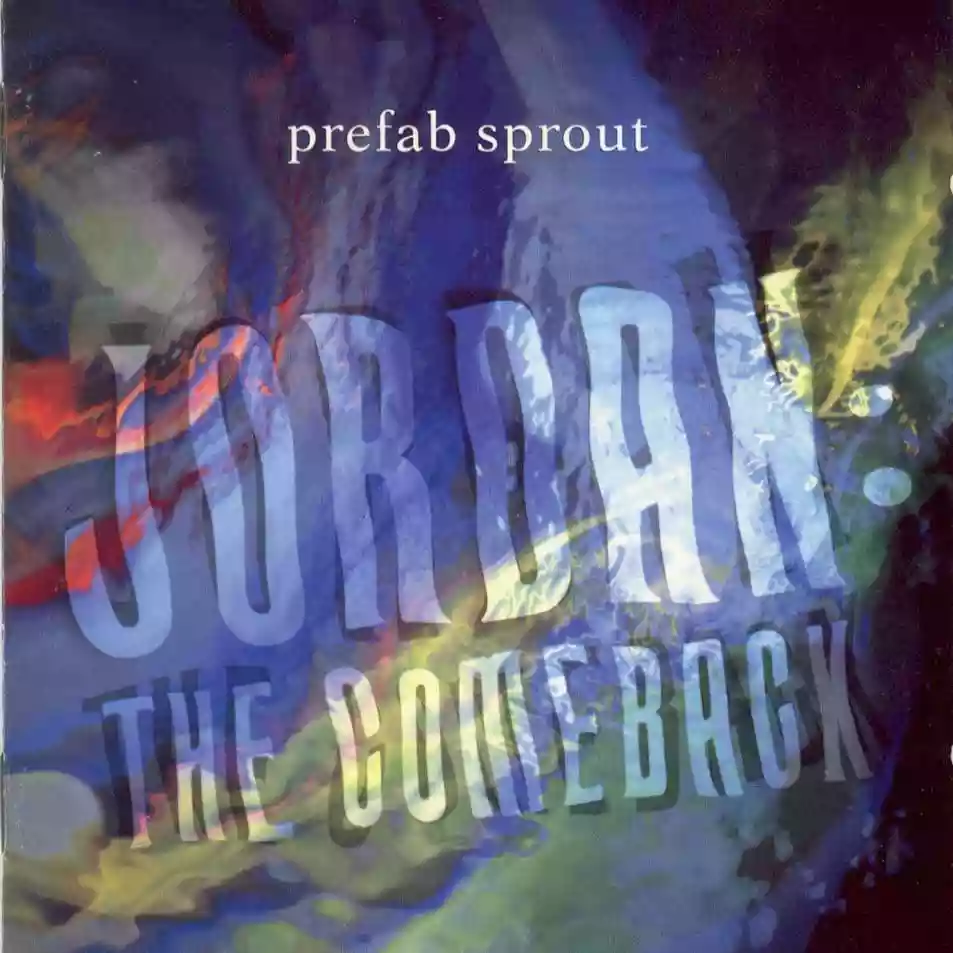
But at the opening of the new decade, "Jordan: The Comeback" goes beyond the mark: a perfect and unattainable synthesis of a path that for some has no equal in the post-Beatles era. A project of vast musical scope, a cauldron where definitions are lost and lose any meaning: it is pop at its highest level of transcendence, the point of no return where "easy listening" and "cultured" music blend and confuse, serving a narrative with a biblical flavor.
No preaching intent, however, wets McAloon's pen: where the reference to the sacred peeks through (the last section of the record, besides the title track), it is bent to the needs of a discourse with strongly humanistic connotations: "Michael", "Mercy", the splendid "One Of The Broken" are nothing but an iconic phenomenology of error and human weakness. And the dream of an infinite medley where sophisticated avant-garde pop and Broadway reminiscences no longer have boundaries is all earthly: gems like "Paris Smith", "The Ice Maiden", "The Wedding March", the inspired promise of "All The World Loves Lovers" are born. If the stride of "Wild Horses" has something spiritually sensual, "We Let The Stars Go" is the quintessence of nostalgia in music, while superb in "Moondog" (where, among other things, the Elvis theme of "The King Of Rock'n'Roll" returns, now more subtly) is the alternation of spatial melody and rhythmic perfection.
And so on, in a whirlwind of endless citations that make little sense to delve into: we are faced with about seventy minutes of pure music, not a comma out of place, no concession to the slightest intent of "mainstream," a lethal distillation of perfect pop for the use and enjoyment of all generations, a little-frequented cornerstone of modern music still awaiting due recognition.
Loading comments slowly
Summary by Bot
Jordan: The Comeback by Prefab Sprout is celebrated as a sophisticated, boundary-pushing pop album that blends easy listening with cultured, avant-garde elements. Paddy McAloon's poetic songwriting and humanistic themes elevate the album to a timeless classic. The review highlights the album's narrative depth and musical perfection, establishing it as a major work in modern pop history.Tracklist Lyrics Videos
Prefab Sprout
Prefab Sprout are an English pop group led by songwriter Paddy (Patrick) McAloon, praised in the reviews for literate lyrics and meticulous, melodically rich arrangements. Their best-known album in this set, Steve McQueen, is repeatedly framed as a post-Beatles-era pop landmark, while Jordan: The Comeback is discussed as an ambitious concept-leaning work. Later-era releases are portrayed as shaped by lineup changes and McAloon’s solo-leaning continuation of the name.12 Reviews
Other reviews
By Abraham
Prefab Sprout are universally recognized as a balm for the contemporary pop scene.
'Jordan: The Comeback' is an atypical concept album, played with uncommon kindness.
